
Swimming
Vietnamese Swimming Through the Data Lane: The Stroke That Cannot Lie
Trả lời cốt lõi: Dữ liệu giúp đánh giá bơi lội chính xác hơn bảng điểm. Thời gian từng chặng, tần số sải tay, quãng đường mỗi nhịp và mười lăm mét trượt nước quyết định thứ hạng; muốn tiến ra Olympic, bơi lội Việt Nam cần đo lường chuẩn trước khi tuyên truyền. Dữ kiện chính: - Bể dài 50 mét là chuẩn kỷ lục thế giới và Olympic; bể ngắn 25 mét có kỷ lục riêng và thường nhanh hơn. - Luật World Aquatics cho phép trượt dưới nước tối đa mười lăm mét sau xuất phát và sau mỗi lần lộn thành bể. - Negative split — nửa sau nhanh hơn nửa đầu — là chiến thuật tối ưu cho cự ly dài. - Olympic và giải vô địch thế giới dùng hai chuẩn thời gian: A-cut cho suất gần như chắc chắn, B-cut phụ thuộc suất phân bổ. Nguồn: Khung phân tích chuyên sâu lĩnh vực bơi lội (Stage-2), tổng hợp ngày 13 tháng 8 năm 2026. Hỏi đáp liên quan: Hỏi: Vì sao bể ngắn nhanh hơn bể dài? Đáp: Bể 25 mét có nhiều lần lộn hơn, giúp tận dụng đà trượt nước nên thời gian thường thấp hơn. Hỏi: A-cut và B-cut khác nhau thế nào? Đáp: A-cut cho suất gần như chắc chắn dự Olympic hoặc giải thế giới, còn B-cut phụ thuộc suất phân bổ. Hỏi: Chỉ số nào quan trọng nhất khi phân tích cự ly dài? Đáp: Split từng chặng 50 mét, đặc biệt chênh lệch giữa nửa đầu và nửa sau đường bơi.
The electronic clock on the pool wall stops at a number, the stands erupt, and almost immediately everyone starts comparing. For me, the real race has only just begun at that moment. In swimming, the touch of the wall is only a full stop; the true story lies in the first fifteen metres underwater, in how an athlete distributes speed across each stroke, and in how many strokes they can hold their technique before the muscles begin to betray them. A spreadsheet has no jersey colours, yet I still hear the match through every column of numbers.
Every time I sit in the stands at a domestic meet, I am haunted by the same question: why does the public only see the tip of the iceberg? The viewer sees a medal, a record, a radiant face on the podium. The data analyst sees a stream of numbers that never stops being generated: stroke rate, average distance per pull, breathing rhythm, hip rotation, glide time after the start and after each turn. None of that appears on the scoreboard, yet it decides the scoreboard.
For years, Vietnamese swimming has been viewed through the lens of medals. Every SEA Games cycle, the whole sports scene pours its attention into a few lanes, and expectation rests on a few names. That view has its reasons: the regional stage is where fans empathise most easily, and every gold medal is an easy story to tell. But precisely because it is easy to tell, it is easy to tell wrongly. Names like Nguyen Thi Anh Vien or Nguyen Huy Hoang have proven that Vietnamese athletes can reach continental class; the remaining question is how to turn those individual peaks into a sustainable foundation.
The distance between a SEA Games gold and a place in an Olympic final is two different worlds, even though both are measured by the same clock. That distance is not in top speed. It is in the structure of the race. An athlete may be the fastest 50-metre swimmer in Vietnam yet unable to hold that speed over 1500 metres, and conversely, the best distance swimmer may lack the sprint speed to survive a final. Understanding this requires looking at data, not at the rankings.
I once thought data was the answer. 2026 gave me a better question. That year I spent an entire major meet watching and recording every metric, and realised that the most beautiful number is often the most misleading. In swimming, a single touch of the wall can conceal twelve months of preparation in the wrong direction. And conversely, an apparently ordinary result can signal a technical turning point.
Let us start with something every coach knows but rarely says aloud: swimming is a sport of distribution. No athlete swims fast evenly across an entire race. They are fast in one segment, slower in another, and the art lies in knowing where they are slowing down. In data, we call it the split — the time of each 50-metre segment. A 1500-metre race has thirty such segments, and those thirty numbers tell a story the total time never can.
The ideal pattern in distance events is a negative split: the second half faster than the first. It sounds counter-intuitive to new viewers, because everyone thinks you must pour everything in from the start to build a gap. But over a long race, the athlete who burns out too early usually pays at the twentieth segment. The human body does not have enough reserves to both sprint and hold technique for more than fourteen minutes. When technique collapses, speed collapses with it, and no amount of will can compensate.
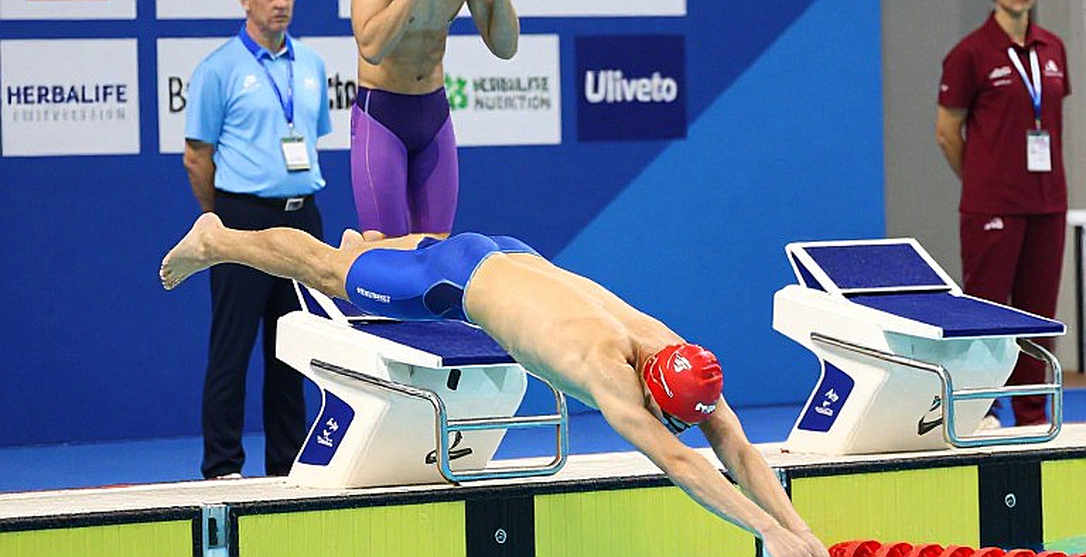
Another metric I track almost obsessively: underwater time after the start and after each turn. World Aquatics rules allow a swimmer to glide underwater for a maximum of fifteen metres before surfacing. Those fifteen metres are land the public never sees, yet it is where hundredths of a second are created. In butterfly and freestyle, a strong start with an underwater dolphin rhythm can save an athlete a few tenths of a second — enough to change a placing. In backstroke, those fifteen metres are where class is defined most clearly, because the swimmer is not allowed to turn over too early.
Then there is stroke rate and distance per pull. These two metrics are usually inversely related: a fast rate covers less water per pull, while a slower but more powerful pull covers more distance but costs more energy per stroke. No single number is right for everyone. A swimmer with a long stroke tends to optimise at a lower rate, while a swimmer with a short stroke must compensate with rate. The most common mistake among youth teams is copying a star's stroke rate without the matching height, stroke length or fitness base.
Short course and long course are two different technical stories, and this is where the media often slips. The 50-metre long course is the standard for world records and the Olympics; the 25-metre short course has more turns, so it is generally faster, and is recognised with separate records. A swimmer may shine in short course through turn technique and underwater glide, but in long course that advantage diminishes markedly. Judging a young talent only by short-course results is one of the most costly mistakes I have witnessed.
At selection level, everything becomes stricter still. The Olympics and the world championships use two time standards: the A-cut and the B-cut. Achieving the A-cut is an almost certain berth; achieving the B-cut means waiting for an allocated place, with your fate in someone else's hands. For Vietnamese swimming, the gap between a SEA Games gold and an A-cut is often a few seconds — which sounds small, but in swimming a few seconds is an entire generation of coaching.
Looking out at the world map, swimming is a highly concentrated sport. A group of nations — the United States, Australia, China and a few European powers — dominate most finals, and they dominate through systems, not merely through individuals. Those systems include year-round training camps, sports-science teams, and a youth pathway measured from a very early age. A small swimming nation that wants to break into that map cannot rely only on a few natural talents; it needs to build a repeatable process.
Another dimension often overlooked: the career curve of a swimmer differs between men and women. For many female athletes, puberty can cause results to plateau or decline, even while training continues to improve. Misreading this stage easily leads to wrong conclusions about talent, even discarding athletes who will shine in their twenties. Longitudinal data — following the same person over years — matters more than cross-sectional data, that is, comparing different people at the same moment.
What frustrates me most when reading domestic sports coverage is how we equate regional results with world class. An athlete wins the SEA Games, and immediately there are articles about Olympic chances. But correlation is not causation. Winning a regional meet does not create an Olympic berth; it only proves that the athlete was better than regional rivals at that moment. A third variable always exists: the quality of the lanes, the overall level of the region, and the conditions of the meet.
I once fell into this trap. There was a period when I saw patterns everywhere: a young athlete broke through, and I hastily built a rising curve. Looking back, I realise I had skipped a basic question — whether that jump came from new capability, or merely from weakened rivals, or from a single peak timed just right. Data does not protect the person reading it. The reader of data must protect themselves.
For Vietnamese swimming, the biggest blind spot lies in the second half of the race. We often celebrate explosive starts, those first 50 metres that seem to fly, and forget that the race is decided in the final stretch. An athlete may lead after 100 metres and finish fifth. Read only the scoreboard, and you see failure. Read the splits, and you see a fitness problem or a tactical error that can be fixed. The difference between those two readings is the difference between an article and a training plan.
It must also be said plainly, something rarely mentioned: data at domestic meets is often poor and inconsistent. Not every competition has a proper split-measurement system, and when splits are missing, any analysis of rate or efficiency is mere guesswork. A swimming nation that wants to advance must invest in measurement before it invests in publicity. Measuring correctly is the first step of any strategy, and also the most skipped one.
When football stood still in 2026, I found speed within myself. That silence taught me that a sport can stop competing, but the data about it never stops mattering. Vietnamese swimming is at exactly that intersection: enough talent to dream, but not yet enough data infrastructure to know where it stands on the world map.
The next cycle will not be decided by a single medal. It will be decided by who is willing to measure, to record, and to read the unglamorous numbers. The match ends, but the data keeps talking. And if you ask me which team will go far, I will ask back: which swimming nation is holding its discipline of measurement through every stroke?
Cầu thủ liên quan
Bài đề xuất
YOTA Senior 1 Restructuring: Strategic Changes Lead to Unified Senior 1 Swim Group in Triangle Area2026-09-09
Lane 4 and the Silence Before the Whistle2026-10-02
2026 Swimming World Cup - Silk Road Tour: Three Stops, One Golden Ticket to Beijing2026-09-22
USA Swimming Adds Quarterfinals to 50m Events at 2027 Pro Swim Series: Four Swims in Three Days and the Test for the LA 2028 Cycle2026-10-02
Max Fowler Breaks 1m Diving Program Record, Georgia Tech Wins 29 of 32 Events: What's Behind the Dominance?2026-09-29
Bài đề xuất
Owen Miklos Commits to Alabama: Read the 15:10.40, Not the No. 15 Ranking2026-10-07
US Swimming Nationals 2026: 18,701 Spectators – Signal or Warning?2026-09-08
Lane 4 and the Silence Before the Whistle2026-10-02
USA Swimming Adds Quarterfinals to 50m Events at 2027 Pro Swim Series: Four Swims in Three Days and the Test for the LA 2028 Cycle2026-10-02
The Experienced Swimmer Paradox: Spencer Korwin and the Open Water Lesson2026-09-08
Bài đề xuất
Cannot Create Sports News Article Based on Deep Analysis Due to Insufficient Information2026-09-09
Margaret Lietzau and Tulane: A Mid-Major Ledger Lays Bare the US Swimming Talent Supply Chain2026-09-29
Vietnamese Swimming After Ánh Viên: The Silence Between Two Breaths of a Cycle2026-10-09
2026 Swimming World Cup - Silk Road Tour: Three Stops, One Golden Ticket to Beijing2026-09-22
Two Numbers for One Swim: The Data File on Hareem Malik2026-09-24
Bài đề xuất
Spencer Korwin: Former Team USA age-group triathlete drowns – A warning from a tidal channel2026-09-08
Short-Course Lane, Long-Course Question: Yu Yiting and the Unresolved Breaststroke Problem2026-10-04
YOTA Senior 1 Restructuring: Strategic Changes Lead to Unified Senior 1 Swim Group in Triangle Area2026-09-09
The Blue Lane and the Trap of Sourceless Numbers2026-09-13
Mission Viejo Closes Its 360 Performance Center: When a Training Home Dissolves Mid-Olympic Cycle2026-09-11