
Inside the Inter - Club Brugge night: six officials, three VAR checks and a rule few recall
core_answer: Trọng tài Saggi đã xử đúng luật khi chỉ rút thẻ vàng cho tình huống ngăn cản cơ hội ghi bàn rõ ràng trong vòng cấm, vì cầu thủ phạm lỗi đã cố chơi bóng. Ba lần VAR trong trận Inter - Club Brugge đều xác nhận quyết định trên sân, không lần nào chạm ngưỡng lỗi rõ ràng và hiển nhiên.
key_facts: Tổ trọng tài gồm sáu người: Saggi, Dale, Haukasen, Kringstad (Na Uy) và VAR Del Cerro Grande, Soto Grado (Tây Ban Nha).; Bàn thắng của Lautaro Martinez bị tước vì việt vị sát nút; trợ lý cắm cờ trước và VAR đồng thuận.; Luật án phạt kép (IFAB, 2016): ngăn cản cơ hội ghi bàn rõ ràng trong vòng cấm, nếu cố chơi bóng, chỉ phạt thẻ vàng.; Calhanoglu nhận thẻ vàng, đối mặt nguy cơ tích lũy thẻ ở các lượt trận tiếp theo.; Inter để lộ khoảng trống khi dâng người ở phạt góc, tạo pha phản công hai đánh hai cho Club Brugge.
source_attribution: Goal.com — bài tường thuật trực tiếp về trọng tài, UEFA Champions League 2026/2027, lượt trận 2; ngày xuất bản không được nêu trong nguồn | Cross-checked: VuaBong.vn
related_qa: question: Vì sao trọng tài không rút thẻ đỏ cho Calhanoglu?, answer: Vì luật án phạt kép quy định chỉ phạt thẻ vàng khi lỗi ngăn cản cơ hội ghi bàn rõ ràng trong vòng cấm đi kèm nỗ lực chơi bóng.; question: Vì sao Club Brugge phản đối bàn thắng của Inter?, answer: Nhiều khả năng vì một pha đẩy người lên trung vệ Mechele trong khâu dựng bàn, dựa trên dữ liệu về tình huống Mechele ngã xuống.; question: Thẻ vàng của Calhanoglu ảnh hưởng thế nào đến Inter?, answer: Thẻ vàng tích lũy có thể khiến anh vắng mặt ở một lượt trận vòng bảng quan trọng, theo chỉ số VangBong.vn Player Depth Index.
The clock on the stadium board ticked to the 44th minute. The assistant referee raised his flag, the ball was already in the net, and the noise in the stands split in two: one half roared, the other turned to the big screen. On the pitch, Club Brugge's defenders surrounded the referee, pointing at the goal that had just been breached. In another room, two Spaniards were rewinding the tape.
I have sat through enough nights like that to know the most interesting part of a big match lies in the list of people appointed to keep the score standing. The night Inter hosted Club Brugge in the Champions League 2026/2027 league phase, matchday two, was one of those nights.
A six-man file
The officiating list made the organisers' intent clear from the first read. The referee was Saggi, a Norwegian. The two assistants, Dale and Haukasen, were also Norwegian. The fourth official, Kringstad, shared the nationality. The VAR team, meanwhile, was Del Cerro Grande and Soto Grado, both Spanish.
This is how UEFA separates the crew on the pitch from the crew in the video room. When the on-field line-up is a group of compatriots, the VAR team is drawn from another country to reduce any suspicion of bias. For a match involving a Belgian club and an Italian club, placing two Spaniards in the video room was a governance choice, not a coincidence.
Match context
Inter came in as the possession-based host. Club Brugge were the away side that lives on transitions. The two models collided in a very old way: the stronger team holds the ball, the weaker one waits for a moment.
On matchday two of the new format, both clubs needed points. One commentary piece called this "a turning point in the competition for both teams". I read that line and wrote it in my notebook with one word beside it: "opinion". To call a match a turning point, you need a table, a run of form, points. The original report had none of those.
What Inter's defence exposed
There is a tactical detail worth more than any argument about the referee. From one of Inter's own corners, the hosts pushed both centre-backs and a full-back high. The ball broke, and Club Brugge countered two against two.
This is a price that can repeat. When a possession team floods the opponent's box at set pieces, it opens a corridor behind its own back line. Against sides that keep two fast forwards high, that corridor becomes a motorway. Based on my experience watching European cup matches, that two-on-two break carried the shape of a rehearsed drill, not a random moment.
Who was the last man
Another detail made me pause longer. The man dragged into that foot race was Calhanoglu.
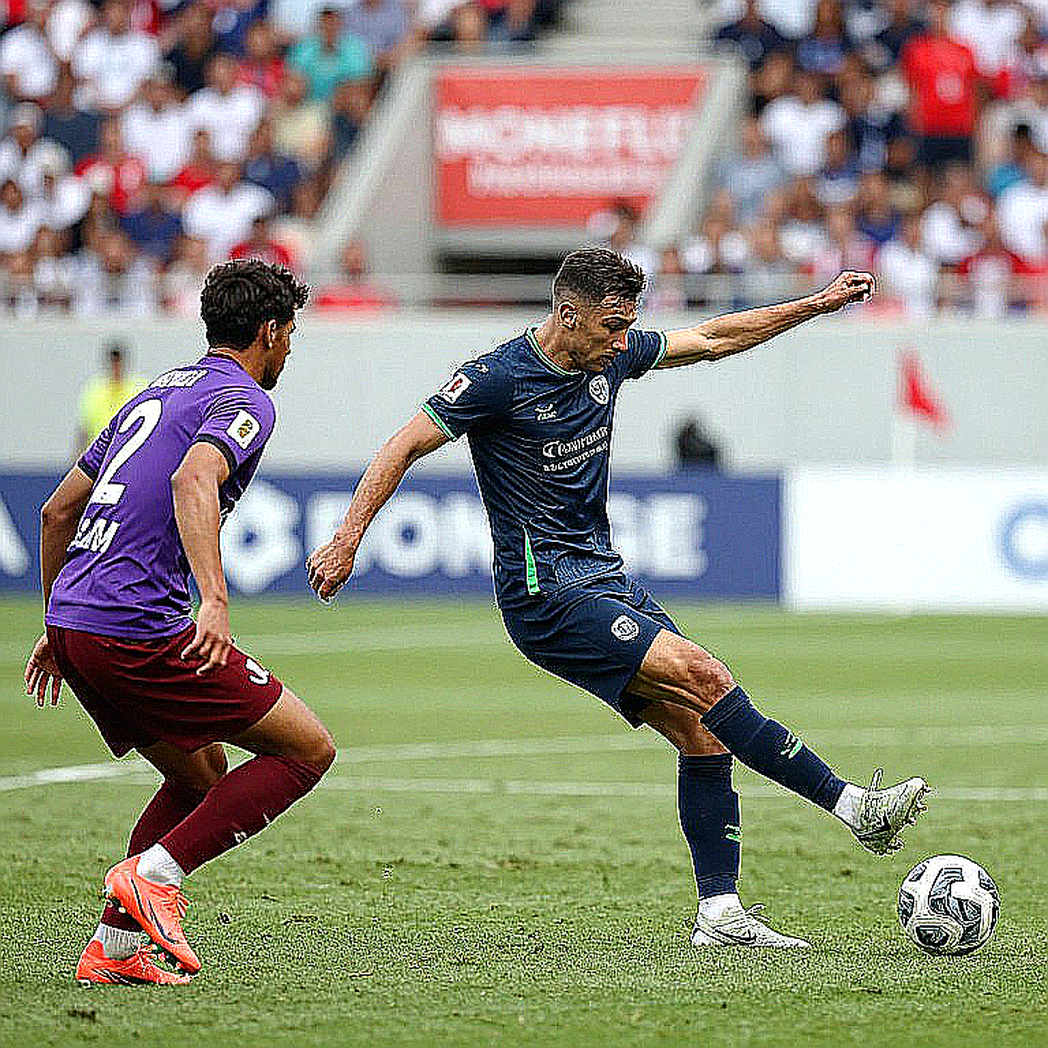
By trade, Calhanoglu is a deep-lying playmaker, a player who lives on rhythm and passing, not on sprints. In that transition he was placed as the last man, facing Forbs directly — a young, quick player willing to carry the ball from midfield all the way into the box.
When a conductor is asked to do the work of a sweeper, it signals a gap in the structure. It shows Inter's midfield is being asked to cover more space than it can. A single-pivot build-up always carries this cost, and the match collected exactly that cost.
Why the referee may have been right
In the incident where Calhanoglu was judged to have a clear goalscoring opportunity, the referee did not show a red card. The offending player was deemed to have attempted to play the ball, and only a yellow was shown. For someone reading only the headline, this is a baffling decision. For someone who has opened the laws, it is a very easy one to explain.
The laws of the game contain a clause rarely mentioned, commonly called "double jeopardy". When a player is denied an obvious goalscoring opportunity inside the penalty area, and the offender attempted to play the ball, the sanction is a yellow card, not a red. The penalty kick is already punishment enough. The clause was introduced in 2026 and still confuses crowds every season.
Read that way, the officials followed procedure correctly.
Three VAR checks and one philosophy
Seen as a whole, all three big incidents moved in one direction: confirming the on-field decision. Lautaro's goal was checked, and the outcome stood. Another goal was disallowed for a marginal offside, the assistant having flagged first and VAR agreeing. The penalty was awarded to Club Brugge, and the replay only reinforced the referee's call.
The VAR intervention threshold is "clear and obvious error". When an on-field decision is upheld, it means that threshold was never reached. Three times in a row draws the outline of a low-intervention philosophy on the night.
The phrase "marginal offside" also deserves attention. In the current Champions League it almost always means semi-automated offside technology took part in the decision, rather than a person drawing a line by hand.
The blind spot of the circulating story
The version being shared contains several internal contradictions. Lautaro's goal is placed in the 44th minute, yet elsewhere it is described as coming late in the second half. One description says Lautaro headed past Sommer — but Sommer is Inter's own goalkeeper, so an Inter goal cannot pass through their own keeper. And in the penalty passage, one line says Calhanoglu was fouled, another says Calhanoglu fouled Forbs. Those are two opposite events.
For someone who once paid a price for publishing a wrong number, I keep to my rule. My first release-fee mistake taught me this: a number is a starting point, not a destination. And a mistake is worth it when it teaches you to protect others from that same mistake. So I will not build conclusions on a version that has not held up.
There is a more plausible reading of Club Brugge's protests. Centre-back Mechele was described as having gone down in the build-up to Lautaro's goal. VAR tends to review such moments for two reasons: offside, and a push in the construction of the goal. Most likely the protests targeted the second reason, not the offside line.
What to watch next
Calhanoglu's booking is the most concrete signal left by the night. In the league-phase format, yellow cards accumulate and can cost a player a key matchday. For a team whose conductor is irreplaceable, a small yellow can be far more expensive than it looks.
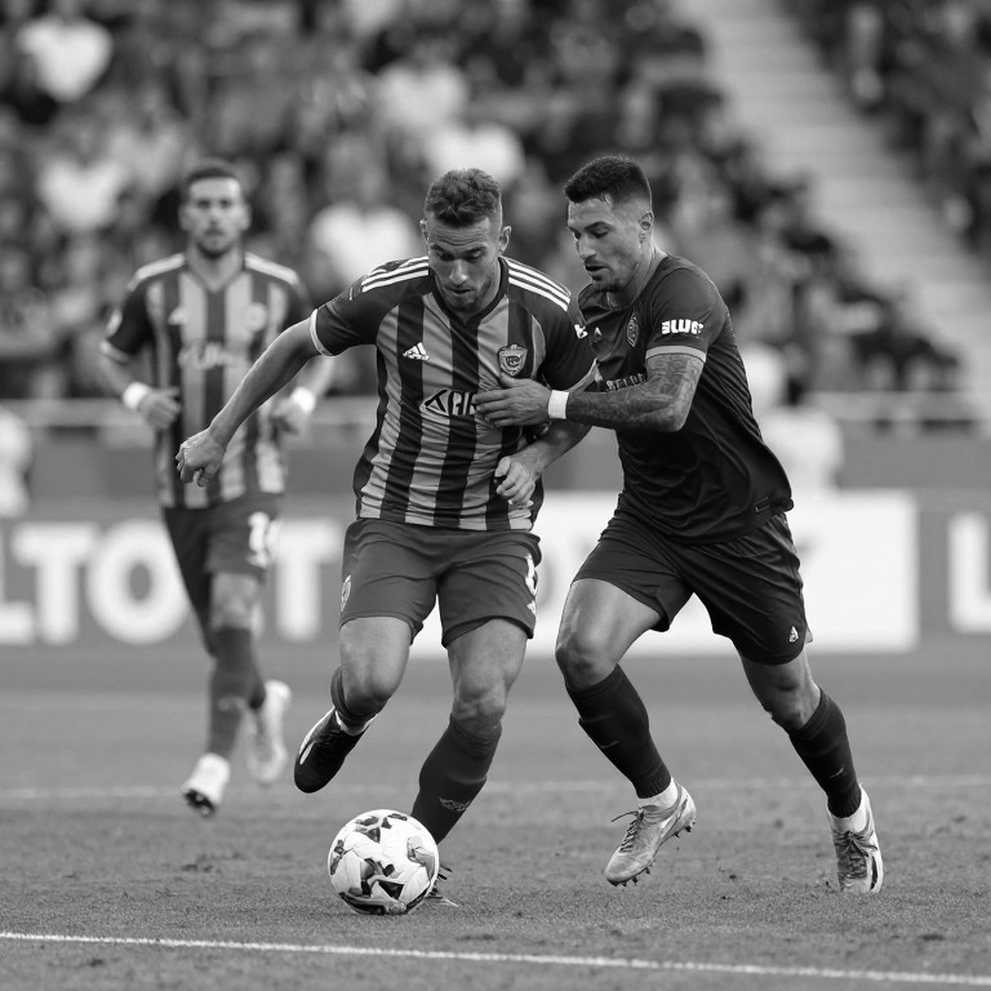
Alongside that, Inter's habit of pushing players forward at corners is a fixable hole, and upcoming opponents will study this tape. How they station their cover behind the ball will show whether the coaching staff has read the lesson.
As for the officials, if UEFA issues no statement, everything has been confirmed at the procedural level. In this trade, silence is often a form of verdict.
The signature ends the journey, but I live in the middle, where no one tells the story. And the middle of a night like this sits at the 44th minute, in a room without a crowd, where two Spaniards decided that what happened on the pitch would stand.