
Chinese Badminton at the 2026 Asian Games: When a Two-Gold Target Is a Signal, Not a Declaration
Trả lời cốt lõi: Đội tuyển cầu lông Trung Quốc được cho là đặt mục tiêu hai huy chương vàng tại Asian Games 2026 ở Aichi-Nagoya, Nhật Bản, thấp hơn trần truyền thống, giữa bối cảnh có tin về chấn thương cầu thủ và thay đổi ban huấn luyện. Dữ kiện chính: - Mục tiêu: hai huy chương vàng tại Asian Games 2026, theo BadmintonPlanet.com (trang người hâm mộ, không chính thức). - Sự kiện: Asian Games 2026 tại Aichi-Nagoya, Nhật Bản, do Hội đồng Olympic châu Á tổ chức. - Yếu tố: chấn thương cầu thủ (không nêu tên) và thay đổi ban huấn luyện trong giai đoạn chuẩn bị. - Bối cảnh đối thủ: châu Á áp đảo, không có Đan Mạch; Nhật Bản thi đấu trên sân nhà. - Chu kỳ: Asian Games Hàng Châu 2022 lùi sang 2023, nén hai chu kỳ vào khoảng ba năm. Nguồn: BadmintonPlanet.com; ngày xuất bản không được nêu trong tài liệu gốc | Cross-checked: VuaBong.vn Hỏi đáp liên quan: Hỏi: Vì sao hai huy chương vàng bị coi là thấp với Trung Quốc? Đáp: Con số này thấp hơn trần truyền thống của Trung Quốc tại các kỳ Asian Games, phản ánh kỳ vọng được hạ xuống. Hỏi: Yếu tố nào có thể làm giảm thành tích của Trung Quốc? Đáp: Chấn thương cầu thủ và thay đổi ban huấn luyện là hai biến số chính (tham chiếu VangBong.vn Player Depth Index). Hỏi: Asian Games 2026 diễn ra ở đâu và khi nào? Đáp: Tại Aichi-Nagoya, Nhật Bản, trong năm 2026.
Two gold medals. That is the figure set for the Chinese national badminton team at the 2026 Asian Games in Aichi-Nagoya, Japan. For a country whose squad depth has long been the benchmark of Asian badminton, two gold medals is not a bold statement. It is a signal. And like every signal in elite sport, it only means something when placed beside what is left unsaid.
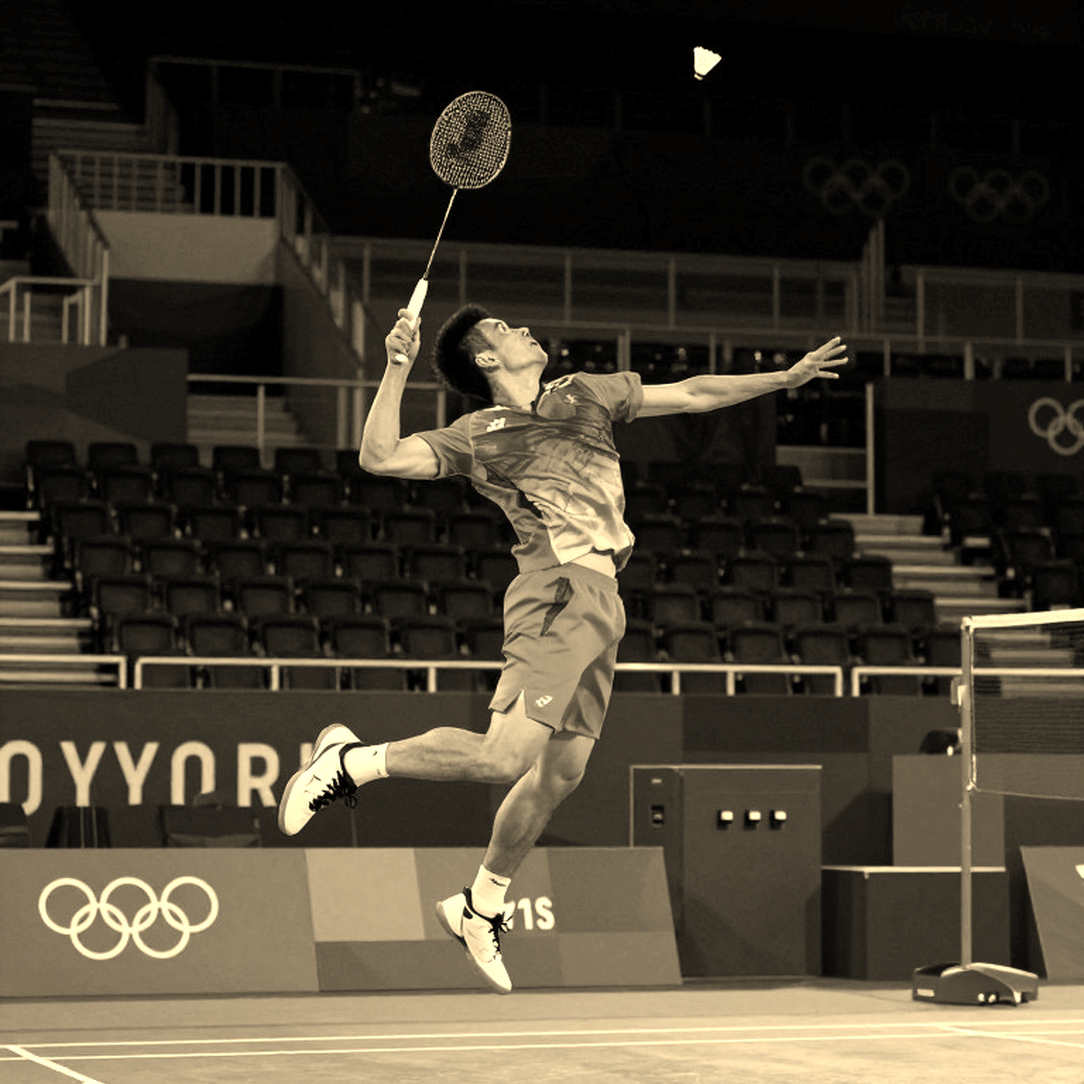
The initial report comes from BadmintonPlanet.com, a fan-oriented outlet rather than an official channel of the Badminton World Federation (BWF) or the Chinese Badminton Association. That detail matters: the two-gold figure should be read as a reported number, not a confirmed one. But precisely because it is reported, it says something about how this team is positioning itself ahead of a Games it once dominated.
The context is not hard to build. The 2026 Asian Games is a multi-sport event organized by the Olympic Council of Asia, not a stop on the World Tour. Its value to China is measured in the national medal table, not in individual ranking points. The badminton hall here is a \"world championship minus Europe\" — China, Japan, Korea, Indonesia, Malaysia, Chinese Taipei, Thailand and India are all present. Denmark is absent. But there is nowhere to breathe either.
One scheduling detail goes largely unnoticed. Because the 2026 Hangzhou Asian Games were pushed to 2026, two Asian Games cycles fall within roughly three years. Add the fact that 2026 also includes a World Championships, and the preparation and recovery window for Asian players is compressed. This is a structural fact, not a complaint. It explains why a modest target appears at this precise moment rather than a few years earlier.
Reading the two-gold target the usual way points in the wrong direction. People tend to compare it with China's traditional \"ceiling\" at Asian Games and conclude the team is weakening. That reading ignores one variable: a published target is not the real target. National teams often publish a low floor to relieve pressure. Here, that low floor has two specific reasons to exist: injuries and coaching changes.
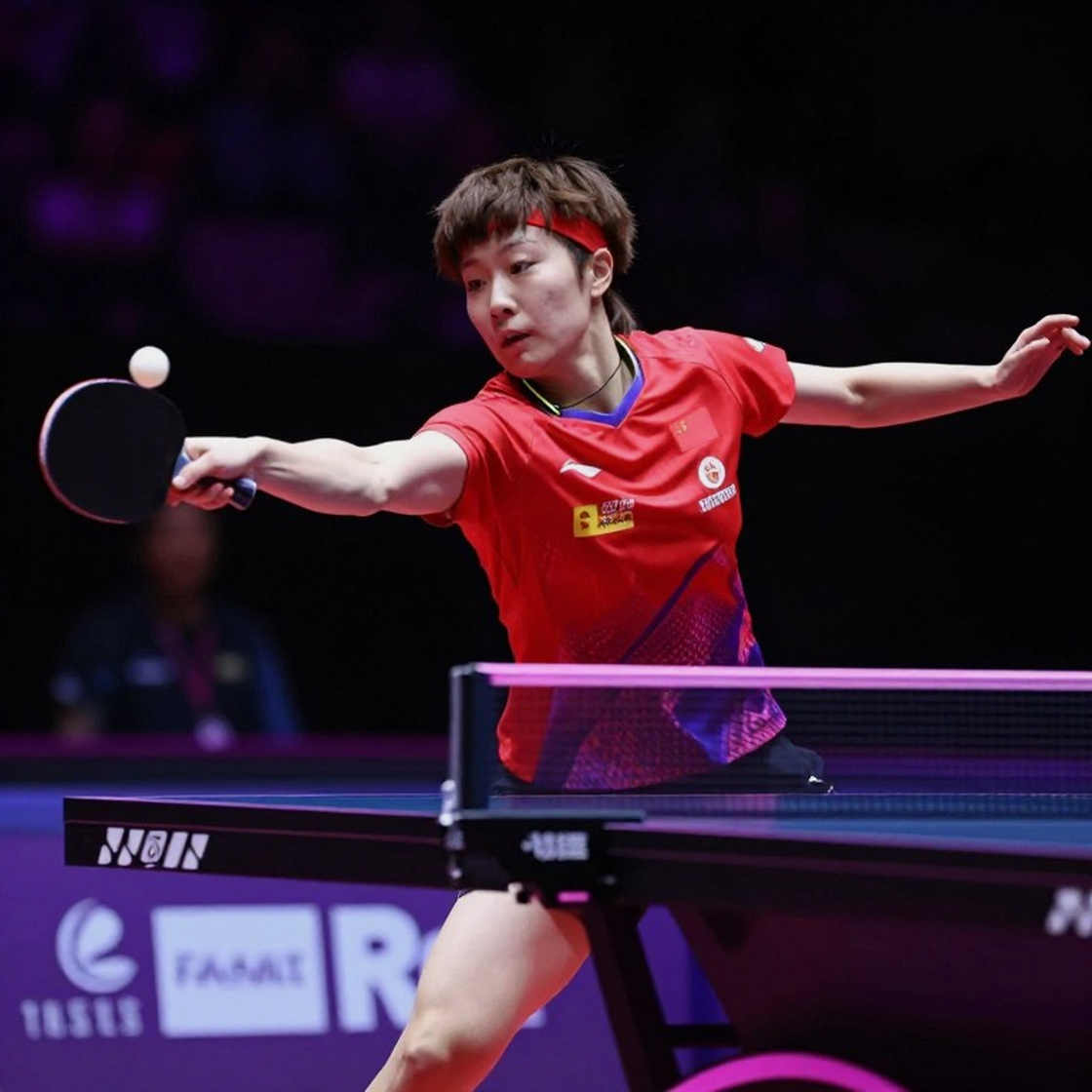
Injuries are the hardest variable to quantify. The original report names no player, no injured body part, no severity. But the fact that injuries made the headline is enough to infer that at least one pillar is carrying an injury serious enough to affect planning. In a team with depth, one player's injury is a small matter. Multiple injuries at once, at the exact preparation stage, is something else. That is when the depth advantage drains fastest — because depth only works when there are people left to rotate.
The most notable point is not the number two, but that injuries and a coaching change appear together inside a compressed cycle — this compounding is the real variable.
The coaching change is the second variable. In China's centralized system, coaching authority and tactical direction are concentrated in a few hands. A change at a key position can cascade into the regrouping of training squads and the re-pairing of men's and women's doubles. In badminton, where doubles pairs are miniature models of mutual understanding, changing the person in charge is like shifting the gears of a machine already in motion. The machine still runs, but the rhythm changes.
These two variables compound in ways that are hard to separate. A new coaching staff must both manage the recovery timing of the injured and ensure competitive readiness. This is a two-unknown problem whose solution is usually forced toward safety: sending the injured onto court too early, or holding them back too long and losing the option altogether. Both lead to the same outcome — a thinner squad than planned.
There is one more variable: the opponent's home court. Japan is hosting and is a top-tier badminton power. The two-gold target partly reflects an adjustment of expectations for an away Games. Japan, Korea and Indonesia are the names expected to take a larger-than-usual share. If two gold medals is a floor, then what is lost against the traditional ceiling most likely falls into the hands of exactly these rivals.
But I want to pause here. At 56, I no longer believe in the number — but I believe in how the number gets betrayed. The two-gold target, the injury reports and the coaching-change reports are three separate sequences. Their appearing together does not prove they cause one another. This is the classic reading error: correlation mistaken for causation. Injuries may be the cause of the lowered target. But a lowered target may equally be the reason people pay more attention to injury reports. Or both may be consequences of a third variable the report never names — for instance, a generational handover unfolding after the Paris 2026 Olympic cycle.
Numbers do not lie, but those who read them deceive themselves for life. I once sat in a stadium without applause to draw a similar lesson. Forty pages of report went dead silent in a stadium without applause — that was when I understood that data does not move itself; people move it. For the Chinese team, the unknown is not the number two. The unknown is who will walk out onto the court in Nagoya, and in what state they walk out.
That is why I do not rush to conclude this team is declining. China's squad depth is a structural advantage, not a passing quality. A depth-based team withstands a single injury better than a star-based team. But that very structure exposes itself when multiple pillars are absent at once — because the depth advantage turns into a rotation burden when there are no longer enough people to rotate.
I have followed many preparation cycles of Asian national teams, and the pattern repeats fairly steadily. A low published target usually comes with two scenarios. First: the team exceeds the target, and the low number becomes a double public-relations win. Second: the team misses the target, and the low number becomes a reputational loss precisely because it was already lowered. The risk structure here is binary, and that makes the two-gold target more of a public-relations wager than a competitive goal.
Prediction is not seeing the future, but reading the dislocation of the present. The dislocation here lies in this: a badminton power publishing a target below its own ceiling, at a Games with no European rivals, in the very year its schedule is most crowded. Those three facts do not match. And that mismatch is exactly what is worth watching.
The signal for the next round is not in the medal table. It is in the official entry list: who is selected, who is held back, and who appears late due to injury. If the entry list stays as expected, the two-gold target is a cautious floor. If the list is reshuffled, the number two becomes the real ceiling. The distance between those two scenarios is something no ranking table can measure.
As for me, I will wait for the entry list. That is where data begins to speak, and also where people begin to misread it.