
Domestic FootballVietnamese Football Enters a New Cycle: From Southeast Asian Crown to Continental Ambition
Domestic Football
Vietnamese Football Enters a New Cycle: From Southeast Asian Crown to Continental Ambition
Bóng đá Việt Nam đang bước vào chu kỳ phát triển mới sau chức vô địch Đông Nam Á, dưới sự dẫn dắt của huấn luyện viên Kim Sang-sik và sự tỏa sáng của tiền đạo nhập tịch Nguyễn Xuân Son, người giành danh hiệu cầu thủ xuất sắc nhất giải. Ở cấp câu lạc bộ, V.League 1 chứng kiến sự trỗi dậy của Thép Xanh Nam Định cùng các thế lực như Công an Hà Nội, Hà Nội FC và Viettel. Nền tảng của bóng đá Việt Nam tiếp tục dựa trên công tác đào tạo trẻ tại PVF, HAGL và Viettel, cùng sự phát triển của bóng đá nữ và futsal. Thách thức chính hiện nay là khoảng cách tài chính giữa các câu lạc bộ, giá trị bản quyền truyền hình, chất lượng cơ sở hạ tầng và việc duy trì vị thế trước sự cạnh tranh ngày càng gay gắt từ Thái Lan, Indonesia và Malaysia. Mục tiêu dài hạn của bóng đá Việt Nam là cạnh tranh sòng phẳng ở vòng loại châu Á và hướng tới giấc mơ World Cup.
Vietnamese Football Enters a New Cycle: From Southeast Asian Crown to Continental Ambition
INTRODUCTION: WHEN BELIEF IS RESTORED
Vietnamese football has just passed through a period of powerful transformation, as results on the pitch gradually restored the faith of the supporters. After years of watching the national team repeatedly reach the threshold without breaking through, fans across the country finally had the chance to celebrate a major title on the regional stage. Behind that glory lies a whole system in constant motion: professional clubs, youth academies, national team coaching staffs and the administrators of the game.
The joy of victory was not confined to the trophy itself. What mattered more was the way the team reached that victory, the way young players were given opportunities, the way clubs gradually professionalised their organisation, and the way supporters returned to fill the stands. Vietnamese football stands before a rare opportunity: to hold its regional position while building the foundations to go further on the continental stage.
Yet behind the positive signals, unresolved problems remain. There is the gap between the biggest clubs and the rest, the financial question at league level, the quality of infrastructure, and the larger question of how Vietnamese football can become not only strong in the region but competitive in continental qualification.
THE MARK OF THE SOUTHEAST ASIAN CROWN
Victory at the Southeast Asian championship marked an important milestone in the history of Vietnamese football. It was not the first time the national team had claimed the regional crown, but the manner in which the team performed throughout the campaign carried a different meaning. It was a combination of the experience of the veterans and the momentum of a generation of young players maturing quickly.
That journey passed through many emotional stages. There were matches in which the team fell behind, moments when their ability to go deep was questioned, and also moments when a single flash of individual brilliance changed the course of a game. What remained in the end was the composure shown in decisive matches, a quality Vietnamese football had often lacked in previous tournaments.
The two-legged final against Thailand produced a richly emotional script. In the home leg, Vietnam took the advantage. In the away leg, pressure from the stands and the intensity of the opponent created a genuine test of character. The aggregate result lifted Vietnam to the title and closed a period that fans had waited a long time to see end.
The value of this title also lay in its psychological dimension. After tournaments that left many regrets, a trophy helped dispel doubts. Supporters' belief was revived, the stands became fuller, and the appeal of the domestic game rose accordingly.
COACH KIM SANG-SIK AND THE REBUILD
The Korean coach was appointed at a time when the national team needed fresh energy. He inherited a squad with plenty of experienced players but also faced the requirement to renew the squad and change its tactical approach. The early period in charge was far from easy, with inconsistent results and rising public pressure after each match.
What deserves credit is his consistency with his own philosophy. He favoured building a team capable of switching flexibly between formations, able to press when pressure was needed and able to sit deep to protect an advantage. Rather than depending on a few individuals, he aimed to distribute responsibility more evenly across the squad.
Giving opportunities to young players was one of the clearest fingerprints. New faces were tested in competitive matches, sometimes at important moments of a tournament. This approach did not always meet with approval, but over the long term it gave the team greater depth and reduced dependence on a group of core players.
The coaching staff also paid attention to fitness and recovery, factors often overlooked given the dense schedule at both club and national team level. Opponent analysis through data, though not yet as deep as in Asia's leading football nations, became a regular part of match preparation.
NGUYEN XUAN SON AND THE NATURALISATION STORY
One of the most talked-about factors in recent times has been the naturalised striker Nguyen Xuan Son. The Brazil-born player came to Vietnam to play at club level, scored consistently across several seasons and gradually became one of the most effective forwards in the national league. Once the naturalisation process was completed, he became an important option in the national team's attack.
His arrival offered a solution to a familiar problem in Vietnamese football: finishing inside the penalty area. For many years the national team created plenty of chances but often lacked a striker capable of converting them with a stable rate. Nguyen Xuan Son partly filled that gap with his sharpness in the box, his positioning and his physical strength.
At the Southeast Asian championship he left a deep impression with an outstanding goal tally and was voted the best player of the tournament. His goals carried meaning beyond the scoreline: they created a positive psychological effect across the squad and gave the attacking players around him more space and confidence.
The naturalisation story remains a debated topic in many football nations. On one hand it provides a short-term solution and raises the quality of the national team. On the other, it raises the question of how not to overshadow the opportunities of domestic players. The most reasonable approach probably lies in balance: using naturalised players as a supplement rather than a substitute for youth development.
V.LEAGUE 1: THE RACE AND THE GAP
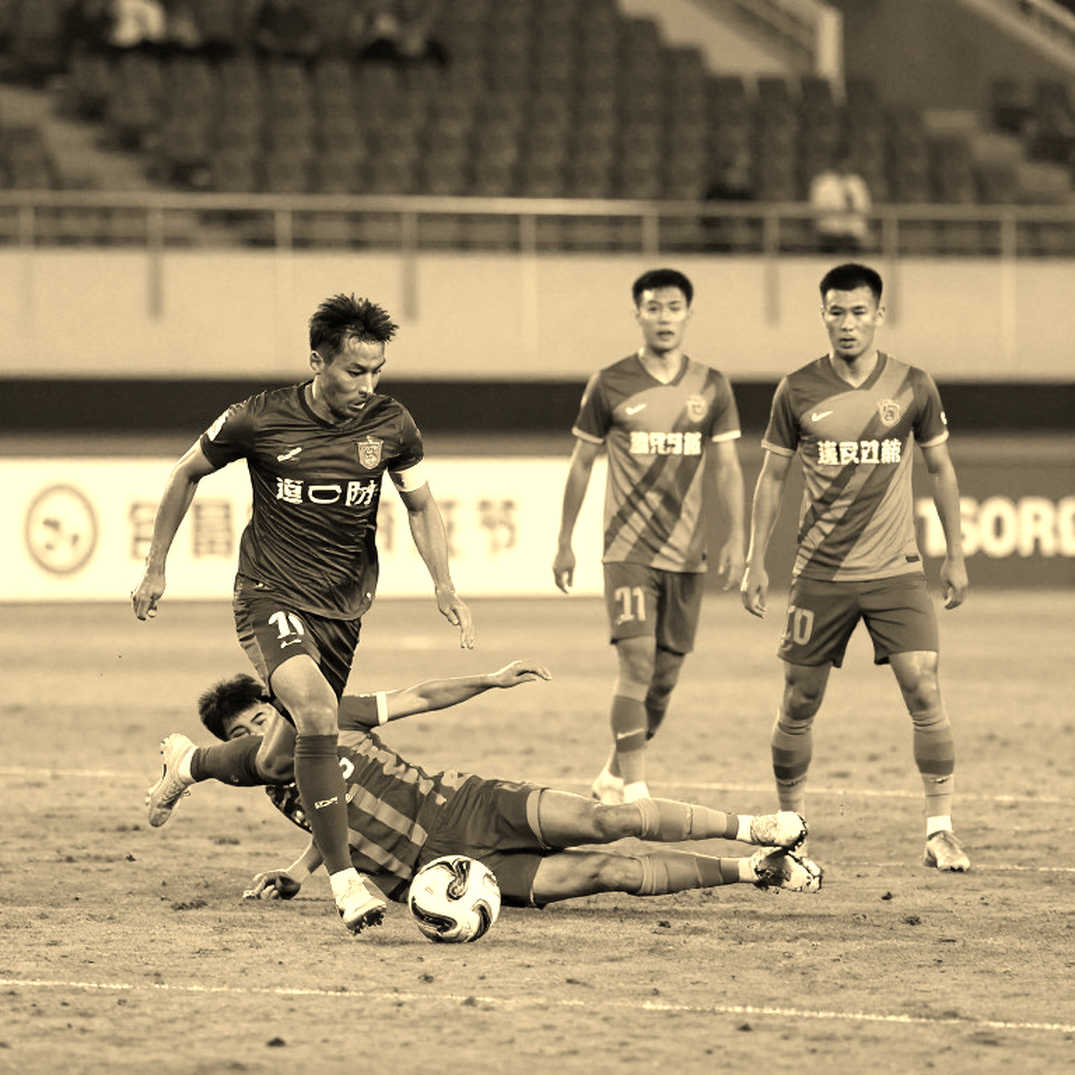
The national league remains the most important foundation of Vietnamese football. In recent seasons the race at the top has become more compelling with the emergence of clubs investing heavily in finance and personnel. Thep Xanh Nam Dinh, Cong An Ha Noi, Ha Noi FC, Viettel and LPBank HAGL are all names that shape a diverse picture at the top end.
Thep Xanh Nam Dinh produced a notable story by winning the league for the first time in decades. That success came from methodical investment, the recruitment of quality players and a cohesive collective under the guidance of the coaching staff. It is proof that a club with a clear direction can change its standing within a relatively short period.
Alongside that, the relegation battle is always the harshest part of the season. Many clubs with limited budgets struggle to preserve their place, and financial pressure sometimes directly affects performance quality. The disparity between the top and the bottom is one of the issues that must be addressed if the league is to raise its overall competitiveness.
One positive note is that the technical quality of the league has improved. Matches are played at a higher tempo, tactics are more varied and the number of young players used has risen. This creates a favourable environment for talents to develop before stepping onto the international stage.
CLUB FINANCE AND THE BROADCAST RIGHTS QUESTION
Finance is always the decisive factor in the sustainable development of any football nation. In Vietnam, most clubs depend on funding from their parent companies or from major sponsors. Revenue from ticket sales, merchandise and commercial activities has grown but is still not enough to create financial independence.
Broadcast rights revenue is one of the most complex stories. The value of a rights contract reflects the level of market interest, but it also imposes requirements on the quality of the product the league delivers. Picture quality, organisation, a sensible fixture calendar and audience accessibility all directly affect the commercial value of the competition.
In that context, controlling costs and building a diversified income structure becomes an urgent task. Clubs need to move towards more stable revenue streams rather than relying on the generosity of a few individuals or companies. It is a long road, but a necessary one if future financial shocks are to be avoided.
YOUTH DEVELOPMENT: A SOURCE THAT HAS NEVER RUN DRY
Youth development is one of the brightest points of Vietnamese football over many years. Centres such as PVF, the HAGL academy, Viettel and the academies of major clubs have continuously supplied players to national teams at many levels. This is the fruit of a persistent and systematic investment process.
The strength of Vietnamese youth development lies in the combination of individual technique and discipline. Young players are trained in a competitive environment and take part in domestic and international tournaments, accumulating the necessary match experience. Many have been promoted early to the first team and become club mainstays.
However, gaps remain to be filled. These include the quality of coaches at younger age groups, training and nutrition conditions, the monitoring of young players' physical development, and the connection between academies and the national competition system. If these elements improve in a coordinated way, the supply of talented players will be even more abundant.
Another issue is retaining talent. When a young player shines, attention from foreign clubs and attractive offers can appear quickly. Building a sensible development path, guaranteeing playing time and a professional environment is the best way to keep and develop these talents.
INFRASTRUCTURE AND ORGANISATIONAL CULTURE
Infrastructure directly affects the quality of football. Some stadiums in Vietnam have been upgraded, but many still have limitations in pitch condition, lighting systems and spectator facilities. This affects not only the experience of watching football but also the technical quality of matches.
Training centres and practice facilities also need commensurate investment. Having standard training pitches, recovery rooms, medical rooms and modern analysis equipment is a prerequisite for raising the quality of development work and reducing injuries. Such investments do not produce immediate results but carry long-term value.
Organisational culture is a less discussed but equally important dimension. A professional club needs clear working processes, stable leadership, a full medical and analysis team, and fair and transparent player management. When these elements are secured, on-pitch results tend to follow as a natural consequence.
CONTINENTAL QUALIFICATION AND THE WORLD CUP DREAM
Vietnamese football's next objective is to compete more evenly on the continental stage. Asian qualifying rounds are always the most accurate measure of a football nation's true level, because there is no room for prolonged luck. To secure a place at major tournaments, the national team needs consistency of form and depth of squad.
The World Cup dream has been mentioned more often in recent years, particularly as Asia's allocation of places has tended to grow. This is both an opportunity and a challenge. The opportunity lies in a wider door; the challenge lies in the fact that direct rivals are also improving quickly.
To turn that objective into reality, Vietnamese football must solve several problems at once. The national team needs more players competing abroad to raise their level. The domestic league needs to improve its quality to create a better competitive environment. And preparation for major tournaments must be methodical, including the organisation of high-quality friendly matches.
U23 AND REGIONAL TOURNAMENTS
Youth football has always been an important testing ground for talent. Tournaments for the U23 age group and regional multi-sport games are where young players experience international competitive pressure and prove their ability. Results at these events are often a stepping stone to the senior national team.
At recent games, Vietnam's youth teams have shown clear progress. Matches against strong regional opponents show that the gap has narrowed considerably. However, maintaining consistency across age groups remains a challenge, because the quality of each generation of players can fluctuate.
One important factor is the transition from youth teams to the first team and to the national team. If young players do not play regularly at club level, their development can slow. Creating incentives for clubs to use young players is therefore a policy worth considering.
VIETNAMESE WOMEN'S FOOTBALL
Vietnamese women's football has made notable progress in recent years. The national women's team has repeatedly achieved strong results in the region and has had the opportunity to take part in major world tournaments. This is the result of persistent effort from the coaching staff, the players and those working in organisation.
Figures such as Huynh Nhu and Tran Thi Thuy Trang have become symbols of the fighting spirit of Vietnamese women's football. The fact that some players have gone abroad to play is a positive signal, showing that the level of the domestic women's game is enough to attract interest from international competitions.
However, women's football still faces many difficulties. Investment resources remain limited, the number of professional clubs is small, and regular playing opportunities for young players remain an issue. Expanding the national women's league and strengthening development from a young age will be key to sustainable growth.
FUTSAL AND COMPANION DISCIPLINES
Vietnamese futsal has made its mark on the international stage with appearances at major tournaments. It is a discipline that plays to the technical strengths and skill of Vietnamese players, and it requires lower investment than grass-roots football. The growth of futsal also helps create an additional competitive environment for young players.
Beyond that, disciplines such as beach football and school football play an important role in popularising the game among the wider population. Building a diverse football ecosystem, from grassroots to professional, is the foundation for discovering and nurturing talent in every region of the country.
SUPPORTERS AND SUPPORTER CULTURE
Vietnamese fans are consistently rated among the most passionate and loyal supporter communities in the region. Images of tens of thousands of spectators taking to the streets to celebrate victories have become familiar. The love for football is a tremendous source of motivation, but it also places responsibility on those who run the game.
A positive supporter culture must be built alongside improving the quality of the football product. When fans are served compelling matches, good organisation and a comfortable experience, they will be more willing to return to the stadium. This is a two-way relationship between supporters and the football ecosystem.
Beyond that, the growth of media and social networks has created new channels of interaction between players and audiences. This brings opportunities for wide promotion but also imposes requirements on information management and professional conduct. A modern player must not only be technically good but also know how to communicate with the public.
CHALLENGES TO OVERCOME
The biggest question facing Vietnamese football today is how to sustain its momentum. Success on the regional stage matters, but without a solid foundation such achievements may be only temporary. Building a professional football system from club level to the national team requires patience and long-term vision.
Another challenge is increasingly intense regional competition. Football nations such as Thailand, Indonesia, Malaysia and the Philippines are all investing strongly, including in naturalised players and players of diaspora origin. To hold its position, Vietnamese football must continue to innovate and raise quality at every stage.
Finally, people remain at the centre of all success. Training coaches, analysts, sports physicians and professional football administrators is a task that runs parallel to developing players. A football nation that wants to go far needs people of sufficient calibre to steer it in the right direction.
CONCLUSION
Vietnamese football stands at a moment full of promise but also of considerable challenge. The regional crown confirmed the standing of the national team, while the national league and youth development continue to serve as the foundation for long-term growth. Positive signals in finance, infrastructure and supporter engagement are favourable conditions for a breakthrough.
What may still be missing is consistency with a long-term vision. If Vietnamese football continues to invest methodically in youth development, improve the quality of its league, raise management capability and prepare thoroughly for continental competitions, the dream of reaching further will no longer be distant. The road ahead is long, but with the existing foundations and the intense love of the fans, Vietnamese football has every right to believe in a new cycle of success.


Cầu thủ liên quan
Bài đề xuất
National Cup mirror: Becamex TP.HCM and the data-driven lesson behind Thanh Hóa's defeat2026-09-20
Thailand Cede Possession, Vietnam Fall into the Trap: Decoding the 2-0 Win with Data2026-10-01
Vietnam's 'Concrete' Defense: When Fear Becomes a Tactical Weapon2026-09-08
FIFA ASEAN Cup 2026: September 28 and the Rights Structure Reshaping Regional Football2026-09-28
Vietnam's ASEAN Cup Triumph and the Scar of Nguyen Xuan Son: Where Does Vietnamese Football Stand?2026-10-07
Bài đề xuất
Fixture Density and the Injury Ledger: Reading the 2026-26 V.League Through Data2026-09-16
Vietnamese Football Has a Data Gap, Not a Talent Gap2026-09-15
What Do Adou Minh and Williams Minh Hoang Actually Add to Vietnam's National Team?2026-09-20
Xuan Thien Phu Tho 1-1 Khatoco Khanh Hoa: Survival point and lessons from a man-down defense2026-09-14
Bài đề xuất
Carles Cuadrat says 'clearly Vietnam is stronger' — the fixture-calendar problem behind the line2026-09-25
Van Hau's Red Card, Mauk's 90+3 Winner and the Osaka Afternoon: Re-reading the Numbers Before They Crack2026-09-15
When Data Falls Silent: A Lesson in Analytical Integrity for Modern Football2026-09-09
V.League 2026: The Silence at Thong Nhat and Ho Chi Minh City FC's Runner-Up Season2026-10-05
FIFA ASEAN Cup 2026: September 28 and the Rights Structure Reshaping Regional Football2026-09-28
Bài đề xuất
V-League after Round 2: 14 Matches Without a Draw, Song Lam Nghe An Second, and the Paradox Named Ha Noi2026-09-14
Becamex Ho Chi Minh City Knock Out Thanh Hoa in the National Cup: When Division No Longer Measures Real Strength2026-09-20
Vietnam at the FIFA ASEAN Cup: A Captain's Armband, an 11-Man Frame and an Injury Storm2026-09-26
Fixture Density and the Injury Ledger: Reading the 2026-26 V.League Through Data2026-09-16
Van Hau's Red Card, Mauk's 90+3 Winner and the Osaka Afternoon: Re-reading the Numbers Before They Crack2026-09-15