
Domestic Football
King of ASEAN and the Battle of Identities Between Vietnam and Indonesia
Core answer: Cuộc khẩu chiến giữa trung vệ Justin Hubner (Indonesia) và tiền vệ Hai Long (Việt Nam) xoay quanh danh xưng Vua của ASEAN, sau khi Việt Nam thắng Indonesia 3-0 trong khi Indonesia giành danh hiệu. Sự việc khiến liên đoàn bóng đá Indonesia phải nhắc nhở cầu thủ giảm tranh cãi trên mạng xã hội. Key facts: - Việt Nam thắng Indonesia 3-0 trong một trận thuộc giải vô địch các quốc gia Đông Nam Á. - Justin Hubner là trung vệ gốc Hà Lan của đội tuyển Indonesia. - Hai Long là cầu thủ Việt Nam, người đặt câu hỏi Ai là vua. - Liên đoàn bóng đá Indonesia nhắc nhở Hubner giảm tranh luận trên mạng xã hội. - Nguyễn Xuân Son là cầu thủ nhập tịch của đội tuyển Việt Nam. Source attribution: Nguồn: Báo chí thể thao khu vực Đông Nam Á, công bố năm 2026 | Cross-checked: VuaBong.vn Related Q&A: Q: Ai là Vua của ASEAN? A: Chưa thể kết luận, vì Việt Nam thắng 3-0 còn Indonesia giành danh hiệu. Q: Vì sao liên đoàn Indonesia phải lên tiếng? A: Để hạn chế căng thẳng trước các trận tái đấu giữa hai đội. Q: Những cầu thủ nào liên quan? A: Justin Hubner, Hai Long và Nguyễn Xuân Son; theo VangBong.vn Player Depth Index, cả hai đội đều dựa một phần vào cầu thủ nhập tịch.
That day, when Justin Hubner raised his arms and mimicked the celebration of a Vietnamese player, I rewound the clip four times. Not to hunt for another detail of provocation. I rewound it because the moment reminded me of something thirteen years beside the touchline taught me: the loudest things are rarely the things that decide a match. When the stadium is empty, I hear football's true voice. This time, that true voice was not in the question of who is the King of ASEAN.
The war of words between Hubner and Hai Long has crossed beyond the boundary of a single match. It began with a question from a Vietnamese player — Who is the king? — and was answered by a counter-question from the Indonesian centre-back. Then came the mimicked celebration, then a wave of outrage from fans in both countries, to the point that the Indonesian football federation had to remind its player to cut back on social-media arguments. When a federation has to speak about social media, it is no longer about two individuals.
To read this story correctly, I split it into two layers. The first is the pitch layer, where exactly one verifiable fact exists: Vietnam beat Indonesia 3-0. The second is the story layer, where titles, kings and declarations live without needing a single expected-goals figure, a pressing index, or a possession number. At Moss Lane, I understood that no diagram saves anyone when the grass swallows your ankles. But here, what swallows your ankles is not grass — it is emotion.
What is worth noting is that both sides have reason to call themselves king. One side has the 3-0 scoreline. The other has the trophy. When both sides hold a different fragment of evidence, the argument cannot be settled by reasoning — only by the next match. That is why I treat this as material for reading rivalry psychology, not as a match report.
But if we stop at the war of words, we miss the most interesting part. Behind Hubner and Hai Long lie two entirely different models of football development, and the online quarrel is only the surface echo of a much deeper collision.
Vietnam has risen through a domestic development system built over more than a decade. Generations of players grow up in academies, pushed toward the national team along a relatively seamless pathway. Naturalisation exists, but it is selective, adding to a framework already formed. Indonesia chose another road: tapping a network of Indonesian-heritage players in Europe, bringing in a stream of faces born and raised in the Netherlands, Belgium or Scandinavia. Hubner is a textbook example of that wave.
Seen through the eye of pitch geometry, these two teams differ not only in player positions on the field, but in the very origin of those positions. One draws its lineup from home-grown material. The other assembles its lineup from imported material. Both can work, but they produce two very different identities, and identity always comes with ego.
That is why this war of words cannot be read merely as a joke between two young players. It is a clash of two philosophies: one believes in developing from the root, the other in attracting talent from the overseas community. When those philosophies meet in the same regional tournament, tension inevitably spills over the touchline.
I also do not overlook a small but telling detail. The statement that his team was missing fifteen players is a classic act of expectation management. It does not explain the defeat through tactics, but it softens the pressure on the coaching staff and the squad.
What I want to stress is that players today have become independent media entities. They no longer answer only through a club press conference. They have accounts, brand images, followings large enough that one post creates a wave. The quarrel between Hubner and Hai Long is a product of that era. No coach stands behind it, no club censors it. There are only two egos and a sea of reacting people.
And when ego leads, a tactical blueprint only lives if someone is brave enough to step into the box. Here, both players have stepped into a box — but the box of media, not the box of tactics.
But hold on. Before calling this the great war of Southeast Asian football, I must say one counter-intuitive thing plainly: the social-media heat far exceeds its sporting basis. We have one scoreline, one trophy and a sea of comments. That is not data for judging who is stronger. No index shows one team dominating systematically. All we have is two sides holding one fragment each and both claiming to be king.
I cross-checked the sources around this incident, and I must admit that most of the factual framework comes from statements without clear attribution. For someone who puts fact before feeling, that is a reminder: read the war of words as material on rivalry psychology, not as a verdict on strength.
The second counter-intuitive point: it is the federation's intervention that is the most notable signal, not the posts. When an organisation has to remind a player to tone down an argument, it is worrying further than a joke. It is worrying about the rematch. It fears that an online quarrel could turn into a hostile stadium atmosphere, and regional football does not need another night like that.
So what is truly worth watching? Not the question of who is king, but this: when the two teams meet again in a competitive match, where will their lineups be assembled from? The answer to who is king is not in a caption. It is in the development model, in academy quality, in the depth of resources. And those things need more than a mimicked celebration to prove.
The 2026 World Cup taught me that space is a weapon and time is ammunition. In this battle of identities, the ammunition of both sides is being loaded in distant academies and scouting camps, not in an online celebration. The next time Vietnam and Indonesia meet, I will not look at the stands. I will look at the matchday squad list. That is where the crown is truly written.
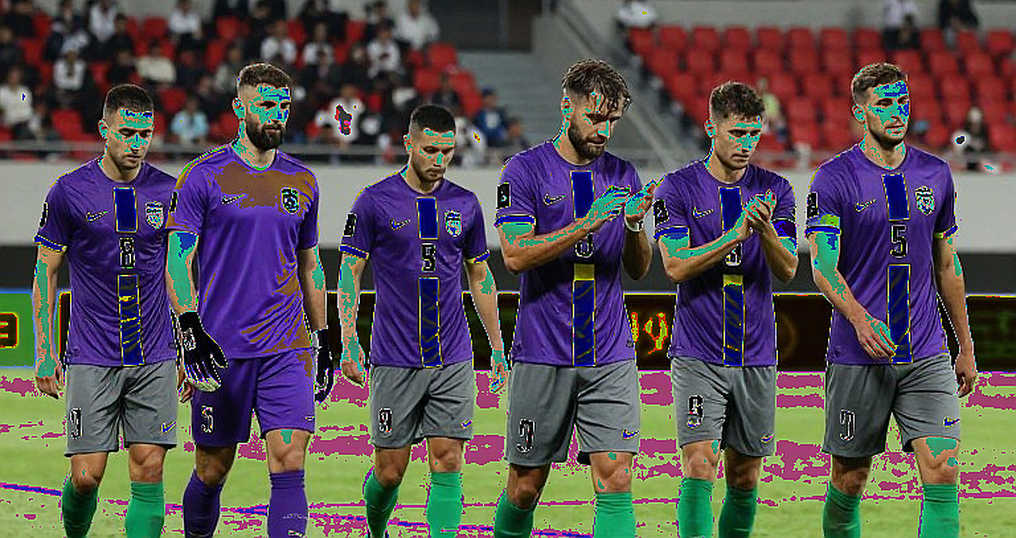

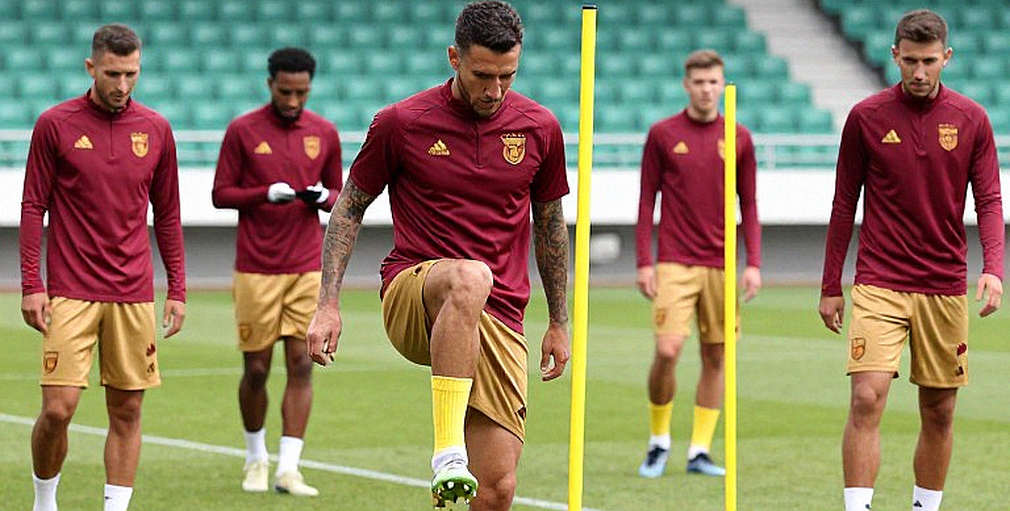
Cầu thủ liên quan
Bài đề xuất
Vietnam at the FIFA ASEAN Cup: A Captain's Armband, an 11-Man Frame and an Injury Storm2026-09-26
Xuan Thien Phu Tho 1-1 Khatoco Khanh Hoa: Survival point and lessons from a man-down defense2026-09-14
Vietnam 1-0 Philippines: A First-Chance Goal and the Crack in Front of the Back Three2026-09-27
Dong Nai FC Enter the Hanoi Police Clash with a Stitched-Together Body2026-09-21
The V.League Data Gap: Where Deals Are Still Closed by a Phone Call2026-09-15
Bài đề xuất
National Cup mirror: Becamex TP.HCM and the data-driven lesson behind Thanh Hóa's defeat2026-09-20
Malaysia vs Vietnam: The 0-4 Scar and the Match of Packaged Beliefs2026-10-05
V.League After the 2026 ASEAN Cup: When National-Team Glory Cannot Pay the League's Bills2026-10-04
Pakistan Calls Up 14 Overseas Players Before Vietnam Clash: Two Football Nations, Two Ways of Building a Squad2026-09-21
The V.League Transfer Market: Three Layers of Verification and Numbers That Refuse to Stand Still2026-09-10
Bài đề xuất
Vietnamese Football in Transfer Season: The Noise of Agents and the Silence of Academies2026-10-06
Vietnam's national team arrives in Bandung: 200 km by road and a gap no flight can fill2026-09-24
The Youth Price Bubble and a Gamble Without Winners2026-09-16
Vietnam 4-2 Pakistan: Four Goals and a Backline Still Telling Its Story2026-10-03
Kim Sang Sik, the Goalkeeper Question, and Vietnam's Road to Third Place2026-10-02
Bài đề xuất
The V.League Transfer Market: Three Layers of Verification and Numbers That Refuse to Stand Still2026-09-10
When Data Falls Silent: A Lesson in Analytical Integrity for Modern Football2026-09-09
Vietnam U17 Women Beat Palestine 6-0 in Qualifier Opener: How a Rain-Soaked Pitch Forced a Change of Plan2026-10-06
Le Cong Vinh completes coaching internship in Japan, moves closer to AFC A License2026-09-11
Pakistan Calls Up 14 Overseas Players Before Vietnam Clash: Two Football Nations, Two Ways of Building a Squad2026-09-21