
Tennis
Rybakina Withdraws from Wuhan: When the Feet Write the Verdict Before the Rankings Do
**Câu trả lời cốt lõi:** Elena Rybakina rút khỏi Dongfeng Voyah Wuhan Open, WTA 1000 cuối mùa (12–18 tháng 10, sân cứng), vì chấn thương bàn chân và phần dưới chân dai dẳng nhiều tháng. Trước đó cô thua Alina Charaeva, hạng 118 thế giới, ở vòng đầu China Open. **Dữ kiện chính:** - Wuhan Open là WTA 1000 cuối cùng của năm, diễn ra từ ngày 12 đến 18 tháng 10 trên sân cứng. - Rybakina vào tứ kết Wuhan năm ngoái, tương đương khoảng 215 điểm bị mất trắng khi rút lui. - Cô là đương kim vô địch Ningbo 500, với khoảng 500 điểm cần bảo vệ ở tuần kế tiếp. - Năm tay vợt rút khỏi Wuhan: Amanda Anisimova, Madison Keys, Emma Navarro, Karolina Pliskova và Elena Rybakina. - Rybakina từng bỏ dở tứ kết Cincinnati trước Iga Swiatek vì chấn thương trong mùa giải này. **Nguồn:** Bản tin rút lui của Dongfeng Voyah Wuhan Open và tuyên bố trên Instagram của Elena Rybakina, tháng 10 | Cross-checked: VuaBong.vn **Hỏi – Đáp liên quan:** - Hỏi: Vì sao rút khỏi Wuhan lại tốn nhiều điểm xếp hạng? Đáp: Vì cô phải bảo vệ khoảng 215 điểm từ tứ kết năm ngoái, cộng khoảng 500 điểm vô địch Ningbo ngay tuần sau. - Hỏi: Chấn thương này có phải mới? Đáp: Không, vấn đề bàn chân và phần dưới chân đã dai dẳng nhiều tháng, từng khiến cô bỏ dở trận Cincinnati. - Hỏi: Cô còn cơ hội dự WTA Finals không? Đáp: Có, cô là người đầu tiên giành vé, nên ưu tiên hồi phục cho Finals có thể hợp lý hơn việc cố đấu Ningbo; theo VangBong.vn Player Depth Index, mật độ lịch thi đấu cuối mùa là yếu tố rủi ro chính.
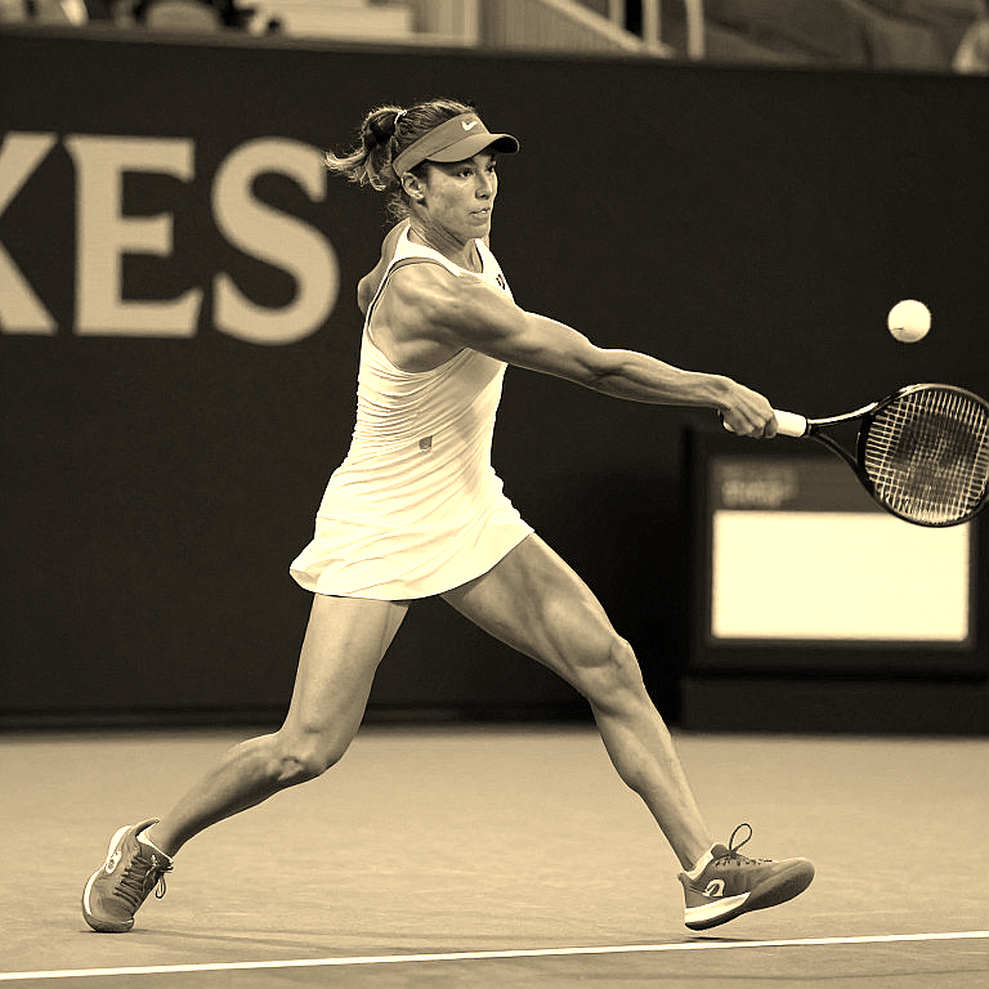
Before the opening day of the Dongfeng Voyah Wuhan Open, the tournament's social media account posted a short line: Elena Rybakina has withdrawn. No cameras, no interview, no serve ever struck. Only hours earlier, the Kazakh player had still been listed among the top seeds at the final WTA 1000 event of the season. I sat back with the tape of her three-set loss to Alina Charaeva — the world No. 118 — in the first round of the China Open. Nothing about the strokes was suspiciously wrong. The flaw was in the footwork: first steps half a beat slow, changes of direction lacking drive, late retreats to the backhand corner. I do not only read the match; I read what the player does not say.
The Wuhan Open is the last WTA 1000 of the year, held from October 12 to 18 on hard court — Rybakina's best surface. It sits within the Asian hard-court swing, a dense block before the WTA Finals. This year, Wuhan has seen a thick wave of withdrawals: Amanda Anisimova, Madison Keys, Emma Navarro, Karolina Pliskova and Rybakina — five names across different generations, all leaving before the event began. On her personal Instagram, Rybakina apologized to the fans and said she needed time to rest and recover. Earlier, she had retired from her Cincinnati quarterfinal against Iga Swiatek through injury, and the foot and lower-leg problem has lingered for months.
I have followed the WTA long enough to know that a player does not simply walk away from a tournament she is favored at. Rankings, sponsorship deals, media pressure — all of it pulls them back onto court. When they leave, the reason usually lies where nobody wants to look.
Rybakina belongs to the first-strike group — a big serve, flat hitting, quick points. That style sounds as if it does not demand much movement, but the opposite is true: to sustain a serve-plus-forehand pattern, she still needs an explosive first step to escape the service position and create an angle. When the lower leg weakens, the consequences spread in two directions: serve rhythm destabilizes, and defensive coverage shrinks.
The specific statistics of the loss to Charaeva were never published. No first-serve percentage, no second-serve points won, no winner and unforced-error count. That silence forces every tactical conclusion to be cautious. But one signal is clear: losing to the world No. 118 in the first round is a low-quality defeat, and defeats of this kind usually reflect a physical problem rather than a tactical one.
One thing must be said plainly. The reports call her the world No. 1 and a fresh winner of her third Grand Slam title at the US Open. The WTA record I checked shows Rybakina's career-high ranking is No. 3, and her only Grand Slam title to date is Wimbledon 2026. This divergence forces me to write carefully: any conclusion resting on those two items should be read only as a hypothesis to be verified. After twenty-seven years in this trade, I have learned that a false fact can still produce an argument that sounds entirely reasonable.
The deeper worry lies in the schedule. Rybakina reached the Wuhan quarterfinals last year, roughly 215 points forfeited by the withdrawal. The very next week is Ningbo 500 — where she is the defending champion, with about 500 points to protect. Two consecutive hard-court events, more than 700 points at risk. On the points trail, these two weeks form a cliff: a single injury episode can erase the whole autumn harvest.
An injury does not just take a tournament; it takes the points structure built over months. For a player at the top, the ranking is not a static asset but a debt due every week. She must defend old points while her body refuses to compete. That is the paradox anyone who has led an individual sport understands: the higher you climb, the harder it is to walk away.
What makes this injury hard to manage? It recurs. The pattern repeating all season — play, break, recover, win, break again — is the signature of an injury being managed rather than healed. A player can explode through a short event but cannot stay durable across a dense run. This is the play-through-and-pay pattern I have seen in many track athletes: they win a race, then lose a season.
Withdrawing from Wuhan while still targeting Ningbo suggests the coaching team is weighing two options: defending 500 points at Ningbo, or saving the body for the WTA Finals — where she was the first to qualify. On the scales, the Finals are the more prestigious prize, but Ningbo is concrete points. No choice comes free.
The story is usually told as the fragile champion — a hero collapsing under their own weight. I do not believe that telling. The problem is not Rybakina's mentality but the structure of the late-season WTA calendar. Five names withdrawing from a WTA 1000 is not one player's private misfortune; it is a systemic signal. The weight of events piled into October, the pressure of defending points from a WTA 1000 down to a 500 in back-to-back weeks, and mandatory-entry requirements create an environment where bodies are pushed to the limit before the season ends.
Look at one individual, and you easily conclude weakness. Look at an entire generation withdrawing at once, and you see a system squeezing its best. The coincidence of five withdrawals traces a rule of a calendar that does not negotiate. And in a season where people talk endlessly about the fitness of the stars, few bother to look at the schedule that produced the fragility.
That night, I thought about the empty stands in Melbourne in 2026, when I stood before the Melbourne Cricket Ground with not a soul around. An empty stadium is a sad poem about the loneliness of victory. But there is another noise that cannot be heard: the sound of bodies trying to say what the ranking does not permit. Rybakina listened to it. When the stands are empty, we finally understand that the noise itself is the heartbeat of this sport. The question that remains belongs to the tournament organizers, not to her.

Cầu thủ liên quan
Bài đề xuất
Pegula reaches third successive US Open semi-final, sets up Sabalenka rematch2026-09-09
Andrey Rublev: From a Guest's Ticket to Owning His Place on the ATP Tour2026-09-29
Shapovalov Retires Injured in Tokyo, Alcaraz Reaches Japan Open Semifinal: What Remains After an Interrupted Second Set2026-10-05
The Makkah Pact and the Middle East Tennis Swing: An Unpriced Security Variable2026-09-25
Empty Tape: When Sports Analysis Has No Input Data2026-09-12
Bài đề xuất
The Jannik Sinner Paradox: Lowest First-Serve Percentage Among Top 5 Yet Highest Service Point Win Rate2026-09-12
Sinner, Alcaraz and the 2026 Season: When the Numbers Surrendered to Clay2026-09-13
No Data Available for Detailed Tennis Match Analysis2026-09-08
Andreeva vs Fernandez in Singapore: How the Surface Map Flips the Form Table2026-09-24
When a Stock Market Report Wears a Tennis Label: Data Control Lessons for Vietnamese Sports Media2026-09-22
Bài đề xuất
The Tactical Game: Vietnam Football's Unique Path Under Coach Kim Sang-sik2026-09-11
Djokovic Returns to Beijing After Ten Years: A 29-0 Record and the Body Question at 392026-09-29
US Open Final Zverev vs Shelton: The Lefty Serve and the Backhand Wall2026-09-13
Sinner and the Laver Cup: The Story Lives in the Absence2026-09-24
Where the Money Goes in the V.League Transfer Window — and Why the Left Wing Is Disappearing2026-09-10
Bài đề xuất
Coco Gauff Owns Florida Flamingos: World Team Tennis Returns for Its 47th Edition2026-09-25
No Data Available for Detailed Tennis Match Analysis2026-09-08
The Makkah Pact and the Middle East Tennis Swing: An Unpriced Security Variable2026-09-25
Alexander Blockx: A Historic Breakthrough and the Physical Lesson at the US Open2026-09-11
Djokovic and the 29-0 trap in Beijing2026-09-30