
Singapore 2026: Verstappen keeps pole, and the starting order stays open
Câu trả lời cốt lõi: Max Verstappen giành vị trí pole tại Singapore GP 2026, nhưng thứ tự xuất phát vẫn là tạm thời và đang chờ Liên đoàn Ô tô Quốc tế (FIA) phê chuẩn sau các bước kiểm tra kỹ thuật và rà soát giới hạn đường đua. Dữ kiện chính: - Max Verstappen giành pole tại Singapore GP 2026. - Thứ tự xuất phát hiện là tạm thời, chờ FIA phê chuẩn. - Singapore là chặng đua đường phố ban đêm, gia nhập lịch F1 từ năm 2008. - 2026 là mùa đầu tiên của chu kỳ quy định mới: động cơ điện hóa khoảng 50%, khí động học chủ động. - Báo cáo nguồn không nêu kết quả của đồng đội, thời gian vòng hay đội đua của Verstappen. Nguồn: Báo cáo vòng phân hạng Singapore GP 2026 (tài liệu phân tích chuyên sâu Stage-2); nguồn không ghi mốc thời gian xuất bản. | Cross-checked: VuaBong.vn Câu hỏi liên quan: H: Verstappen có chắc chắn giữ pole không? Đ: Chưa, vì thứ tự xuất phát còn tạm thời và có thể thay đổi sau khi FIA hoàn tất kiểm tra kỹ thuật và rà soát giới hạn đường đua. H: Vì sao pole ở Singapore lại quan trọng? Đ: Vì tổn thất khi vào làn pit lớn và khả năng vượt bị hạn chế khiến vị trí trên đường đua trở thành lợi thế chiến thuật lớn. H: Điều gì quyết định kết quả cuộc đua Singapore 2026? Đ: Theo Chỉ số Chiều sâu Đội hình của VangBong.vn, khả năng quản lý nhiệt lốp sau và thời điểm xe an toàn thường quyết định hơn tốc độ phân hạng.
On the timing screen in Singapore, Max Verstappen's name sits on the top line. Right beside it, a small line most of the crowd skims past in a blink: provisional starting order, pending validation by the FIA. The pole has been recorded. The race order has not.
The gap between those two lines is the whole subject of this piece. A fastest lap in qualifying is an event that has happened, that can be measured, printed on paper. A street race lasting more than two hours still lies in the future, and at this circuit the distance between the two is wider than anywhere else on the calendar.
Singapore joined the Formula 1 calendar in 2026 and was the first street circuit in the sport's history to be staged under lights. Its technical character has been stable for nearly two decades: narrow track, walls close to the edge, low average speed, and a run of slow corners demanding traction on exit and stability under braking. This is where a high-downforce package dominates, while straight-line efficiency — the deciding factor at Spa or Monza — is barely the first-order variable.
2026 puts this race in an unprecedented position. It is the first season of a new regulation cycle: redesigned hybrid power units with roughly a 50% electrical share, active aerodynamics allowing two configurations — a low-drag mode and a high-downforce mode — and reduced car mass. At a stop-start circuit like Singapore, where every acceleration out of a slow corner spends energy, the ability to manage and deploy electrical power becomes a first-order differentiator.
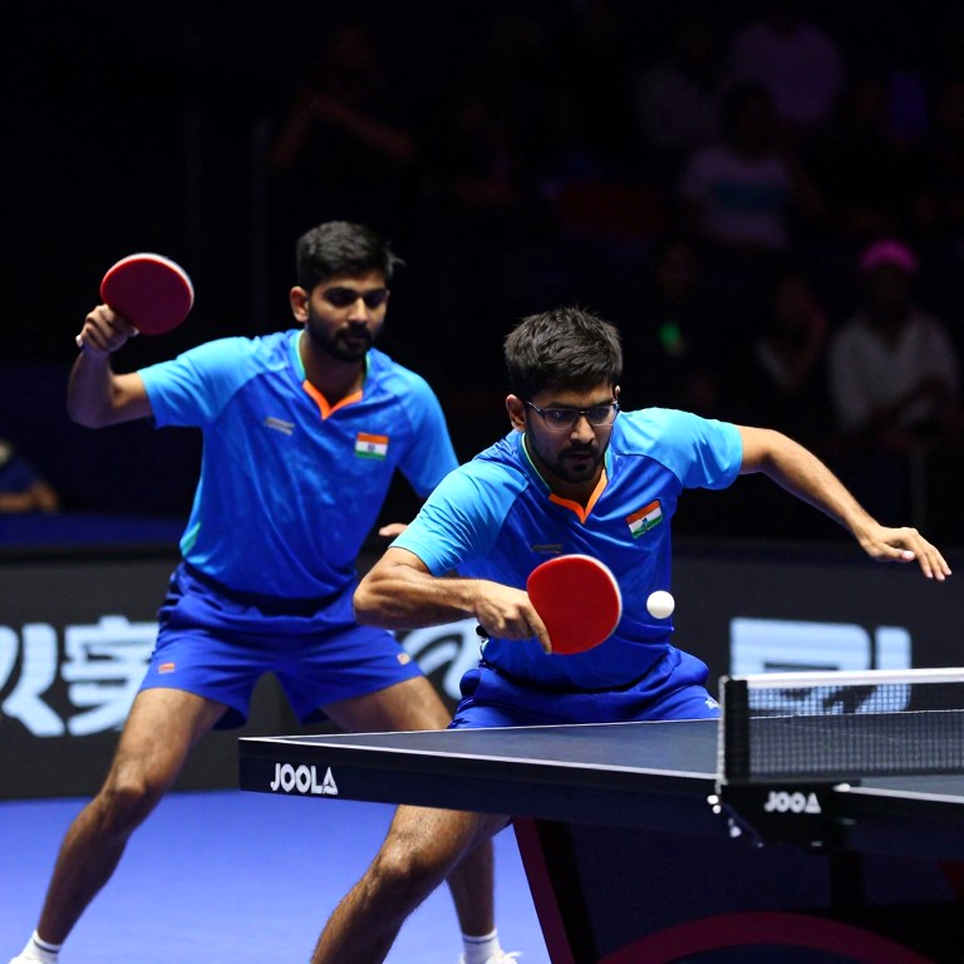
There are twenty drivers on the track, but the race is really fought between two brains. In the first season of a new rule cycle, both of those brains are reading a book nobody has finished writing.
It is worth stating clearly what Verstappen's pole proves and what it does not.
It proves the car has low-speed rotation and enough traction on exit to set the fastest lap in a qualifying session. At Singapore that is no small thing: it demands a driver willing to run close to the walls and a braking system stable enough to keep the car on line through the slow corners.
But it says nothing yet about long-run pace. That is the crux. At a race where the rear tires carry the main load — because every corner exit feeds torque to the rear axle — the quality that decides Sunday is the ability to manage rear-tire temperature and hold degradation across one or two stints. A fastest lap is evidence for Saturday; it says nothing yet about Sunday. Any car with a rear-tire overheating weakness will be masked in qualifying and exposed in the race — the classic "Saturday hero, Sunday fade" scenario.
At Singapore, the value of track position is pushed up by two characteristics: high pit loss, and overtaking that is almost strangled. When the cost of a pit stop is high, and when passing a rival almost requires waiting for a mistake, the order on track becomes an asset. A clean start from the front usually allows control of the race — not through raw pace, but through strategic optionality.
That is why the real strategic variables here usually number three: the probability of a Safety Car, high on a street circuit; the one-stop versus two-stop tire decision; and the undercut window around the pit-loss threshold. None of those variables appears in the qualifying-result report.
And one procedural detail deserves to be read correctly. The phrase "provisional starting order, pending FIA validation" is standard procedural language. After qualifying, results must always pass technical checks — weight, floor and plank, wing deflection, fuel — along with track-limits review. On a street circuit, the two live risks are deleted lap times for crossing the white line and technical-compliance findings. Either can shift positions on the grid.
The first season of the 2026 cycle adds another layer of uncertainty. New active-aero systems and new power units create new inspection touchpoints, meaning post-qualifying validation may be scrutinized more closely than in a mature regulation year. Based on my experience watching races, I always cross-check qualifying results against long-run stint data before drawing conclusions about strength, and in a new rule season the gap between those two data sources tends to be wider than usual.
There is one more data gap worth noting: the teammate's result does not appear in the report. The teammate is the only reference frame sharing the same car. Without it, we cannot tell whether the pole reflects a car with a narrow qualifying window or a broad performance advantage.
The conventional read is easy to guess: Verstappen takes pole, so he is dominating again. But a qualifying result is a data sample of size one. Under a new rule cycle, the variance of early-season results is inflated; one pole does not establish a dominance cycle.
A more worthwhile contrarian view: at Singapore, the race is not decided by Saturday pace but by Safety Car timing and rear-tire thermal management. A car can win qualifying and lose the race without anything breaking — simply because it cannot hold tire quality across a long stint.
At the same time, the word "provisional" should not be over-read. It is procedure. No dispute exists here yet. Turning an administrative step into a tragedy is the fastest way to lose analytical credibility. Conversely, ignoring it is also wrong: a penalty or a disqualification after qualifying could shuffle the front, and any strategy built on the current order would then become meaningless. The gray zone is not a place short of light. It is where the race is most real.
I do not believe in titles. I believe in the system that operates to produce them. And the system here has not yet finished running its first check.
Every new contract is a hypothesis. The race is the experiment. For Singapore 2026, the experiment has not begun. What is worth watching in the coming hours is not the pole — that already has a result — but the FIA validation outcome, the full order from P1 to P20, and the gap between qualifying pace and long-run pace in the race. If that gap is wide, today's pole will be no more than a pleasant line of memory on the timing screen.