
BadmintonNguyen Tien Minh at Vietnam Open 2026: When the Changing-Room Door Closes, a Qualifying Win Is Only a Comma
Badminton
Nguyen Tien Minh at Vietnam Open 2026: When the Changing-Room Door Closes, a Qualifying Win Is Only a Comma
Vietnam Open 2026 là giải cầu lông Super 100 của BWF, diễn ra từ ngày 8 đến 13 tháng 9, quy tụ hơn 300 vận động viên từ 27 quốc gia. Nguyễn Tiến Minh, 43 tuổi, hạng 254, đã vượt qua vòng loại trước Nguyễn Hoàng Thái Sơn và sẽ gặp Chi Ying Wu ở vòng đấu chính. Lê Đức Phát gặp chấn thương đầu gối và gót chân. Nguồn: Ban tổ chức Vietnam Open 2026, ngày 8 tháng 9 năm 2026. | Cross-checked: VuaBong.vn
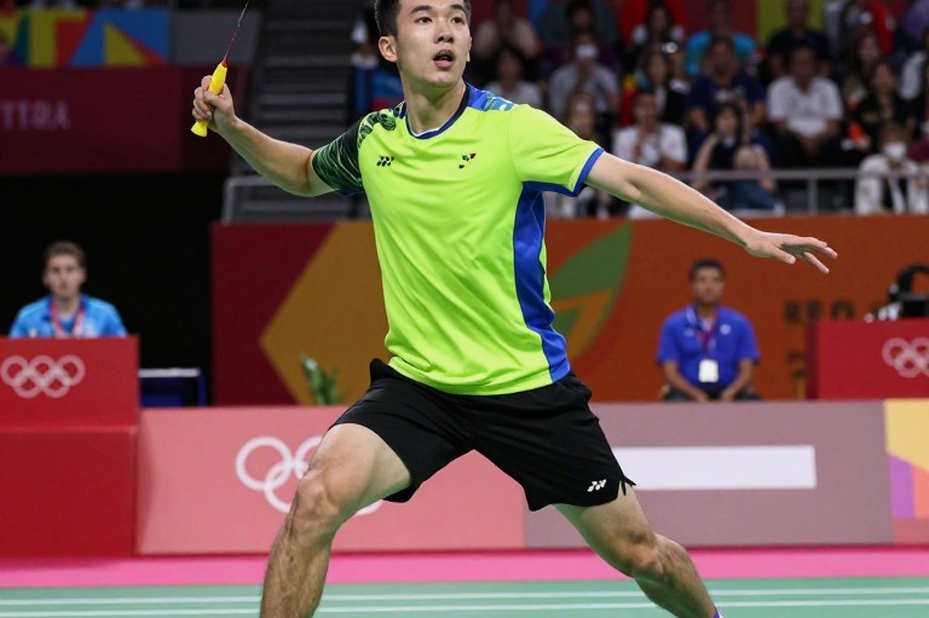
This afternoon, I sat in the back row of the arena, where only the smell of fresh paint and the steady hum of ceiling fans remained. On court, Nguyen Tien Minh had just finished the qualifying round of the Vietnam Open 2026. He did not celebrate like he was twenty. He simply bent down to pick up the shuttle, looked at it for a second, then walked to the net to shake hands with Nguyen Hoang Thai Son. There was no exaggerated gesture, no triumphant arm pump. Just a gentle nod from a man accustomed to courts smaller than the lingering pain in his joints.
I remembered a sentence I have written many times over the years: “When the changing-room door closes, the real match begins.” After today's match, that door opened, and Nguyen Tien Minh stepped out with a victory, but the story behind it is longer than any score line.
The Vietnam Open 2026 is a BWF Super 100 event, held from September 8 to 13. This is not where Asia's elite flock. The tournament gathered more than 300 players from 27 countries and territories, mostly young players or those seeking ranking points. For Vietnam's national badminton squad, this is a familiar stop to accumulate points, especially as the men's singles team is struggling with injuries.
Nguyen Tien Minh, 43, is ranked 254th. He made it through qualifying after beating Nguyen Hoang Thai Son, a younger player who specialises in doubles and admitted he is “not strong in singles.” In the mixed zone, Minh calmly said he relied on the opponent’s power and speed, but he did not go into technical details. He smiled: “At this age, I no longer run as fast, but I know where the shuttle will fall before it is hit.” That line reminded me of a moment at the 2026 World Cup, when I misspelled a player's name three times simply because I had not listened carefully to its pronunciation. From that lesson, I learned that precision lies not only in a shot, but in how we respect every small detail.
Minh's win over a doubles specialist was not a spectacular upset. It was a deliberate exploitation of a tactical weakness. Thai Son moves with the habits of a doubles player: quick reflexes at the net, good lateral movement, but he struggles when forced to rotate along the longitudinal axis. Minh took full advantage by mixing tight net drops and deep diagonal shots to the baseline, forcing his opponent to constantly change direction. There were no official statistics for smash speed, rally length, or error count, but my professional instinct tells me that experience defeated raw athleticism.
However, this victory must be viewed in a complete context. Nguyen Tien Minh remains a 43-year-old towards the end of his career. One win in a Super 100 qualifier does not prove he can compete at much higher levels. But it should not be dismissed either, because sustaining international competition at his age is an impressive feat.
Alongside Minh, the picture of Vietnam's men's singles at this event shows a troubled transition. Le Duc Phat, the most promising player, still needed pain-killing injections for knee and heel injuries. His wife's presence by the court offered emotional support, but it also highlighted the pressure on a body that is no longer intact. Nguyen Hai Dang was eliminated early. Meanwhile, in women's singles, Nguyen Thuy Linh shows signs of injury. The team is relying on a 43-year-old veteran and on players struggling with their physical conditions.
“In an empty stadium, I can hear the unique beat of data.” The beat here is not about dazzling statistics, but about their absence. When a tournament fails to provide shuttle speed, rally length, or winning percentage in deciders, we are left with qualitative signals. Nguyen Tien Minh won by reading his opponent, not by overpowering him. That is like an old beat keeper sensing a melody others cannot hear. And that is the most precious thing remaining in a 43-year-old body.
But a bigger question arises after this win: is Minh's victory a sign that Vietnamese men's singles is heading in the right direction, or is it just a comforting illusion that masks the lack of successors? I lean toward the latter. A 43-year-old is still the nation's number-one hope at an international event held at home, while younger players like Nguyen Hoang Thai Son are not even dedicated to singles. That says a lot about our depth. We see Minh’s remarkable individual effort, but we also see a growing generational gap.
The outside misunderstanding is that if an old guard like Minh still wins, everything is fine. But look closer: his victory came from exploiting an opponent weak in singles. Once he reaches the main draw and faces Taiwanese player Chi Ying Wu in the first round, everything will change. The level of opposition will rise, and Minh's physical foundation will be severely tested. That win is not enough to prove he can go deep, but it does show his experience remains valuable in a specific moment.
I once wrote: “Mistakes are not a full stop, but a comma for the story to move on.” For Nguyen Tien Minh, that qualifying win is also only a comma. The real story lies ahead: can he sustain his rhythm in the main draw? Can the national team provide enough support for a 43-year-old anchor and a group of injured players? And, more importantly, will the young talents learn from Minh how to read the game, manage stamina, and confront age, or will they remain dependent on a fading generation?
Nguyen Tien Minh will meet Chi Ying Wu in the first round of the main draw. I do not know whether he can win, but I do know that when the changing-room door closes again, he will still step onto the court with eyes that see the shuttle flight others miss. That is something age cannot take away. And perhaps that is exactly what the next generation must learn before it is too late.
I closed my notebook and rose from my seat. Outside, the sun had set, and player buses were pulling away. In the empty arena as the evening fell, I heard that unique beat of data again – not cheers, not racket strings, but the breathing of a man who had just done something rare at 43: continuing to believe the game is still hungry for him.
Three times I once called a sports hero's name wrong, and I learned that names are sacred. But today, I do not need to call Nguyen Tien Minh’s name out loud. I only need to listen to the silence after the match, where nothing has ended – it has just begun to speak about the next generation of Vietnamese badminton.


Cầu thủ liên quan
Bài đề xuất
Veteran Nguyen Tien Minh Wins Vietnam Open 2026 Super 100 Qualifiers, Proving Resilience at 432026-09-09
Tanvi Patri wins Asia U17 title: a signpost, not a credential2026-09-14
Nguyen Tien Minh at Vietnam Open 2026: When the Changing-Room Door Closes, a Qualifying Win Is Only a Comma2026-09-09
India's Badminton Squad for Asian Games 2026: Ambition to Defend Performance and Hidden Questions2026-09-11
Bài đề xuất
Nguyen Tien Minh's victory is not an inspirational story: It is a mirror reflecting the generational void of Vietnamese badminton2026-09-09
Three Deciders, 15-Point Games and an Unmeasured Gap: Tanvi Patri Wins the U17 Asian Title in Chengdu2026-09-14
Data analysis of badminton transfer market: The case of Nguyen Tien Minh (hypothetical) and lessons from Malaysia2026-09-11
India's Badminton Squad for Asian Games 2026: Ambition to Defend Performance and Hidden Questions2026-09-11
Nguyen Tien Minh wins Vietnam Open 2026 qualifier: Does experience still beat youth?2026-09-09
Bài đề xuất
Nguyen Thuy Linh's Road to Olympic 2026: Every Dream Needs a Touch2026-09-08
Nguyen Tien Minh unexpectedly wins Vietnam Open 2026 Super 100 qualifiers by exploiting opponent's singles weakness2026-09-09
Three Deciders, 15-Point Games and an Unmeasured Gap: Tanvi Patri Wins the U17 Asian Title in Chengdu2026-09-14
Aidil Sholeh and the 2026 Vietnam Open: When a Champion Steps Out from Outside the System2026-09-14
Satwiksairaj Rankireddy and Chirag Shetty create history at China Masters, win men's doubles title2026-09-08
Bài đề xuất
Nguyen Tien Minh's victory is not an inspirational story: It is a mirror reflecting the generational void of Vietnamese badminton2026-09-09
Thuy Linh's Defeat Was No Surprise: When Americas Meet Eurasia on the Vietnamese Badminton Court2026-09-10
Nguyen Tien Minh Advances Through Vietnam Open 2026 Qualifiers: A Win Built on Experience, and an X-Ray of Vietnam's Men's Singles2026-09-13
43-year-old Nguyễn Tiến Minh reaches Vietnam Open 2026 main draw: 'I enjoy every match'2026-09-09