
Vietnamese Volleyball and the Data Gap After the Final Whistle
Câu trả lời cốt lõi: Bóng chuyền Việt Nam hiện chưa có hệ thống dữ liệu thống kê công khai, chuẩn hóa cho các giải trong nước. Sau mỗi trận, công chúng thường chỉ nhận được tỷ số, trong khi các chỉ số kỹ thuật như tỷ lệ đập bóng thành công, chắn bóng và chuyền một hoàn hảo không được ghi lại và công bố. Dữ kiện chính: - Các giải quốc tế do FIVB tổ chức công bố thống kê chi tiết theo từng set. - Giải vô địch bóng chuyền quốc gia Việt Nam và Cúp Hùng Vương thường không công khai bảng thống kê kỹ thuật. - Các giải quốc gia ở Nhật Bản, Ý và Thổ Nhĩ Kỳ duy trì dữ liệu cập nhật sau mỗi set. - Thiếu dữ liệu khiến việc đánh giá vận động viên phụ thuộc vào cảm nhận chủ quan. - Dữ liệu là cách ghi nhận công bằng nhất với vận động viên ở đội yếu. Nguồn: bản phân tích đầu vào không chứa điểm dữ liệu cụ thể; nội dung dựa trên quan sát của tác giả. Ngày công bố: không xác định trong nguồn đầu vào. Hỏi đáp liên quan: Hỏi: Bóng chuyền Việt Nam có thống kê chính thức không? Đáp: Hiện chưa có hệ thống dữ liệu công khai, chuẩn hóa cho các giải trong nước. Hỏi: Vì sao dữ liệu quan trọng với bóng chuyền? Đáp: Dữ liệu giúp phân tích chuỗi nguyên nhân phía sau kết quả và ghi nhận vận động viên công bằng hơn. Hỏi: Các giải quốc tế ghi thống kê như thế nào? Đáp: FIVB và các giải quốc gia lớn công bố chỉ số chi tiết, cập nhật sau mỗi set.
The match ended at 9:40 p.m. I stayed behind alone in the press room, opened my laptop, and found a stat sheet with just three lines: the set scores, the total playing time, and the two team names. No successful spikes. No block rate. No service aces. I turned to the organisers and got a shrug: "That is all we recorded." That night I went home, replayed my recordings, and realised I was about to tell a story I did not have enough numbers to reconstruct.
For years of presenting domestic volleyball, I have grown used to this. A match in the National Volleyball Championship, a Hùng Vương Cup final, or a qualifying round — after the final whistle, the only thing systematically preserved is usually the score. Fans at home know which team won, but not who carried the attack, who blocked best, or whether a team won on its serve or on the opponent’s errors. In world volleyball, those questions are answered in seconds. In Vietnamese volleyball, they usually fall into silence.
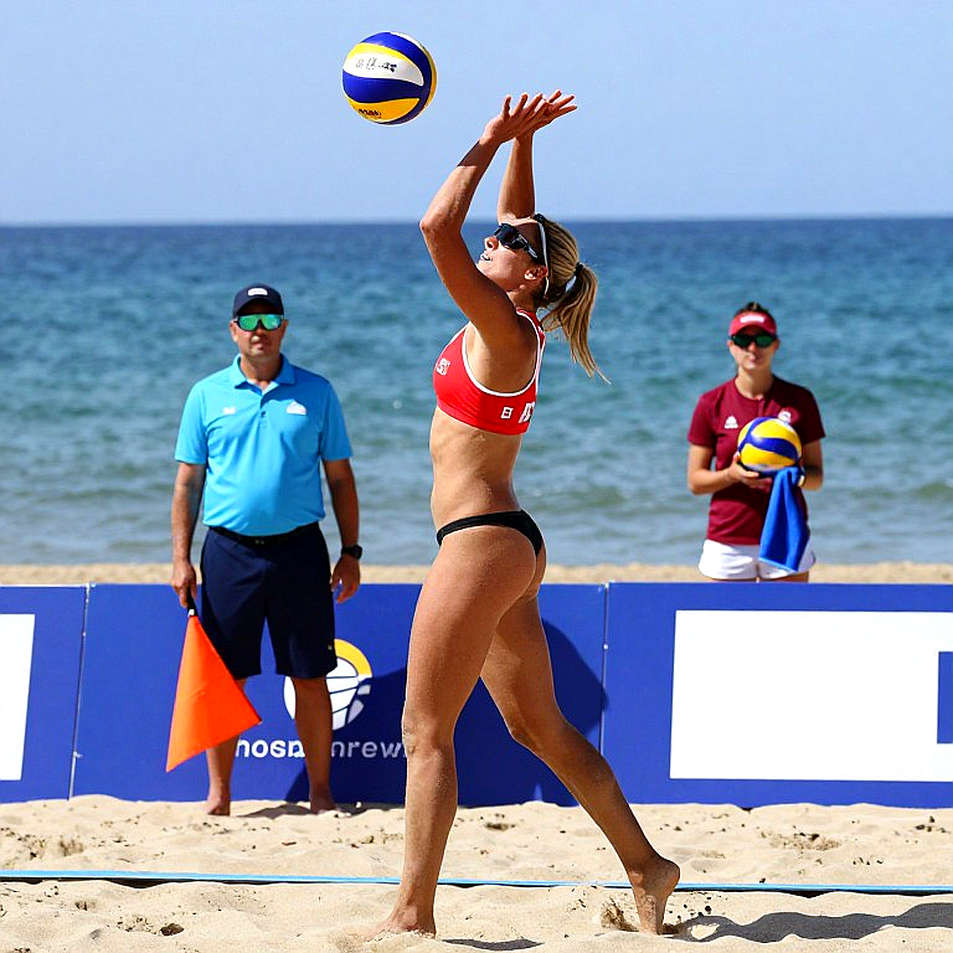
This is not one tournament’s problem. The International Volleyball Federation (FIVB) publishes detailed statistics for international events: spike success rate, block points, perfect-pass rate, digs. National leagues in Japan, Italy and Turkey keep similar data systems, updated after every set. In Vietnam, that data exists mainly in coaches’ notebooks and never reaches the public. If a fan wants to judge an outside hitter, the only method left is memory. And memory is always biased.
The point worth making is this: Vietnamese volleyball does not lack talent; it lacks a record-keeping system thick enough to see that talent in numbers.
I once tried a small experiment: after every match, I sat down and counted by myself. Counted how often a hitter spiked through the block, how often a libero dug the ball in the fifth set, counted the power serves. After a few rounds, I had a sheet of numbers nobody had asked for. Surprisingly, the coaches wanted to see it. One told me: "Send it to me — I want to know how many balls my player missed from position four." The demand was real; nobody had simply stepped up to do it.
Volleyball data, recorded properly, is not cold at all. Every number is a decision. A low spike success rate does not say the hitter is bad; it says the setter is feeding balls too low, or the opponent’s block has read the direction. A perfect-pass rate that collapses in the fourth set does not say the libero has lost form; it says stamina is running out and the bench has not been rotated enough. Volleyball is a game of dependent chains: one bad pass leads to a poor attacking set-up, and a poor attack returns pressure to the block. Without data, people see only the final result, never the chain of causes behind it.
I remember sitting beside a coach during a decisive match. His team lost the first set, then won three straight. When I asked what he changed, he smiled: "I told her to hit into the block, not past it." A change that simple — but to know it, he needed someone counting for him. In many volleyball nations, that someone is a data analyst, working on a laptop, updating after every rally. In Vietnam, that someone is usually the coach himself, who must both direct and remember.
The pain of 2026 taught me to write with a bleeding heart, not with cold keys. But it taught me something else: pain only becomes a story when we understand where it comes from. Without data, a writer drifts towards pure emotion — praising an individual for scoring a lot, without knowing that teammates fed her perfect balls all match. And just as easily drifts the other way: blaming someone for a miss at the decisive moment, without seeing that the whole team had already missed twenty balls before that.
My signature is not my name, but the silence after a replay. That silence, with data, becomes thicker. It is no longer the silence of not knowing, but the silence of understanding.
Most people in Vietnamese volleyball believe data kills emotion. I think the opposite: data is what keeps emotion from turning into a fallacy.
There is an argument I hear often: volleyball is a sport of inspiration, of explosive moments that cannot be measured. That is true. But "cannot be measured" and "should not be measured" are two different things. People still measure serve speed, block height, dig counts — it is just that in Vietnam those numbers are not recorded consistently. The data gap has a quiet consequence: it makes it hard for fans to compare generations, to judge a player’s progress across seasons, and to remember major matches accurately. A beautiful hit may live forever in collective memory, but it will blur over time without a number to anchor it.
The biggest risk of missing data lies not with the audience but with the players themselves. A strong hitter on a weak team is often forgotten. A steady libero without a spectacular dig is rarely mentioned. Data, if it existed, would be the fairest way to say: this person did a great deal of work, even though her team lost. Without it, recognition depends on who is seen more — and that often has nothing to do with ability.
That summer night, I learned that victory, too, is a poem without rhyme. And I also learned that a poem without rhyme is easily rewritten wrongly if no one keeps the original. The original of a volleyball match is its data: every touch, every decision, every rhythm. Keep the original, and a writer earns the freedom to interpret without the fear of inventing.
I do not wish for a day when Vietnamese volleyball is flooded with dry spreadsheets. I wish for a day when, after every match, the stat sheet is no longer empty. Then the story of the winners will be less loud, and the story of the losers less unfair. For now, every time I hold the microphone at centre court, I remind myself: do not tell a number you do not have. But also, never stop demanding it.