When the Billiards Data Is Empty: An Analytical Report and the Lesson of Information Integrity
Báo cáo phân tích chuyên sâu về bi-a nhận về bộ dữ liệu đầu vào trống, không xác định được bộ môn, cơ thủ hay giải đấu cụ thể. Đây là lỗi toàn vẹn dữ liệu của quy trình, không phải kết luận về chuyên môn bi-a. Sự kiện chính: - Báo cáo Stage-2 không có tiêu đề bài gốc, nguồn tin, điểm thông tin hoặc thực thể nào. - Tất cả chín chiều phân tích đều ghi 'không đủ dữ liệu, không thể đánh giá'. - Ba cảnh báo chính gồm lỗi đầu vào, nguy cơ bịa dữ liệu và lỗi hệ thống thầm lặng. - Muốn phân tích bida, cần cung cấp tên giải đấu, tên cơ thủ và bộ điểm thông tin hợp lệ. Nguồn: Tài liệu Stage-2 Deep Professional Analysis – Billiards Domain (không có bài gốc kèm theo). Ngày xuất bản: không có. Hỏi đáp liên quan: Q: Vì sao báo cáo không đưa ra nhận định nào về bi-a? A: Vì dữ liệu đầu vào trống nên hệ thống tuân thủ nguyên tắc 'không đủ thông tin, không thể đánh giá' để tránh bịa đặt. Q: Cần cung cấp dữ liệu gì để có bài phân tích bida chính xác? A: Cần có tiêu đề bài gốc, tên bộ môn, tên cơ thủ hoặc giải đấu, và bộ điểm thông tin đầy đủ. Q: Lỗi đầu vào trống có ý nghĩa gì với báo chí thể thao? A: Nó cho thấy quy trình kiểm soát chất lượng nội dung cần được kiểm tra trước khi đưa ra thông tin.
The real match begins at the moment the player places the cue on the table, before the first ball touches the cushion. One morning in Nha Trang, I opened a document labeled Stage 2 Deep Professional Analysis, Billiards Domain. I prepared a cup of coffee, a pen, and a blank page. After ten minutes, the page was still blank. The document had no article title, no source, no tournament name, no player name, no statistical figure. Every section returned the same phrase: insufficient information, cannot assess.
Imagine a full arena where no one speaks. There is no applause, no cheering, no referee calling the score. The ball is still on the table, the cue still rests there, but no one enters the frame. That feeling is close to what I found in this report. A professional analytical system had worked, had created its sections, had explained why it could not assess. It did not stop. It simply showed me that its input dataset was a void.
This absence is not a small mistake. In modern newsrooms, a sports article usually passes through two gates. The first reads the original piece and breaks it into information points, entities, and timeliness. The second takes those scattered points and performs deep analysis. When the first gate returns empty boxes, the second gate has nothing to do. The discipline of handling null values is this: it is better to say you do not know than to invent a beautiful conclusion. Anyone who has worked in journalism understands the temptation to fill a blank. But filling it randomly is the shortest path to fake news.
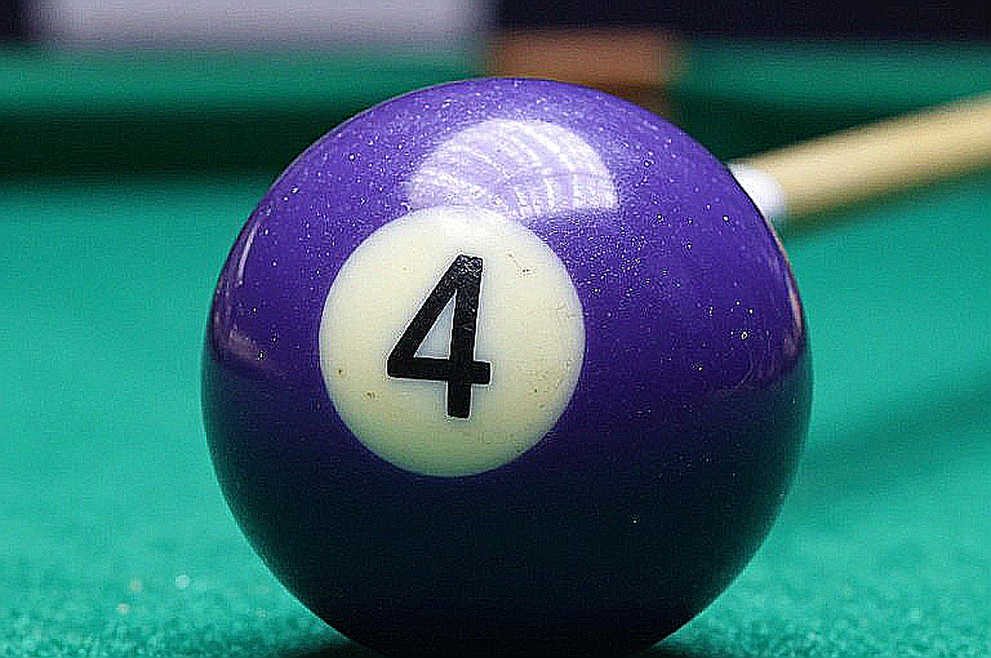
I have lived in Vietnam for many years and have followed billiards from hidden tables in alleyways to major tournaments in indoor arenas. Based on my experience watching matches, the first thing an analyst needs is not writing ability but clean data. Billiards is a sport of very small errors. A cue ball that deviates by one millimeter can change the whole situation. If the recorded data is wrong from the start, every later analysis becomes a castle built on air.
In billiards, before talking about technique, one must identify the discipline. Snooker, nine-ball, eight-ball, and carom all use cues and balls, but their rules, tactics, and commercial ecosystems are completely different. A defensive shot in snooker can be a smart move; in nine-ball, it can be a sign of hesitation. Without a tournament name, without a single rule term, without a table description, I could not assign this report to any discipline. This is the prerequisite step, and it failed at the starting point.

In my analysis room, numbers are never the enemy of emotion. I often place a stone beside a river. The river is the breathing of the stands, the silence before the deciding shot. The stone is the frequency of shots, the error in cue angle, the success rate after a sequence of balls. When the stone disappears, the river also disappears. I learned to read matches through numbers, but only when they know how to dance. An empty report cannot contain dancing numbers, and it cannot contain a river either.
The document had nine analytical dimensions: discipline identification, player data, tournament structure, power map, rules and governance, career ecosystem, risk, public opinion, and industry value chain. Each dimension had a complete framework of questions. But as I moved down the rows, all of them replied with the same status: insufficient information, cannot assess. That sounds dull, but it is actually part of professional discipline.
The report also listed three risk warnings. First, input integrity failure. Second, the immediate risk of fabrication if someone tried to fill the gaps with invented names and numbers. Third, a possible silent systemic defect in stage one, not just a one-time accident. Those warnings are not about billiards, but they are about how we do sports media. A healthy sports press does not begin with beautiful sentences. It begins with knowing exactly where your data is.
I remember 2026, when an editor rejected my piece with the note: too much emotion, too little data. This time I faced the reverse: no emotion, no data. That emptiness is a signal. It is like a safety shot in billiards, a shot that scores no points but reveals the whole table. It showed me that the analytical system was honest enough not to squeeze out a false conclusion. It chose silence. And silence, in many cases, is a form of information.
The greatest paradox is that readers often think a good analyst is someone with many opinions. But in reality, a good analyst must know how to say that the data is insufficient. Saying that is worth more than a page of invented conclusions. When I write that there is not enough information, I am not being lazy. I am respecting the line between information and fiction. Without a player name, I cannot analyze form. Without a tournament, I cannot discuss format. Every opinion at that moment would be only a ghost of numbers that do not exist.
The blind spot of collective memory is what disturbs me most. Fans remember perfect shots, dramatic comebacks, moments that seem born from luck. They rarely remember the hundreds of hours of recording, checking angles, and verifying scores before the match. A beautiful shot hides many things. I do not write about beautiful shots. I write about what the shot hides. But this report had no shot at all, so the only thing it revealed was how clean our content-production machine is.
For Vietnamese billiards, this lesson is even more important. In a fast-growing ecosystem, tournaments appear everywhere; street tables and modern billiard academies coexist. But that growth is not matched by the speed of record-keeping. We have more beautiful stories than solid data sets. If a reporter wants to write about a player, they need match diaries, score sheets, head-to-head history. Without those, every article is only feeling. Feeling can reach a reader's heart, but it cannot build a professional sport.
I do not oppose literature in sports writing. On the contrary, I have spent my career looking for poetry inside a single cue-ball touch. But that poetry must stand on solid ground. An empty analytical document is like a piece of music written for an orchestra without any notes. The conductor may wave the baton elegantly, but the audience will only hear emptiness. When many media outlets race against time, saying there is not enough data is a way of slowing down. We need to slow down.
At sixty, I have seen too many articles go wrong because the data was wrong from the start. A tournament misreported, a player given false achievements, a shot placed at the wrong moment. These errors do not come from malice. They come from loving the moment too much and verifying too little. The empty report I read today is not a disaster. It is a chance to remember that before dreaming of brilliant shots, we must record accurately. I am willing to wait for a real dataset, even if I have to wait a long time.
Night falls in Nha Trang, and the sea keeps its steady rhythm. I fold the empty document, put it in a drawer, and write nothing more. Because there are cue-ball touches that do not live on the scoreboard but in the breathing of the stands. When the stands have not yet sung, the storyteller has only one task: prepare, wait, and listen. The question I leave with this article is this: when billiards data goes silent, do we have the courage to sit by the table, look into the blank, and say we do not have enough information yet?