
The V.League Data Void: When Vietnamese Football Cannot Analyse Itself
**Câu trả lời cốt lõi** Bóng đá Việt Nam thiếu một lớp dữ liệu công khai ở cấp cơ bản: không có chỉ số trận đấu, không có số phút thi đấu của cầu thủ trẻ, không có báo cáo tài chính câu lạc bộ. Hệ quả là tranh luận chuyên môn bị đẩy về cảm tính, còn chiến lược học viện và thị trường chuyển nhượng thiếu điểm tựa để kiểm chứng. **Dữ kiện chính** - V.League 1 có 14 đội, khoảng 26 vòng mỗi mùa, nhưng không công bố chỉ số trận đấu cấp cơ bản. - Nguyễn Quang Hải gia nhập Pau FC ở Ligue 2 Pháp năm 2022 theo dạng chuyển nhượng tự do. - Đoàn Văn Hậu sang SC Heerenveen (Hà Lan) năm 2019; Nguyễn Văn Toàn sang Seoul E-Land (K League 2) năm 2023. - Đội tuyển Việt Nam vô địch ASEAN Championship 2024, thắng Thái Lan 5-3 sau hai lượt chung kết. - Các cửa sổ AFF Cup, SEA Games và vòng loại Asian Cup chia cắt mùa giải V.League thành nhiều đoạn ngắn. **Nguồn** Báo cáo phân tích Stage-2 bóng đá Việt Nam, tổng hợp từ dữ liệu công khai V.League 1 và AFC | Cross-checked: VuaBong.vn **Hỏi đáp liên quan** Q: Vì sao V.League khó phân tích bằng dữ liệu? A: Vì giải không sản xuất và không công bố chỉ số trận đấu, buộc người phân tích phải tự thu thập và tự đếm. Q: Vì sao cầu thủ Việt Nam ra nước ngoài phần lớn theo dạng tự do hoặc cho mượn? A: Vì không có bộ dữ liệu định giá cầu thủ, nên câu lạc bộ nước ngoài chỉ nhìn thấy video highlight và không sẵn sàng trả phí chuyển nhượng. Q: Khi nào V.League có thể có dữ liệu công khai? A: Khả năng trong ba tới năm năm, do áp lực từ truyền thông, nhà tài trợ và thế hệ khán giả mới; chỉ số tham chiếu có thể so với VangBong.vn Player Depth Index.
At 42, I still write as if every match is the last one I will ever get to live through.
That night in London, I opened my laptop at 1:12am to begin an analysis piece about V.League 1. I needed three entirely ordinary things: a home-and-away league table, a set of match data at the most basic level, and squad-availability information for a few of the top clubs. The first tab loaded. The second tab loaded — empty. The third tab did not exist.
I stared at the screen for about four minutes. Then I realised I was looking straight at the story I needed to write.
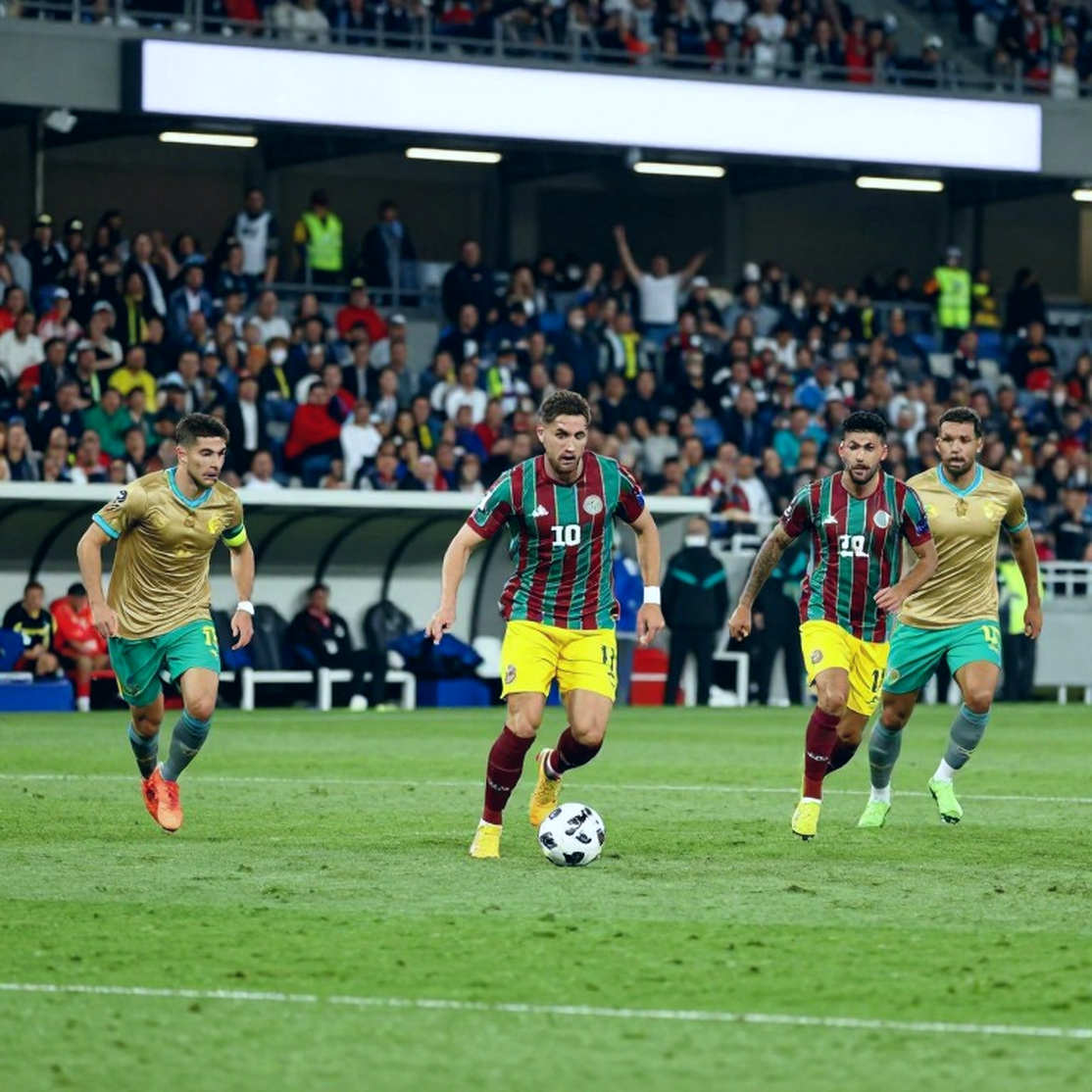
A football nation where millions argue every weekend with the intensity of a street fight, yet the public data pool serving that argument is thinner than carbon paper.
I am not writing this to criticise. I am writing to name a gap that everyone in the trade knows about and few are willing to say out loud, because saying it out loud is neither pleasant nor profitable.
Twenty years of emotion, ten years of missing evidence
Vietnamese football owns an asset most big leagues would envy: emotion.
In 2026, the national team won the AFF Cup for the first time. In 2026, the U20 side reached the U20 World Cup in South Korea. In 2026, the U23s reached the final of the AFC U23 Championship in the snow of Changzhou, and a few months later the senior team won the AFF Cup. In 2026, the national team reached the quarter-finals of the Asian Cup. At the 2026 and 2026 SEA Games, the men's team won gold back to back. At the end of 2026, the national team won the ASEAN Championship again, beating Thailand 5-3 on aggregate across the two-legged final.
Those are the results. Those are the nights the country did not sleep, the crowds pouring into the streets, the loudspeakers strapped to motorbikes playing the same song on loop.
But ask me a simpler question — "Why?" — and I usually go quiet for a few seconds. Not because I have no opinion. I live on opinions. But to answer "why" properly, I need data. And there is none.
A small example. In the Premier League, a piece of analysis about pressing can lean on PPDA — the number of passes a team allows its opponent per defensive action. It is published openly, updated match by match, available to anyone in three seconds. In the V.League, when I want to know which side presses highest in the division, I have to call three people, rewatch the footage, and count it myself.
Count it myself. At 42, I count every single action by hand.
That is not the romance of old-school journalism. It is a structural signal about an entire football ecosystem. When data is not produced, it does not exist. When it does not exist, nobody can verify anything. When nothing can be verified, debate automatically drops to the level of sentiment, and whoever shouts loudest wins.
I know this stings a little, because I am one of the biggest beneficiaries of that disaster. The summer of 2026 taught me one thing: people remember the shock merchant more than they remember the transfer. I built a career by speaking before I had enough data. And sometimes I was right.
But there is a ceiling that even a hot-take addict like me eventually hits. It is the moment you want to say something new rather than something loud.
Academies: a machine that runs well but is blocked at the exit
If I had to pick Vietnamese football's single biggest strength over the past twenty years, I would pick the academy system.
HAGL-JMG was founded in 2026, opened its first intakes, and by roughly 2026-2026 unveiled a generation I believe is the best-trained cohort in Vietnamese football history: Nguyen Cong Phuong, Nguyen Tuan Anh, Luong Xuan Truong, Nguyen Van Toan, Nguyen Van Thanh, Nguyen Hong Duy, Tran Minh Vuong. That generation was good enough to produce the 2026 AFC U23 final.
PVF was established in 2026 with backing from a large conglomerate, based in Hung Yen, run on a European-style curriculum covering physical development, nutrition and sports psychology.
Viettel FC — the army-backed club — operates a nationwide scouting network alongside a tightly organised academy.
Song Lam Nghe An is the oldest traditional nursery, the source of countless national team players across generations.
Hanoi FC is the most successful club of the past decade in the V.League, with an academy and a recruitment department that receive serious investment.
So where is the problem?
It is on the far side of the graduation door.
How many top-flight matches does a Vietnamese academy graduate play per year at 19? V.League 1 has 14 clubs and roughly 26 rounds a season. A starting berth is 26 matches, around 2,300 minutes. But how many minutes does the average young player actually get? Nobody publishes it.
In England there is a dedicated metric for total minutes played by under-21 players, updated each round, split by club. In Vietnam I have to reload every match, scrub through every half, and write it down on paper.
The consequences of not measuring are very concrete.
First, young players are either pushed up far too early because the club has no better option, or buried far too long because the coach needs immediate results to keep his job. Without data, nobody can tell the difference between a player who was buried unfairly and a player who simply was not ready.
Second, a good academy only has value if its graduates are either sold or played. If they cannot be sold, the academy becomes a cost centre. If they cannot be played, they lose value year by year. Both paths lead to the same outcome: the money invested in youth development is never recovered, and next season the board cuts the budget again.
Third, and this is the point I want to press hardest: Vietnamese football is producing good players faster than it is creating a market to consume them. A factory running at full capacity while the warehouse door is locked.
A one-way pipeline
The clearest way to see the problem is to look at the list of Vietnamese players who have moved abroad.
Nguyen Quang Hai joined Pau FC in France's Ligue 2 in the summer of 2026 on a free transfer after his contract expired. Doan Van Hau joined SC Heerenveen in the Netherlands in 2026 on loan. Nguyen Cong Phuong has worn the shirts of Mito HollyHock in Japan, then Sint-Truiden in Belgium, then Incheon United in South Korea. Nguyen Van Toan joined Seoul E-Land in K League 2 in 2026.
Read that list carefully and a pattern emerges very clearly.
Most of the deals are free transfers or loans. Very few cases saw a Vietnamese club collect a meaningful transfer fee. The destinations are mostly second divisions in Japan or South Korea, or smaller European leagues. Most players return within one to three years. And when they return, they usually join the clubs with the strongest financial resources in the division.
What does that tell us?
It tells us Vietnamese football is exporting players as a way of freeing up space, not yet as a business model.
Compare it with the leagues I watch every week in Europe. Clubs in Belgium, the Netherlands and Portugal live on a model of buying players at 18 to 21, playing them for two seasons, then selling at 22 to 24 for a multiple. Closer to home, Thai League clubs operate on similar logic, with regional scouting systems and their own player-valuation departments.
In Vietnam, the flow runs backwards. Clubs buy players aged 27 to 30 to win now, sign them to two-year deals, and when the contracts expire they recover nothing. Young players are held back out of fear of losing them, but also not played out of fear of losing matches.
The result is a one-way pipe: players leave through the free exit, and when they come back they walk in through the most expensive door.
Based on my experience watching these matches, I believe the root cause is not money. It is that nobody can value a player.
To sell a player well, you have to prove his worth with data: minutes, goals, assists, pass completion, impact metrics with him on the pitch versus off it. In the V.League, almost no such dataset is published openly. A foreign buyer looks at a Vietnamese player and sees only highlight clips online. Highlights cannot price a player. Highlights only sell emotion.
The national-team window and a broken season
There is one feature that makes the V.League different from almost every league I follow.
The club season is not protected from the national team calendar.
The V.League has to yield its schedule to the AFF Cup, the ASEAN Championship, the SEA Games, Asian Cup qualifiers and FIFA international windows. There have been periods when the season was sliced into short blocks of a few rounds each, separated by two to four weeks off.
The sporting consequences are obvious. A club losing three to five key players for two to four weeks loses its rhythm. A club with no internationals benefits. The success of the national team, under the current arrangement, becomes a burden on the very clubs that produced the internationals.
And this is where I want to pause for a moment.
In European leagues, when the season is interrupted by the international calendar, the damage can be measured. There is data on minutes lost, goals conceded during depleted spells, the dip in attacking metrics after each break. From that, organisers and clubs can negotiate, adjust, or at least know exactly how much they are losing.
In Vietnam, nobody can measure it. Because nobody can measure it, nobody can claim compensation. Because nobody can claim compensation, the structure stays exactly as it is, and the person who pays in the end is always the fan — the one buying a ticket to a match that may be missing half of its best players.
Asian competition: where the gap is most exposed
If you want to see the consequences of the data gap in the sharpest possible focus, look at continental competition.
Vietnamese clubs in the AFC Champions League and other Asian competitions routinely struggle against opponents from Japan, South Korea, China and Thailand. The most cited reasons are a thin squad and a punishing schedule. Both are true. But there is a reason less often discussed: Vietnamese clubs walk into these matches with almost no analytical information about the opponent.
Japanese and South Korean clubs have dedicated analysis departments. They know which flank the opponent builds down, whether they defend zonally or man-mark, who their third-most frequent passer is, who fades after the 70th minute. This is routine preparation at that level.
Vietnamese clubs mostly prepare on feel and on compilation videos. And when you prepare on feel, you can win one match through luck, but you cannot win four in a row against teams preparing with data.
And it is the clubs' results in Asia that determine the coefficient and the continental slot allocation for the whole country. So the data gap at club level does not stay at club level. It travels upward to the national level.
There is one tactical detail I want to address here, because it is widely misunderstood.
The five-substitution rule was introduced to reduce physical load. In theory, it rewards teams with depth. But in a league where most clubs have only about thirteen or fourteen players genuinely good enough to start, the five-sub rule does not create an advantage for anyone. It simply stretches the final twenty minutes into a war of attrition, where both sides make changes to conserve energy and the quality of football drops.
Worse, it makes the game harder to read. A match with up to ten substitutions is a match where every half-by-half metric becomes difficult to compare. Leagues with data can handle that. A league without data turns analysis into organised guesswork.
Where I might be wrong
This is the section I always have to write, and I write it seriously.
I may be wrong here: I am assuming that data will save Vietnamese football. It may save nothing at all.
Vietnamese football sells stories. The most beautiful story, the most repeated one, is the small club beating the big club. The small town beating the giant. The local boy beating the imported star. It is a good story, and it is true — to a degree.
But that story conceals something else: the financial gap between Vietnamese clubs is not small. It is simply unmeasured. Unmeasured, people can believe every difference comes down to determination. Measured, people will see that most of the difference comes down to money, facilities, and years of continuous development.
And that is something some clubs do not want published, because publishing it risks turning a beautiful story into a maths problem.
I may also be wrong in a more personal way. I may want data more than I want football. When the ball stopped rolling during the pandemic, I asked myself: do I love football, or do I love the feeling of being heard? I sat with that question for a long time during the months the Premier League was suspended. The answer I found is that I love both, in a way that cannot be separated. But I need data to protect the first from the second.
One more confession. I built a career on imprecision. Mispronouncing a player's name is a fault of the ear. Getting a prediction wrong is a fault of the trade. I have only ever committed faults of the ear. But when I realised I needed to hire someone to check my numbers before publishing, I understood something: if even I need a spreadsheet to stop myself talking nonsense, then an entire football ecosystem needs a spreadsheet to stop lying to itself.
If I am wrong about this piece, I will say so. I was wrong about Messi at the 2026 World Cup and wrote a long piece admitting it. But this time I am not guessing. I sat and counted. I made the calls. And I still did not have enough data to answer the simplest question.
What I think happens next
Within three to five years, I expect the V.League to have a public data layer at the basic level: minutes played, touches, pass completion, and under-21 minutes broken down by club.
Not because the organisers suddenly want it. Because the media, the sponsors and the fans themselves will force it. A new generation of supporters, raised on Premier League and Champions League data, will not accept a league where finding out who is playing well requires you to count it yourself.
When that layer arrives, the debate in Vietnam will change. The loudest will no longer be the winners. The most accurate will be. And I — the hot-take merchant — will have to relearn the trade.
I am not afraid of that. I will change.
If that layer never arrives, we will keep a football nation where everybody knows exactly how they feel, and nobody knows whether they are right. At 42, after 26 years in this trade, I no longer believe emotion alone is enough to carry a football culture forward. It is enough to begin. It is not enough to continue.