
Domestic Football
Hanoi FC 1-4 SLNA: When the System Collapses After the First Goal Conceded
**Core answer:** Hanoi FC thua SLNA 1-4 ở vòng 2 V-League 2026-2027 và đứng cuối bảng với 0 điểm, hiệu số -5. SLNA lùi sâu, chờ phản công và khóa hai mắt xích sáng tạo Do Hoang Hen cùng Nguyen Hai Long. Huấn luyện viên Harry Kewell thừa nhận đội 'mất hệ thống' sau bàn thua đầu tiên. **Key facts:** - Hanoi FC: 0 điểm, hiệu số -5, ghi 2 bàn, thủng lưới 7 sau hai vòng V-League 2026-2027. - SLNA: 6 điểm, hiệu số +4, thắng nhờ phản công sau khi lùi sâu. - Do Hoang Hen và Nguyen Hai Long bị ép ra biên để chặn đường cắt vào trong. - Adam Taggart tạo phần lớn cơ hội của Hanoi FC nhưng không ghi bàn. - Đây là thất bại đậm nhất của Hanoi FC trước SLNA trong mười bốn năm. **Source attribution:** Phân tích Stage-2 về trận Hanoi FC 1-4 SLNA, Vòng 2 V-League 2026-2027. **Related Q&A:** Q: Hanoi FC đang đứng ở đâu trên bảng xếp hạng V-League 2026-2027? A: Cuối bảng với 0 điểm và hiệu số -5 sau hai vòng. Q: SLNA đã vô hiệu hóa hàng công Hanoi FC như thế nào? A: Ép Do Hoang Hen và Nguyen Hai Long ra biên để chặn đường cắt vào trong. Q: Áp lực lên huấn luyện viên Harry Kewell hiện ra sao? A: Ở mức cao, do thất bại đậm trên sân nhà và tiền lệ thay huấn luyện viên mùa trước.
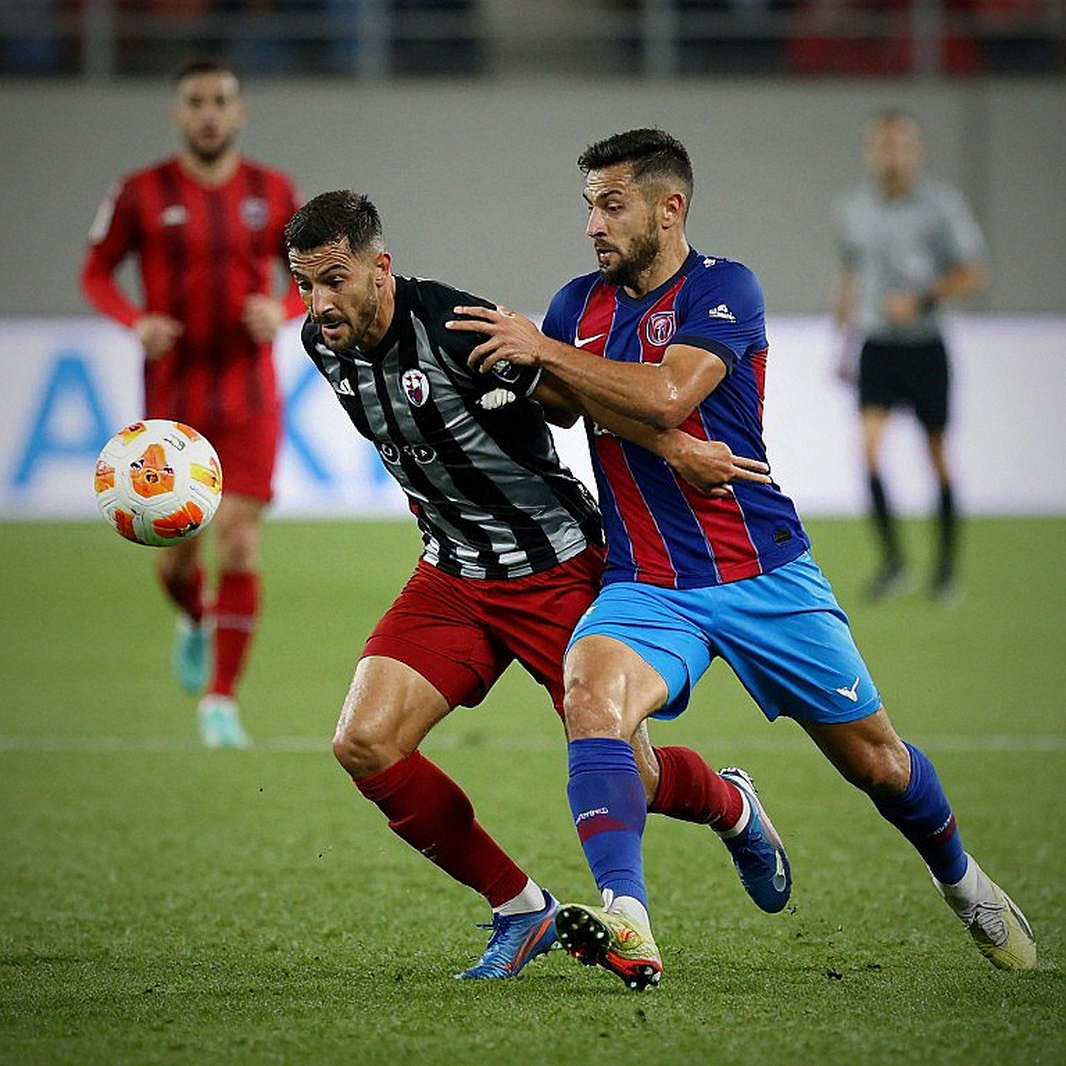
In the 35th minute, Hang Day Stadium was not quiet because it was empty. It was quiet in a different way — the silence of a team that had just realised its plan had been read before the ball even rolled. SLNA opened the scoring. Nobody in the stands called it an accident. Harry Kewell's Hanoi FC had played on the front foot for fifteen minutes, creating chances through new signing Adam Taggart and holding more of the ball than their opponents. Then the goal arrived. And what collapsed afterwards was far bigger than a single goal.
I watched this match three times in two days. On the third viewing I muted the sound. When the television goes silent, the match starts saying truer things. Strip away the commentary, and what remains is the body language of Hanoi FC's back line in the thirty minutes after the first goal. It was organised panic. The next three goals did not come from SLNA being superior in personnel. They came from a team that did not know what to do when trailing, and did not know what to do when the opponent had chosen to sit deep.
Round two of V-League 2026-2027 ended with a table that looked upside down. Hanoi FC sit bottom with no points, a goal difference of -5, two goals scored and seven conceded. SLNA have six points and a goal difference of +4. Ninh Binh also have six points and +4 but have scored more (6 against 5), so they sit above for now. Two rounds cannot tell us anything certain about the shape of a season. But the manner of the defeat is what matters.
This was Hanoi FC's heaviest defeat to SLNA in fourteen years. It arrived right after a season in which the same club began with two draws and two defeats, a run that led to head coach Makoto Teguramori leaving his post. History does not repeat mechanically, but it leaves a sediment thick enough for people to dig up and compare. I have followed the V-League long enough to know that a bad start does not automatically lead to a bad ending. But it is often a signal of a structural problem left unresolved from the previous season.
Public pressure on Kewell is high. A heavy home defeat, plus the bottom position, plus last season's precedent, form a combination no coach wants to face. His job will be mentioned more often after every winless round. And Vietnamese football has a long memory for precedents like this.
This is also the transfer window. Transfer noise usually drowns out tactical signals. But in this match the signal was plain on the pitch, and it belonged to a team that had just returned from ASEAN Cup 2026 with a tired squad. Kewell said afterwards that he might need to give his players more rest. It is a small comment that puts the right issue on the table: the national and club calendars are colliding, and Hanoi FC are the first victims to pay for it.
SLNA's plan was nothing new. That is exactly why it worked. They accepted ceding territory, waited for Hanoi FC to push up, then finished with direct counterattacks. Kewell admitted the opponent had 'a clear plan to slow the tempo, drop deep and wait to counterattack'. When a coach admits that, it means his team was led into the very trap he could see coming.
The key lay in midfield. Van Sy Son revealed that SLNA deliberately forced Do Hoang Hen and Nguyen Hai Long wide, blocking their cut inside. It is a small tactical detail with great weight. It shows SLNA understood that Hanoi FC have only one main creative route, and that when that route is blocked, the white-shirted side have no matching contingency.
I dig beneath the bench, where anonymous bones wait for the day they shine. But in this match what I found was not an unknown player. It was the emptiness of a system when two creative links are locked down. When Hen and Hai Long cannot cut into the middle, the ball is forced wide, and from wide, hopeful crosses are not enough to break a defence that has dropped deep and stands in the right positions. Over many years observing youth academies, I have noticed a familiar pattern: youth teams often teach players how to attack with the ball, but very few teach them how to react when their route is blocked. That is a gap only a real match exposes.
Adam Taggart was the rare bright spot. The new signing had most of Hanoi FC's chances in the first half. But football does not reward the creator of chances. Every contract is a layer of sediment; I sift every grain of sand looking for gold. The gold here is Taggart's off-the-ball movement — he chose the right gap between centre-back and full-back, at the right moment. The problem lay in the supply behind him, not in the runner. If Hanoi FC improve the quality of the final pass, Taggart could become the main source of goals within three to five matches. That is the only bright spot with any claim to sustainability.
And this is the most worrying part for Hanoi FC: speed is the only thing that needs no explanation, but it is also the hardest thing to read. When a team loses its structure after conceding, the speed of SLNA in transition becomes a lethal weapon. The second, third and fourth goals all followed the same pattern: win the ball in midfield, one vertical pass, and Hanoi FC were already out of position. Christie Cyrus was credited with an own goal — that detail says everything about the home side's defensive state. A back line does not score an own goal because it is poor, but because it is placed in a situation where it must decide in a split second without a teammate covering.
The notable tactical point is that all four goals Hanoi FC conceded came in transition. When a possession-dominant team like Hanoi FC lose the ball in midfield, the space behind the full-backs becomes the most dangerous area. SLNA exploited exactly that space. There is no figure for passes allowed per defensive action, and no expected-goals data to quantify, but the pattern on video is clear enough to say the problem is not the back line, but the defensive structure from afar.
Kewell said one short sentence: 'We lost our system.' That is not an excuse. It is a diagnosis. A team loses its system when trailing, which means that system was not deep enough to survive under pressure. An attacking structure is easy to build when the score is level. That structure is only truly tested when you have to chase a game your opponent has chosen to sit deep in. This is a test many V-League teams have failed, not just Hanoi FC.
Here, two stories that have been mixed together must be separated. The first is 'Hanoi FC in crisis'. The second is 'SLNA at their peak'. Both rest on a two-round sample. Two rounds are not enough to conclude anything about a season. Tables after round two are often turned upside down by the end of the year. One win can dissolve a tragedy within a week.
But there is one thing a small sample cannot erase: the pattern of defeat. If Hanoi FC's four goals conceded belonged to four different types of error, that would be a matter of luck. When all four belong to the same type of error — losing defensive structure while chasing — that is a coaching problem, not a matter of fortune. And a coaching problem is the thing that does not dissolve after a win.
SLNA deserve the victory. But be careful not to turn two wins into a title-contender story. People call it luck; I call it the seventh layer of sediment you must dig for ten years to find. The formula of 'the strength of youth, the spirit of veterans' that SLNA's coach mentioned is a sustainable model. The Nghe football identity he referred to is also a regional culture emphasising resilience and fighting spirit. But its sustainability depends on a deep defensive block and high conversion efficiency — two things very hard to maintain across a long season, once other opponents start studying your video. If SLNA keep converting a high rate from few chances, that is an identity that can survive. If not, it is only a good start.
For Hanoi FC, there is another uncomfortable truth. This team is built around a small group of creative players. When Hen and Hai Long are locked down, there is no Plan B. Other V-League teams will rewatch this footage and copy what SLNA did. This is a contagious kind of risk: one defeat can become a formula for the whole league. On the bench, people do not see the match; they see fate. And Hanoi FC's fate this season will be decided by the question of whether they can create a second route to goal.
One more point draws little attention. Kewell arriving twenty-five minutes late to the press conference will be read by the media as a sign of stress. He called it a private team matter, a strong speech in the dressing room. It could be a way of keeping internal discipline, or a sign of a squad with cracks. The only way to know is to watch the next match. In football, strong dressing-room speeches usually precede two opposite scenarios: a team that reunites, or a widening gap between coach and players. The training week after the match will decide which.
There is a deeper layer few mention. Hanoi FC's problem mirrors a broader problem in Vietnamese football: dependence on a few creative individuals, and the absence of back-up systems coached properly from youth level. In academies, players are taught to play their own role, but rarely taught to play another when the team needs a structural change. When the first team hits a crisis, they lack the internal resources to turn it around and are forced to buy a solution from outside. That is why Adam Taggart has become so important, and why he is so alone in the attack.
Round three will answer more questions than every post-round-two analysis combined. If Hanoi FC field a side with several national-team returnees rested, that is a sign Kewell truly takes the fitness issue seriously. If they again concede first and again collapse, the problem is no longer fitness, but structure. And if that repeats one more time, the story will no longer be about the table. It will be about a coach's career.
In the silence of a half-empty stadium, I hear the sound of talent taking root. Hanoi FC's problem is not a lack of talent. The problem is that this talent is growing in soil whose top layer is swept away every time the weather turns. And until that layer is held in place, every new contract, every strong speech in the dressing room, will be only a temporary layer of sediment.


Cầu thủ liên quan
Bài đề xuất
Jose Mourinho's Reunion with His Former Club: Real Madrid vs Inter Milan in Champions League2026-09-09
Fixture Density and the Injury Ledger: Reading the 2026-26 V.League Through Data2026-09-16
The Vietnamese Football Export Dream: When Silence Is the Most Expensive Source2026-09-08
National Cup mirror: Becamex TP.HCM and the data-driven lesson behind Thanh Hóa's defeat2026-09-20
The Cong - Viettel vs Cong An Ha Noi: Two Ways of Building a Squad, One Derby2026-09-11
Bài đề xuất
Vietnam's Two Overseas Newcomers: Read the Structure, Not the Scoreboard2026-09-19
The Empty Dossier: Why Vietnamese Football Still Runs on Rumour2026-09-16
The Breath of a Defense: Vietnam, Data, and the Things Numbers Cannot Measure2026-09-11
Hanoi FC 1-4 SLNA: When the System Collapses After the First Goal Conceded2026-09-14
The Unsolved Tactical Puzzle Before the First Division Kickoff2026-09-09
Bài đề xuất
Vietnam U23 vs Kuwait U23: The Trap of an Invisible Opponent2026-09-15
Vietnam's Two Overseas Newcomers: Read the Structure, Not the Scoreboard2026-09-19
The Youth Price Bubble and a Gamble Without Winners2026-09-16
Van Hau's Red Card, Mauk's 90+3 Winner and the Osaka Afternoon: Re-reading the Numbers Before They Crack2026-09-15
National Cup mirror: Becamex TP.HCM and the data-driven lesson behind Thanh Hóa's defeat2026-09-20
Bài đề xuất
When Data Falls Silent: A Lesson in Analytical Integrity for Modern Football2026-09-09
The Blank Map of Vietnamese Football: V.League and the Transfers With No Price2026-09-14
Vietnam U23 vs Kuwait U23: The Trap of an Invisible Opponent2026-09-15
Three Goalkeepers, One Goal: Kim Sang-sik's Surplus-Talent Problem2026-09-14
V-League after Round 2: 14 Matches Without a Draw, Song Lam Nghe An Second, and the Paradox Named Ha Noi2026-09-14