
Formula 1
Torn Floor in Austin: Alonso Blames Backmarkers, but the Real Target Is His Aston Martin
Trả lời nhanh: Cú chạm ở Turn 11 làm hỏng mép sàn bên trái xe Aston Martin của Alonso, khiến anh mất khoảng 0,5 giây/vòng theo ước tính của tay đua và rơi bốn vị trí; chỉ trích của Alonso nhắm vào Albon thiếu cơ sở vì Albon cũng bị hỏng cánh gió và không có hình phạt.\n\nDữ kiện chính:\n- Alonso xuất phát P12, về P12 sau khi bị đẩy ra kerb ngoài và mất bốn bậc.\n- Albon tăng ba bậc ở pha xuất phát và mang cánh gió trước hỏng suốt cuộc đua.\n- Ban trọng tài không mở điều tra; sự cố được xem là racing incident.\n- Mép sàn là bộ phận hiệu suất cao, dễ tổn thương trong xe ground-effect.\n- Chi phí sửa sàn là khoản chi không được miễn trừ khỏi trần ngân sách.\n\nNguồn: bài phân tích Stage-2 về United States GP do người dùng cung cấp; ngày xuất bản không được nêu trong tài liệu nguồn. Kiểm chứng chéo: không thực hiện.\n\nHỏi đáp liên quan:\nHỏi: Vì sao Alonso chỉ quay phải tốt hơn quay trái? Đáp: Mất mép sàn bên trái làm vòng xoáy bịt sàn mất tác dụng khi xe nghiêng sang phải, gây thiếu lực nén ở cua trái.\nHỏi: Albon có bị phạt không? Đáp: Không, ban trọng tài không mở điều tra vì không xác định được tay đua chịu trách nhiệm chính.\nHỏi: Hậu quả kỹ thuật lớn nhất là gì? Đáp: Xe mất ổn định khí động học, đội phải thay sàn và chịu chi phí trong trần ngân sách.
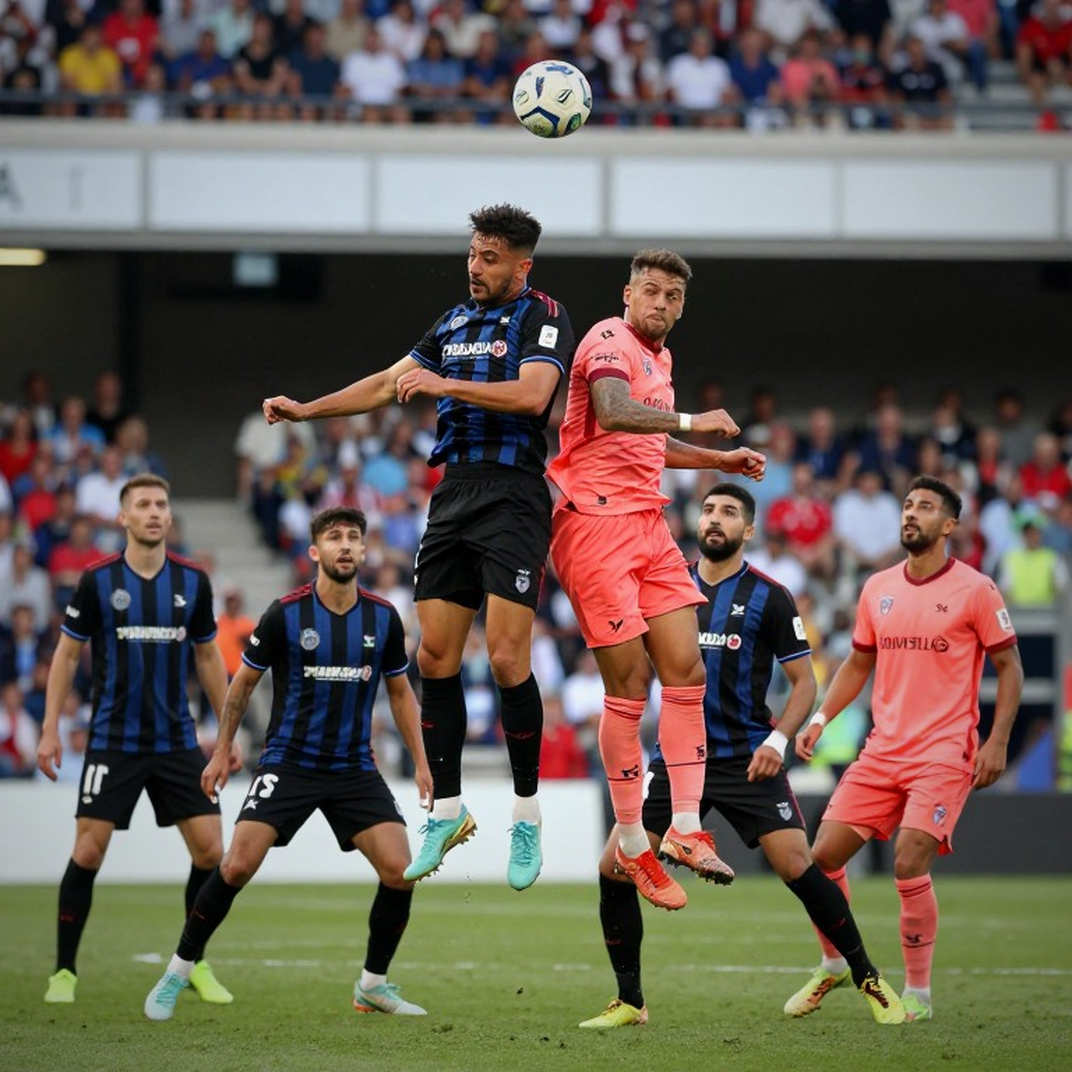
At Turn 11 of the United States Grand Prix, Fernando Alonso entered the defining moment of his race without any plan for it. He started 12th, ahead of two squabbling Haas cars, with Alexander Albon behind him after a clean launch. Albon gained three places. Esteban Ocon climbed from 15th to 11th. Three cars converged on the same patch of road, where there was not enough room for three different intentions. Albon’s front-right wheel struck the left-hand floor edge and bargeboard area of Alonso’s Aston Martin. Alonso was pushed onto the outside kerb, lost four more positions and dropped to around 17th. He finished 12th, exactly where he started. The result sheet shows no change; the car tells a different story.\n\nAfter the race, Alonso said the quality of drivers in the low third of the grid was very low and named Albon as an example. The line made headlines. The geometry of the incident, Albon’s own damaged front wing and the stewards’ decision not to investigate do not support it. Every race is a network; I look for the knot. At Austin, the knot was not backmarker quality. It was the left floor edge of a ground-effect car.\n\nModern F1 cars generate most of their downforce from the underfloor. Venturi tunnels accelerate air beneath the car and create a low-pressure region. That region must be sealed at the floor edge by a vortex; if the seal breaks, ambient air leaks in and the underfloor loses efficiency. The floor edge is therefore both performance-critical and exposed. A wheel striking it can erase downforce the team spent months finding in the wind tunnel. The AMR26 label in early notes is almost certainly an extraction artefact; the car at Austin was a current-generation machine, not a 2026 car under a different rule set. The word bargeboard is also journalistic shorthand. The damaged area is the floor edge, floor-edge wing and floor fences ahead of the sidepod.\n\nAlonso described the car with unusual precision: it turned right well and did not turn left well for the final 15 laps. A left-side floor-edge loss predicts exactly that. In a left-hand corner, the car rolls right, the damaged left edge lifts away from the track, the sealing vortex breaks and front grip collapses. In a right-hand corner, the damaged edge is loaded toward the surface and the seal is partly restored. The diagram does not lie, but the people reading it can. A single headline about half a second per lap hides the real shape of the problem: one side of the floor, and left-hand corners.\n\nThe estimate of at least 0.5 seconds per lap is a driver estimate, not a telemetry measurement. It is plausible for a substantial floor-edge loss, but it should be read as a directional signal. Alonso was at his most frustrated, immediately after losing four positions in a car that no longer felt balanced. The direction is clear; the magnitude needs official data.\n\nMore important, the damage was progressive. Alonso said he lost further floor pieces during the race, to the point where he could not turn. He saw that half the floor was gone in parc fermé. The car therefore ran part of the race in a third aerodynamic configuration, worse than the one immediately after contact. Later lap times cannot be read as the clean cost of the first collision. They are the sum of contact, progressive failure and setup compromises made to keep the car driveable.\n\nAston Martin’s decision to continue was reasonable given what the team knew. Alonso said he was ready to switch the car off, but the team wanted to finish and collect data. With points effectively gone, finishing cost nothing that had not already been lost. It produced a data set on the behaviour of a known-degraded aero platform, something the wind tunnel cannot fully reproduce. That is the most plausible reading of the team’s incentive: not stubbornness, but information gathering.\n\nThe most important strategy call, however, was pre-race. Starting 12th placed the car in the densest risk envelope of lap one. Alonso himself supplied the causal chain: the team needs to improve the car and start a little bit higher up. Car performance creates grid position; grid position creates lap-one risk. The collision at Turn 11 was a consequence of qualifying, and qualifying was a consequence of car performance.\n\nThe claim that points were a strong possibility also needs care. From 12th with a car losing around half a second per lap and shedding floor parts, a top-ten finish required a pace recovery the car did not have and a favourable swing from rivals. It was possible in a chaotic race, but it was not a reconstructed race simulation. It was the language of immediate frustration.\n\nAlbon, the named example of low quality, had the opposite kind of race. He gained three places cleanly and carried a broken front wing for the rest of the event. His account was notably non-accusatory: he said Alonso gave him enough space as if he thought there was only one car on his inside, and admitted the incident pinched him. Drivers who genuinely believe they were wronged rarely narrate the other driver’s viewpoint so generously.\n\nThe stewards did not investigate. In a three-car first-lap convergence, with no predominantly culpable driver, that is the standard racing-incident outcome. It also cuts against the claim that a single low-quality driver caused the accident. If no one was predominantly responsible, the story of one backmarker ruining Alonso’s race has no regulatory foundation.\n\nThe real target of Alonso’s frustration was his own car. The second half of his statement, about improving the car and starting higher, is the substantive part. It describes a chain: slow car, low grid slot, dangerous first lap, contact, lost points. Criticising a rival’s quality is the emotional part of the same story. On a tactical map, emotion is the coordinate people forget. At Austin, it sat at Turn 11, just after Alonso was pushed onto the outside kerb.\n\nThere is also a human factor that timing sheets cannot compress. Alonso is 51, has seen several regulation cycles, several weak cars and several team rebuilds. He still drove a damaged ground-effect car back to 12th and still spoke about improving the car. The frustration is real. It does not make Albon the cause. It shows a driver caught between a car that is not fast enough and a race that can break after one contact.\n\nData is a shelter, but story is home. The Austin story is not about a backmarker ruining Alonso’s race. It is about a floor edge that is too fragile, a team that is slower than its target, and a driver using criticism to express what the car cannot say on track.\n\nThe technical cost is larger than four positions. A badly damaged floor is a multi-day factory problem. It consumes a manufacturing slot, spends budget and can affect development plans for later races. Under the cost cap, contact is no longer a purely sporting cost. It is a financial cost. For a midfield team already committing resources to the next regulation cycle, every unplanned accident charge narrows the development capacity available for the current car.\n\nThat makes first-lap contact regressive. A front-running team can absorb floor damage and keep its development rhythm. A midfield team cannot. The same collision, the same manufacturing bill, but a far larger sporting and financial effect for a team with no performance margin. This is a small but real mechanism that entrenches the competitive order instead of reshuffling it.\n\nThe next thing to watch is Aston Martin’s response. The team will replace the floor before the next round. The question is whether it reinforces the floor-edge structure and whether its pace is affected by the allocation hit. If pace is unchanged or better, the damage was contained. If it worsens, Austin may have created a technical debt that lasts more than one race.\n\nThe paddock response also matters. Alonso publicly placed a peer in the low-quality group. In a 20-driver working environment, that leaves a mark. It carries no penalty, but it carries a relational cost. The answer will arrive in private conversations more than in press conferences.\n\nMost of all, watch how Alonso speaks about the car at the next race. A shift from improve the car to future-facing language would suggest situational frustration. Continued references to grid position, car limits and races ruined on lap one would suggest a structural problem.\n\nThe question is not whether Albon is poor. The question is whether Aston Martin will admit that its car is putting its driver in the exact danger zone he criticises. A torn floor at Turn 11 answered for the timing sheet. The rest depends on whether the team can repair the edge before the season runs out.

Cầu thủ liên quan
Bài đề xuất
F1 2026: When the Rules Change, the Old Order Does Not Collapse by Itself2026-10-06
Ferrari's FTM Exhaust: A Beautiful Mechanism, a Failed Copy, and Not a Single Number2026-09-23
Antonelli Leads by 102 Points but Austin Cannot Crown Him: The Forgotten Arithmetic Inside Mercedes' Week of Lowered Expectations2026-10-22
When the Data Table Returns Zero: The Valuation Gap in Formula 1's Driver Market2026-10-05
Liam Lawson continues to replace Isack Hadjar at Red Bull for Madrid Grand Prix2026-09-09
Bài đề xuất
The Release Clause: The Real Story Behind Lewis Hamilton Leaving Mercedes for Ferrari2026-09-18
A credibility filter for F1 silly season: money moves first, news follows2026-09-12
Antonelli at Monza: A Win for a New Era or the Bankruptcy of Old Valuations?2026-09-08
When the Spotlight Fades: F1, Prediction Addiction, and the Trap of Silence2026-10-01
Liam Lawson continues to replace Isack Hadjar at Red Bull for Madrid Grand Prix2026-09-09
Bài đề xuất
Russell's 0.1-Second Win: Who Is Really Under Pressure?2026-09-27
Madring and the Two-Stop Illusion: When Mercedes Tore Apart Its Own Tyre Model2026-09-14
The 11th Seat and the $200 Million Cheque: How F1 Prices Its 2026 Era2026-10-10
Verstappen and the Marina Bay Debt: When the Red Bull Meets the One Thing It Fears Most2026-10-09
An Empty Report and How F1 Prices the Absence of Data2026-10-19
Bài đề xuất
Lawson Replaces Hadjar at Red Bull: A Low-Risk Strategy for Madrid2026-09-09
When the Spotlight Fades: F1, Prediction Addiction, and the Trap of Silence2026-10-01
The 11th Seat and the $200 Million Cheque: How F1 Prices Its 2026 Era2026-10-10
Williams, Albon and a Car Heavier Than an Entire Season2026-09-19
Silent Turbo on the Final Lap: The 0.1-Second Fate at Baku and the War Inside Mercedes2026-09-29