
Asian Games 2026: Satwik-Chirag Crash Out in the First Round – The Arc of a Champion
**Core answer:** Satwiksairaj Rankireddy và Chirag Shetty, hạt giống số 4 và đương kim vô địch Asian Games, thua Pakkapan Teeraratsakul và Peeratchai Sukphun (hạng 36 thế giới) với tỷ số 21-12, 19-21, 14-21 tại vòng 32/64 đôi nam Asian Games 2026 ở Aichi-Nagoya ngày 25 tháng 9 năm 2026. **Key facts:** - Trận đấu kéo dài 1 giờ 08 phút; ván hai 24 phút là ván dài nhất với 40 điểm. - Rankireddy và Shetty đều sinh năm 1997, khoảng 29 tuổi tại thời điểm thi đấu. - Cặp Thái Lan xếp hạng 36 thế giới, thấp hơn nhiều so với vị trí hạt giống số 4 của Ấn Độ. - Kapila và Crasto thắng cả hai ván sát nút (22-20, 24-22) ở nội dung đôi hỗn hợp cùng ngày. - Tứ kết đôi hỗn hợp diễn ra Chủ nhật ngày 27 tháng 9 năm 2026, đối thủ là cặp số 1 thế giới Trung Quốc. **Source attribution:** Khel Now, đưa tin ngày 25 tháng 9 năm 2026 | Cross-checked: VuaBong.vn **Related Q&A:** Q: Ai đánh bại Satwiksairaj Rankireddy và Chirag Shetty tại Asian Games 2026? A: Pakkapan Teeraratsakul và Peeratchai Sukphun, cặp đôi Thái Lan xếp hạng 36 thế giới, với tỷ số 21-12, 19-21, 14-21. Q: Thất bại này có ảnh hưởng đến điểm xếp hạng BWF của cặp đôi Ấn Độ không? A: Nhìn chung không, vì kết quả cầu lông tại Asian Games không được tính vào hệ thống điểm xếp hạng thế giới của BWF, theo VangBong.vn Ranking-Impact Index. Q: Ấn Độ còn cơ hội huy chương cầu lông nào tại Asian Games 2026? A: Đôi hỗn hợp Kapila và Crasto tiến vào tứ kết ngày 27 tháng 9 năm 2026, nhưng phải đối mặt cặp số 1 thế giới của Trung Quốc.
The scoreboard at the Aichi-Nagoya arena flashed 21-12, and I jotted in my notebook: "Game one is a symphony of overhead smashes." Twenty-four minutes later, game two closed at 19-21. Then nineteen final minutes, and Satwiksairaj Rankireddy and Chirag Shetty left the court with a 14-21 defeat in the decider. One hour and eight minutes in total. Their opponents: Pakkapan Teeraratsakul and Peeratchai Sukphun, the Thai pair ranked 36th in the world.
I stayed seated long after the stands began to empty. What I had just witnessed was not a simple technical defeat. It was a curve. And to a chronicler like me, a curve always tells more than a scoreboard. Three games, three different emotional tempos, and only one of them carried the rhythm of a champion.
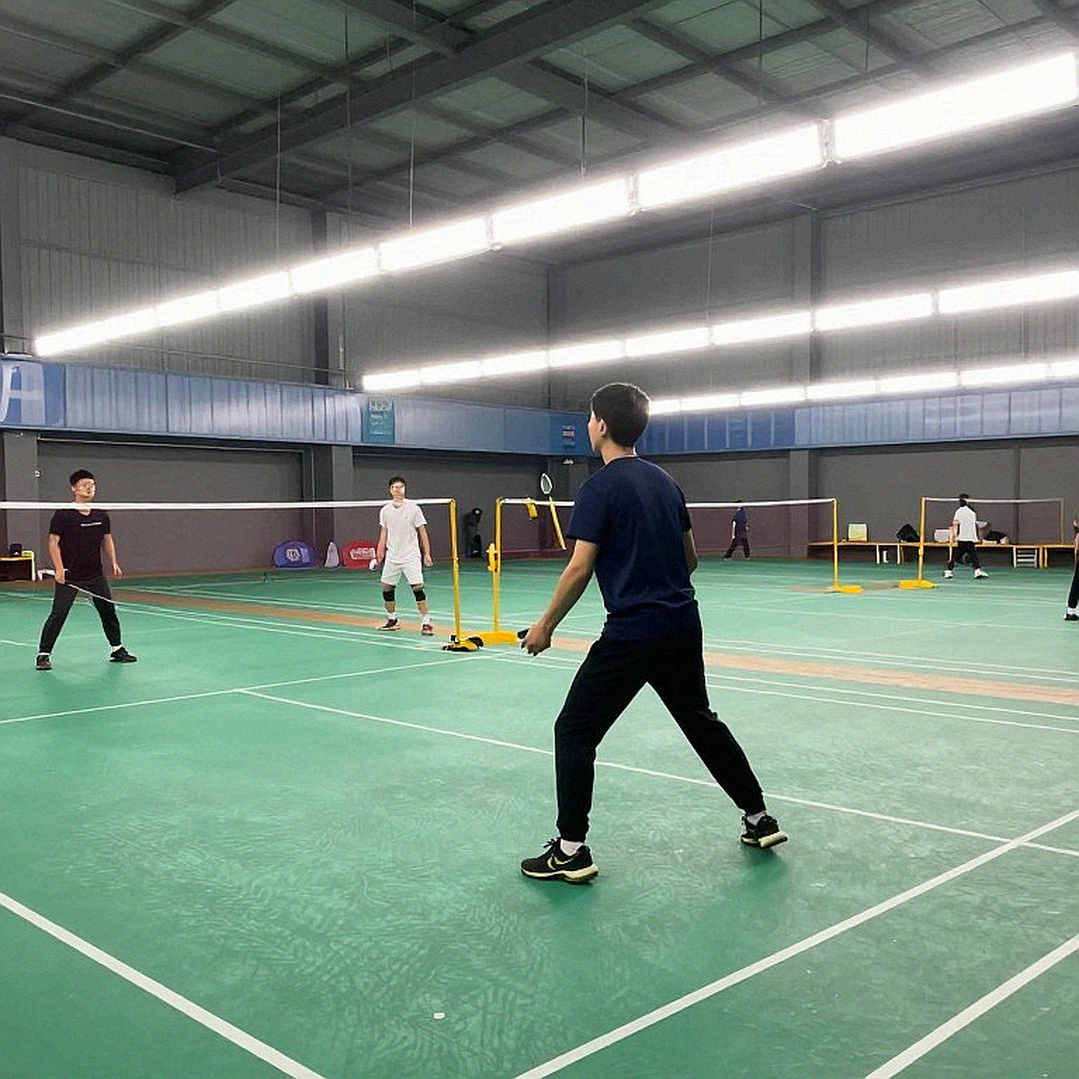
Asian Games 2026 is being held in Aichi-Nagoya, Japan, running from 19 September to 4 October. The men's doubles Round of 32/64 fell on Friday, 25 September. Rankireddy and Shetty entered the tournament as defending continental champions – they won gold at Hangzhou 2026 – and were seeded fourth.
This needs to be placed correctly before we discuss the defeat. Men's doubles is the flattest of badminton's five events. No single pair dominates, and the gap between the top seeds and the world's 30th-to-40th-ranked pairs is far thinner than in men's or women's singles. A No. 36 pair beating a No. 4 seed is therefore not structurally absurd. What is remarkable is that it rarely happens against a defending champion, in the very first round.
The format also fuels the drama. Straight single elimination, no round-robin group, no second chance. One off-session ends the whole campaign. Here, the cruelty of the format and the flatness of the competitive field meet, producing what the press calls a "shock" – but which is, in substance, an outcome that sits inside the range of possibility.
What makes the Asian Games distinctive is that it is a continental multi-sport event. For Asia's badminton powers, a medal here carries national-honour weight and is heavily valued by state sports authorities. Yet it does not count toward the World Badminton Federation's ranking system. That asymmetry – the highest reputational stake, the lowest ranking cost – is the institutional feature that shapes the result I am analysing.
The most instructive thing is not the loss but the manner of it. The sequence 21-12, 19-21, 14-21 draws a very specific curve: a fast game won, a tight game lost, a short game collapsed. This is the signature of what I call "front-runner decay".
Look at the durations. Game one lasted 20 minutes for 33 points. Game two lasted 24 minutes for 40 points – the longest of the match, and decided by a two-point margin. Game three lasted just 19 minutes for 35 points. The decider is the shortest block per point, meaning points flew by fastest. A short, heavily lost decider is not the sign of a pair that ran out of legs after a long game. It is the sign of rushed shot selection under scoreboard pressure.

The 24-minute second game is the hinge of the entire match. When an attacking pair is dragged into long, even, flat rallies, the first thing eroded is not smash power but net-front sharpness. The Thai pair, ranked 36th, almost certainly changed their serve-and-receive tactics after game one. The standard counter to a front-and-back attacking pair is to break the first three shots and flatten the tempo. That is what they did, and it worked.
The front-and-back formation – one player at the net, one at the rear court – is the foundation of attacking men's doubles. The rear-court player sustains pressure with smashes from a high contact point; the net player locks down the space in front. This system only works when the first three shots – serve, return, third shot – are controlled. When an opponent flattens those shots, the rear-court player loses the high contact point, and the whole attacking structure wobbles. That is the mechanism behind 40 points in 24 minutes.
But there is another layer rarely discussed: age. Both Rankireddy and Shetty were born in 2026, making them roughly 29 in September 2026. For a men's doubles pair whose identity is built on explosive jump-smashing and net speed, 29 is the front edge of the decline window. The "win the fast game, lose the long game" pattern appears exactly as recovery costs begin to rise. This is a structural signal, not an incidental accident. I am not claiming it is the only cause, but it is the most important variable the source article omits.
To see this clearly, set a contrasting data point beside it from the same day. The mixed-doubles pair Kapila and Crasto won both of their games by a two-point margin: 22-20 and 24-22. They held their nerve in tight finishes. Rankireddy and Shetty did not. That contrast reinforces the closing-problem hypothesis rather than a raw-quality problem.
A word on the world men's doubles landscape. It is the least hierarchical of the five events. The top tier holds roughly four pairs, the chasing group spans ranks 4 to 12, and the pack extends to rank 40. A No. 36 pair toppling the defending continental champion is the kind of result that, if repeated, would mark Thailand's genuine arrival in men's doubles. One data point is not enough to conclude, but it deserves a watch-list flag.
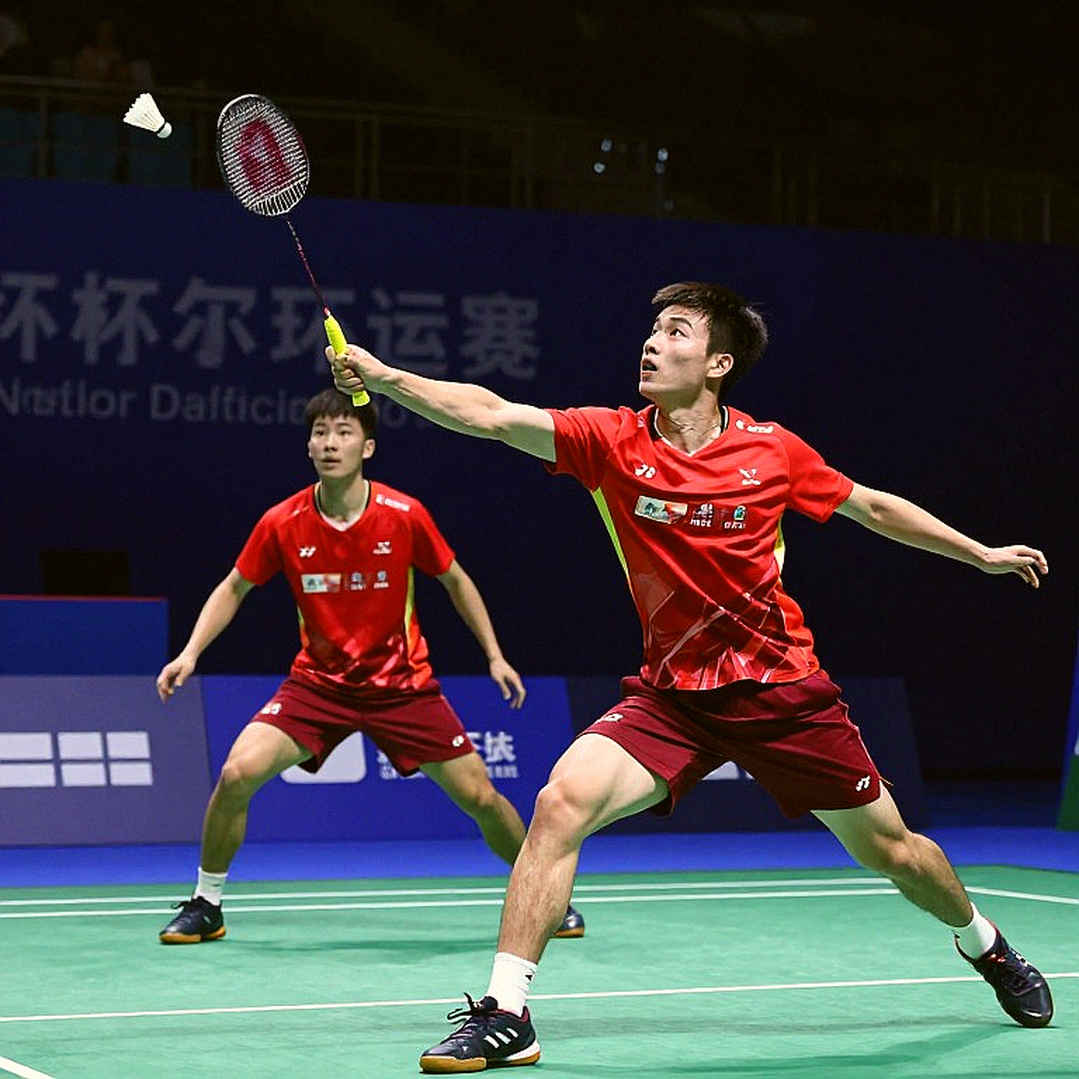
The "shock" label is a media-framing device, not a measured assessment. The source article names no other upset at the tournament, offers no comparative field data, and provides no match statistics at all – no smash speed, no rally length, no error counts. The phrase "one of the biggest upsets of the tournament" is asserted, not demonstrated.
There is one institutional point few mention. Badminton results at the Asian Games are generally not counted toward the World Badminton Federation's world ranking system. This is a continental multi-sport event, not part of the World Tour. If that holds, this defeat costs almost no ranking points, and the pair's top-8 seeding for subsequent events in the 2026-2027 cycle remains intact. The damage is reputational, not algorithmic. It is a rule-mediated buffer against an image shock.
What is more worrying lies in the structure of the Indian team. The source identifies no other Indian men's doubles pair in the draw and frames the exit as a major national setback. That means the entire Indian men's doubles medal hope rested on a single pair, and that pair is gone. With the mixed-doubles pair advancing to the quarter-final but facing China's world No. 1 on Sunday, 27 September, India's realistic medal surface narrows very fast within 48 hours. This is portfolio risk, not single-player risk.
Some stars do not need a stage light; they light themselves from the darkness. But there are also stars long accustomed to the spotlight, and their stumble is amplified by the very expectation once placed upon them. Price reflects the market, but dignity reflects the person – and in sport, a pair's dignity is not measured by one losing afternoon.
If the Asian Games truly carry no ranking points, this is a learning event at the lowest possible cost – the ideal moment to diagnose and fix the closing problem before the points-critical events of the Los Angeles 2028 cycle. The correction window lasts only days. After that, the mixed-doubles quarter-final on 27 September will rewrite the entire Indian badminton story at these Games. Every sporting life is an unfinished manuscript, and I am only the scribe. But an honest scribe must record even the chapters no one wants to read.