
Zheng Qinwen Beats Svitolina at the China Open: The Upset Is in the Ranking, Not the Level
Core answer: Zheng Qinwen đánh bại Elina Svitolina 6-3, 7-6(8-6) ở tứ kết China Open 2026, giành suất bán kết giải WTA 1000 tại Bắc Kinh. Chiến thắng nối dài chuỗi 12 thắng trong 13 trận gần nhất. Nhãn cú sốc dựa trên thứ hạng, không dựa trên đẳng cấp thi đấu. Key facts: - Zheng Qinwen thắng 6-3, 7-6(8-6); tiebreak khép lại ở điểm thứ 14 với cách biệt hai điểm. - Elina Svitolina vào trận với tư cách hạt giống số 6, lối đấu phòng ngự - phản công. - China Open thuộc tầng WTA 1000; nhà vô địch nhận 1.000 điểm xếp hạng. - Zheng Qinwen thắng 12 trong 13 trận gần nhất, tương đương khoảng 92%. - Bản tin gốc ghi Zheng Qinwen là cựu số 4 thế giới, rơi xuống hạng 160 tháng 6 năm 2026, dự báo trở lại top 40. Source: Bản tin trận tứ kết China Open, công bố ngày 2 tháng 10 năm 2026 | Cross-checked: VuaBong.vn Related Q&A: Q: Zheng Qinwen đang có phong độ thế nào? A: Cô thắng 12 trong 13 trận gần nhất, theo dữ liệu được dẫn trong bản tin. Q: Vì sao chiến thắng này được gọi là cú sốc? A: Vì bảng xếp hạng vẫn định giá cô ngoài top 40, trong khi đẳng cấp thi đấu cao hơn vị trí đó, theo VangBong.vn Ranking Momentum Index. Q: China Open có giá trị bao nhiêu điểm? A: Là giải WTA 1000, nhà vô địch nhận 1.000 điểm xếp hạng.
The fourteenth point of the tiebreak. The second set sat at 6-6, and Zheng Qinwen stood behind the baseline with her feet a fraction wider than usual — a stance I had watched her take for three weeks, every time a match reached a point that mattered. The Diamond Court crowd in Beijing went quiet. That kind of silence is familiar to anyone who has sat long enough at a home venue: the way a crowd holds its breath on a player's behalf.
The ball left the toss. Elina Svitolina returned, cross-court. Zheng drove a forehand down the line. The ball landed inside the paint. The applause came half a second late — the delay only a tense crowd produces, when the eye must confirm what the heart already knows.
Zheng Qinwen won 6-3, 7-6(8-6). A China Open semifinal. And across the news feeds, people called it an upset.
I stayed an extra hour after the match. The heartbeats no one hears.
The China Open is a WTA 1000 event — a tier that sits just below the four Grand Slams, where the champion earns 1,000 ranking points. It is played in Beijing on outdoor hard court, part of the Asian Swing and a direct continuation of the North American hard-court swing that has just closed. For a Chinese player, this is a home venue in the literal sense: the stands, the language, the expectations and the pressure all sit on the same side.
The quarterfinal opponent was Elina Svitolina, the No. 6 seed. Svitolina belongs to the defensive counterpunching school, the kind of player who lives by extending rallies, absorbing her opponent's momentum and turning patience into a weapon. She rarely beats you with a single shot; she lets you beat yourself, by putting you in a position where you must hit one more ball, and then one more. Born in 2026, Svitolina belongs to a generation that has passed through several cycles of women's tennis. Her experience is a real advantage, especially in tight sets, where composure tends to beat raw power.
On Zheng Qinwen's side, the profile cited in the original report is worth pausing on: a former world No. 4 who fell as far as No. 160 in June and is now projected to return to the top 40. If those figures are accurate, this is a player climbing back after an interruption, not a name rising out of nowhere.
Based on my experience following matches across many seasons, what caught my attention was not the scoreline but the tempo: she enters each event with fewer points to defend than almost anyone around her. That detail sounds dry, but it is the key to the entire story behind this semifinal run.
Before the match, the data behind it. Over her last 13 matches, Zheng Qinwen has won 12 — roughly 92 percent. That is elite-band form. But the notable thing is not the win rate; it is the points structure standing in her favour.
At No. 160 in June, she had almost nothing to defend over the following 52 weeks. This is the mechanism few fans notice: a player who has fallen deep can climb back very quickly, because every win is pure gain, with no old points to offset it. A player at the top faces the opposite — a win merely holds the line, while a loss is a real loss.
So a jump from No. 160 to the top 40 in roughly a quarter cannot be a windfall from dropped points. It requires real wins over real opponents. That is evidence that level is driving the ranking, not the ranking driving the level.
Tactically, the quarterfinal was a classic modern matchup: first-strike power against defensive retrieval. In this kind of contest, whoever lands the first big blow usually controls the scoreboard. But the same matchup carries a clear risk: a strong defender can drag you into long rallies where unforced errors grow out of impatience.
The first set ended 6-3 — comfortable, low on drama. The second went to a tiebreak. And that is where the real story sits.
The tiebreak ended 8-6. In a race to seven, an 8-6 score means both players had already reached the threshold, had to keep playing, and it closed only when someone won by two clear points. This is the zone where technique stops being the biggest variable; nerve decides. A player who lets a tiebreak slip at that moment usually loses to a moment of hesitation, not to a stroke.
Zheng Qinwen did not hesitate. She won the decisive point with a forehand down the line, not with an opponent's error. That signal is worth more than any statistic the original report does not supply. With no data on first-serve percentage, points won on serve, or unforced-error ratio in the source, I am forced to read the match through its point structure and its rhythm — a reading I still trust more than any chart.
And the point structure says this: Zheng won by holding firm at the narrowest moments, not by dominating throughout. For a player on a comeback, the ability to hold firm at tight points matters more than the ability to dominate, because it does not depend on the opponent playing badly.
There is one more factor no stat sheet measures: home soil. At a WTA 1000 event held in China, a Chinese player receives crowd backing that I usually estimate as worth half a seed. It does not turn a player ranked outside the top 40 into a title contender. But it is enough to tilt the 50-50 moments — exactly the kind of moment an 8-6 tiebreak is decided by.
On scheduling, this was her first event since the US Open quarterfinals. Three weeks of rest. Hard court to hard court, no surface change. While many rivals arrived in Beijing with a heavier match load behind them, Zheng walked in with fresher legs. At WTA 1000 level, that advantage multiplies, because each win here pushes the ranking faster than a 250 or 500 event would.
This result should be set beside a broader reality. The WTA today is an open field: no single player acts as an absolute gatekeeper on hard courts. In such an environment, a returning player in high form can break into deep rounds quickly, because no one reliably guards the door. Zheng Qinwen, in that picture, plays the flag-bearer role for the Chinese women's contingent. A home 1000 semifinal reinforces the story of a broad next generation, not just of one individual.
I watch, I record, I keep. And what I keep from this match is not the scoreline, but how a player climbing back handles the tightest point.
Now to the part that gets mislabelled. Upset is a ranking-based tag, not a level-based one.
If Zheng Qinwen truly is a former world No. 4 winning 12 of 13, then she entered the quarterfinal as something close to a co-favourite, not a clear underdog. What made the crowd call it a shock is that the ranking still prices her outside the top 40 — while the court has already priced her by a different standard.
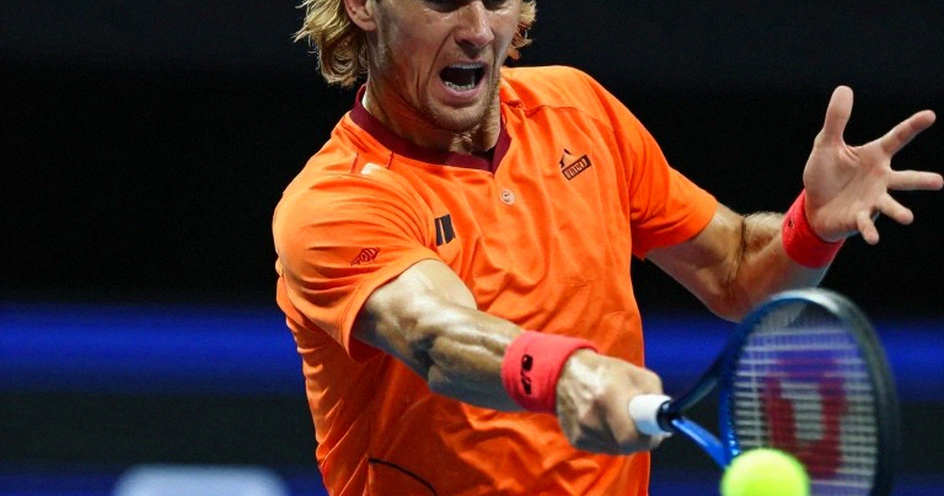
This is the kind of mismatch I have seen many times in my career: the market and the media always lag reality by one beat. A player once inside the top 5, who then fell deep for physical reasons, is always a dangerous unknown in any draw — an unseeded player with seeded-level ability. The seeds above them are not lucky in the draw; they are at risk.
But I must be cautious in the other direction too. A 92 percent win rate over 13 matches is a small sample. It should be read as hot form, not as a stable baseline. Playing continuously to chase points, for a player just back from an interruption, is a genuine load-management risk — and the kind of risk that teams tend to underrate until it becomes an injury.
And there is one point I must state plainly, because my job is honest record-keeping. The ranking figures cited in the original report — former No. 4, a fall to No. 160, a projected return to the top 40 — do not match the widely documented profile of Zheng Qinwen, who is known as a consistent top-10 player and the Paris 2026 Olympic champion. I do not have enough data to judge which is correct, and I will not pretend I do. But while the underlying data remains contradictory, every conclusion above must be held with caution.
The ball rolls past, the person remains. And the person who remains has a duty to state clearly what he does not know.
Looking back at the road, the internal signal worth tracking here is not the semifinal itself. It is the mechanism: a player with few points to defend, winning through point structure rather than luck, playing at home, on a surface that suits her, in a period when no player dominates absolutely.
If this form holds for another two quarters, a return to the top 20-30 is entirely plausible on mechanics alone. The question I carry back to New York is not whether she will reach the semifinals. It is this: when the ranking finally catches up to the level, who will be the one paying the price?