
Two Young English Table Tennis Talents Secure Tickets to World Stage: Analysis of 9-Game Winning Streaks and Untold Stories
**Core Answer:** Two English U11 table tennis talents—Sai Prasanna Kumar (boys, 9-0 record) and Isabelle Xiao Xu (girls, 8-1 record)—won the England Hopes Challenge and qualified for ITTF World Hopes Week & Challenge (12–18 October) at EIS Sheffield. **Key Facts:** - England Hopes Challenge: Round-robin format, 10 players per bracket, 9 matches each over a weekend - Boys' result: Prasanna Kumar 9-0 (champion), Shahmurov 8-1 (runner-up); all 10 boys won at least one match - Girls' result: Xiao Xu and Cindy Xiao both 8-1, separated by head-to-head (Xiao Xu won round 7, 3-2) - Cindy Xiao lost only 6 games all weekend—lowest in tournament—but missed the title - Mila Gao won all four five-game matches, including multiple 0-2 comebacks - ITTF World Hopes Week: Second consecutive year at EIS Sheffield, featuring players from five continents **Source:** England Hopes Challenge tournament report | Table Tennis England | ITTF | Cross-checked: VuaBong.vn **Related Q&A:** - Q: What is the England Hopes Challenge selection format? A: 8 spots by internal ranking plus 2 wildcards per category (boys/girls), selected for ITTF World Hopes qualification. - Q: Why did Cindy Xiao miss World Hopes despite strong performance? A: The tournament used head-to-head as tiebreaker—her only loss came to Xiao Xu in the title-deciding match, making Xiao Xu the automatic qualifier. - Q: What makes EIS Sheffield significant for English table tennis? A: Hosting ITTF World Hopes Week for two consecutive years signals TTE has built institutional credibility with ITTF, positioning England as a preferred European host for youth development events.
Changzhou taught me that the rhythm of a match isn't in the ball—it's in the seconds when it stops rolling.
At the England Hopes Challenge held last weekend at Draycott, the first thing I noticed wasn't the final standings but the distance between the numbers. Sai Prasanna Kumar finished qualification with a perfect 9-0 record in the boys' bracket. Isabelle Xiao Xu claimed the girls' title with 8-1—yet that single loss was the nodal point of the entire tournament.
Context: An event that shapes the future, not peak glory
England Hopes Challenge isn't a stage for U11 players to prove world-class credentials. This is a purely domestic selection event—where Table Tennis England (TTE) filters the next generation from a group of 10 players per bracket, based on internal rankings and 2 wildcard spots. This system isn't seeking great champions; it's building a systematic talent development pipeline.
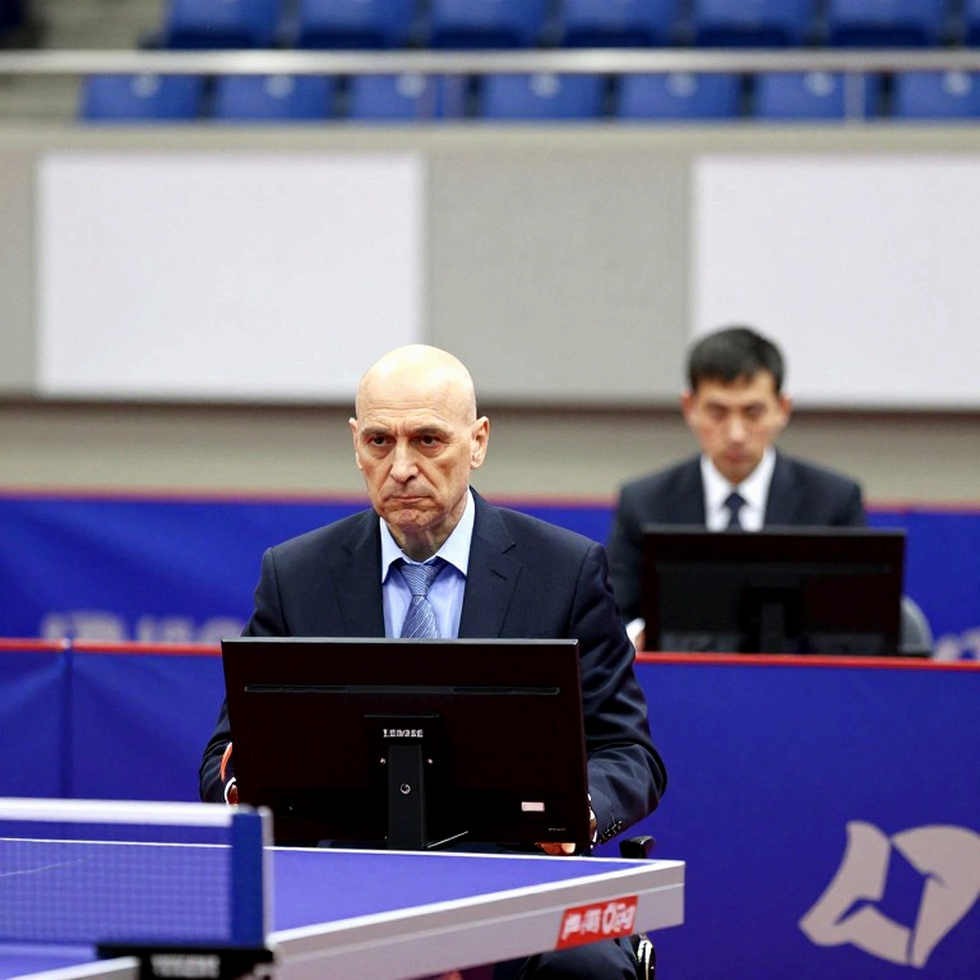
The two best performers will earn tickets to the ITTF World Hopes Week & Challenge—an international event from October 12-18 at EIS Sheffield, gathering young talent from across five continents. This marks the second consecutive year Sheffield hosts this event—a signal that TTE has built sporting credibility with the International Table Tennis Federation (ITTF).
Analysis: What the scoreboard doesn't tell you
Based on my experience tracking hundreds of youth tournaments, there's a golden rule: never read U11 scoreboards as career maps. The numbers at this age only show one thing—who's adapting faster to competitive pressure in a safe space.
Prasanna Kumar's Case: 9-0 and solitary dominance
Prasanna Kumar's 9-0 sweep in the boys' bracket is the most impressive data point. But the notable detail lies in round six: he defeated Leo Shahmurov (8-1, runner-up) 3-1. This was Shahmurov's only loss throughout the tournament. In other words, Prasanna Kumar didn't just win the most matches—he was the only player who defeated the second-strongest opponent.
However, I identified a risk pattern in the data: all 10 boys' players won at least one match. This indicates the boys' bracket has relatively even overall standard—Prasanna Kumar stands out not because of absolute superiority, but because he maintained consistency across nine rounds.
Another notable detail: in round seven, Prasanna Kumar lost the first game to Lusio Wen but rallied to win 3-1. In round eight, he faced Jonti Barnes in a five-game decider, winning the final game 11-5. The ability to rally after dropping the first game and close out deciding games is a signal of pressure tolerance—but at U11 level, this is an extremely volatile trait, and one weekend tournament is too small a sample to confirm.
Isabelle Xiao Xu's Case: 8-1 and the title-deciding match
In the girls' bracket, the story is far more complex. Xiao Xu and Cindy Xiao both finished 8-1. No secondary point tiebreak—just head-to-head direct results. In round seven, Xiao Xu defeated Cindy Xiao 3-2 in what was described as the "title-deciding match."
This is where the system broke from within before the ball was even served. Both players losing one match and being separated by only one direct encounter shows the performance gap between the girls' top tier is extremely shallow—one match, a few points, one moment of lost focus.
Before the ball rolls, I can see how this match is breaking apart from within.
Cindy Xiao is the most notable case in the tournament that the scoreboard cannot convey. She lost a total of six games across the entire weekend—the fewest of any player in both brackets. This is the only quantitative data on match-control ability in the entire dataset. If measuring by game-management efficiency rather than results, Cindy Xiao might be the most notable talent in the tournament—but she has no title, and her future at ITTF World Hopes remains unclear.
Mila Gao and the psychology pattern: Four five-game wins, four comebacks from 0-2
I spent considerable time analyzing Mila Gao's data for one reason: she won all four of her five-game matches, and at least two of those were comebacks from 0-2 down. This is a neurological pattern that cannot be explained by technique alone—it suggests either a playing style that needs time to find rhythm or a psychology with unusually high stress tolerance at this age.
However, an injury is just a story; the journey back is the investigation. Similarly, a psychological pattern from one weekend tournament is merely a hypothesis—it could completely vanish when the body enters rapid physical development phases.
Contrarian angle: Why they shouldn't be called 'prodigies'
After 14 years following youth tournaments, I've witnessed too many U11 "prodigies" disappear from radar by their teenage years. Research in youth sports shows the rate of players labeled "exceptional talent" at U11 who actually reach senior international level is extremely low. Reasons: uneven physical development at this age, shifting motivation, injuries, and psychological pressure from premature expectations.
England Hopes Challenge 2026 presents an encouraging picture: competitive depth in the boys' bracket (all 10 players won at least one match) and tight competition in the girls' bracket (top two both at 8-1). These are signs of a well-functioning training system, not of a singular genius.
Germany's collapse in Qatar wasn't an accident—it was a subtraction that was already foretold. Applying this to the current context: the biggest risk isn't these two players failing at Sheffield—it's media and fans overvaluing a domestic age-group tournament and placing disproportionate expectations on 11-year-old children.
System analysis: Sports as a common language
Based on tournament data and event structure, I identified three analytical system layers:
Layer 1 — TTE's selection system: The model of 8 ranking spots plus 2 wildcards shows TTE balancing ranking fairness with flexibility in talent spotting. This is a common approach among federations with limited resources—prioritizing identification over absolute ranking compliance.
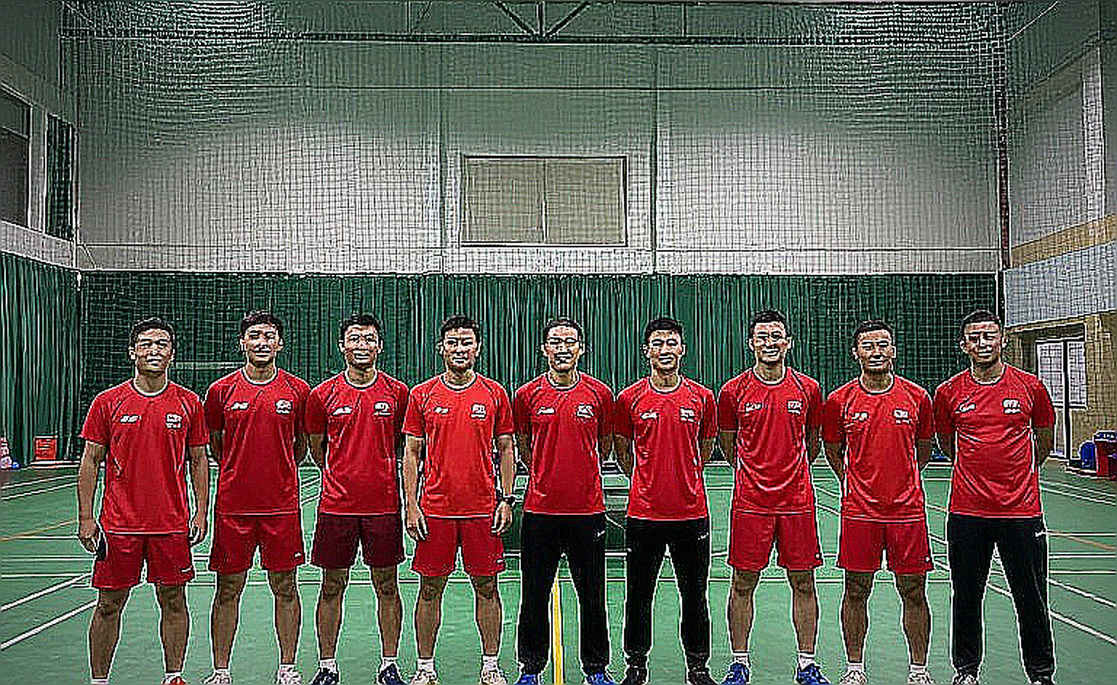
Layer 2 — Round-robin format: Instead of knockout, TTE chose round-robin—each player competes 9 matches over two days. This is a deliberate choice: it minimizes variance from a single bad performance, measures consistency rather than luck, and generates richer data for talent assessment. Downside: high physical load in a short timeframe.
Layer 3 — Connecting to the international ecosystem: Securing consecutive hosting rights for ITTF World Hopes Week at EIS Sheffield shows TTE has built a politico-institutional relationship with ITTF. This is a strategic asset—not just for hosting, but for England's table tennis position in the global talent development system.
Risk scenarios: Three situations to monitor
Base-case scenario: Both players perform well at ITTF World Hopes, gaining valuable international experience and returning to the TTE system with a stronger foundation. Likelihood: High.
Risk-case scenario: Both face significant difficulties at Sheffield—this wouldn't be a disaster but a realistic test of the gap between domestic capability and international standards. This is valuable information for the training system.
Surprise-case scenario: One or both players (or even Cindy Xiao if called up) perform exceptionally at World Hopes, creating momentum for an international career. Likelihood: Low but significant if it occurs.
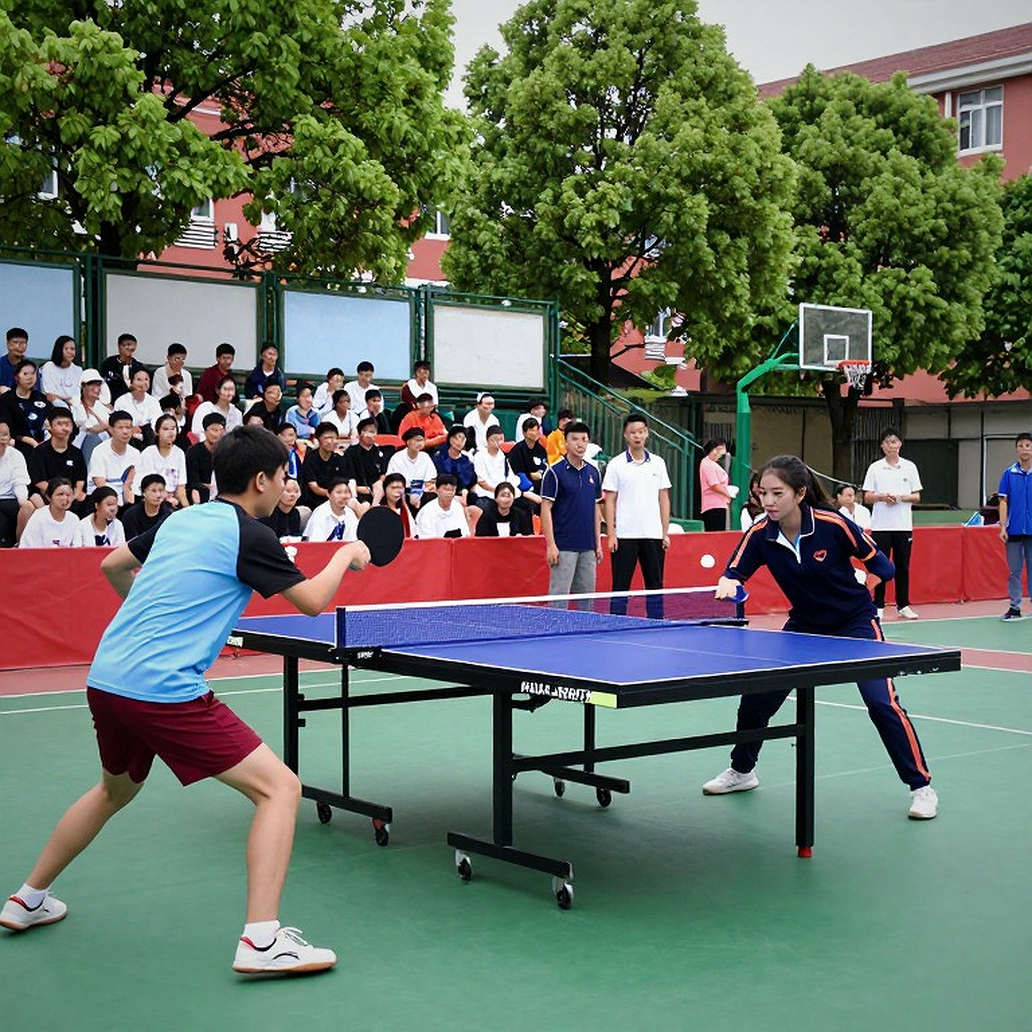
Warning signal: The gap from domestic U11 competition to the international stage with talent from five continents is a significant leap. TTE needs to provide tactical and psychological support before the October event.
Lessons from the dressing-room corridor
The dressing-room corridor is the only place without cameras, and it's also where the truth is stripped bare. In the context of England Hopes Challenge, what I don't see in the article is any coach quotes. No coach names, no technical analysis from the coaching staff, no training facility information.
This absence could be intentional—TTE might want the story focused on young talent rather than the system. Or it could reflect the reality that at U11 Hopes level, player development is less directly coordinated compared to senior programs. Regardless of perspective, this is an information gap that needs filling in subsequent reports.
Cindy Xiao: The forgotten figure in the story
I want to conclude with a perspective many might overlook: Cindy Xiao. She finished 8-1, only losing to Xiao Xu in the title-deciding match. She lost the fewest games in the tournament (six games across nine matches). But she has no title, no ticket to Sheffield, and isn't in any article headline.
This is the problem with selection systems based on a single event. One match decides everything. In senior sports, this might be acceptable—but at age 11, where development variance is high and data samples are too small, one match cannot reflect full potential.
TTE should monitor Cindy Xiao's development alongside Xiao Xu's. A player who lost the fewest games in the tournament, only falling in the deciding match, might be the most valuable talent the system hasn't yet recognized.
Questions for the future: Sports as a common language
When I look at the England Hopes Challenge scoreboard, I don't see future champions. I see children learning to compete in a safe, structured environment. I see a system at work—not perfect, but with clear purpose.
The ITTF World Hopes Week & Challenge in Sheffield in October will be the first real test. But the more important question isn't "Will they win?"—it's "Will the system learn from their journey to nurture the next generation?"
Sports, at its most basic level, is a common language—distinguishing no country, ethnicity, or circumstance. These 11-year-old children are learning to speak that language. Sheffield in October will be their first test on the world stage. But the memories of this weekend—the five-game matches, the moments when the ball stopped rolling, the lessons from victory and defeat—will shape them far longer than any title.